Why Is My Castor Oil Cloudy or Thick? Normal or Spoiled
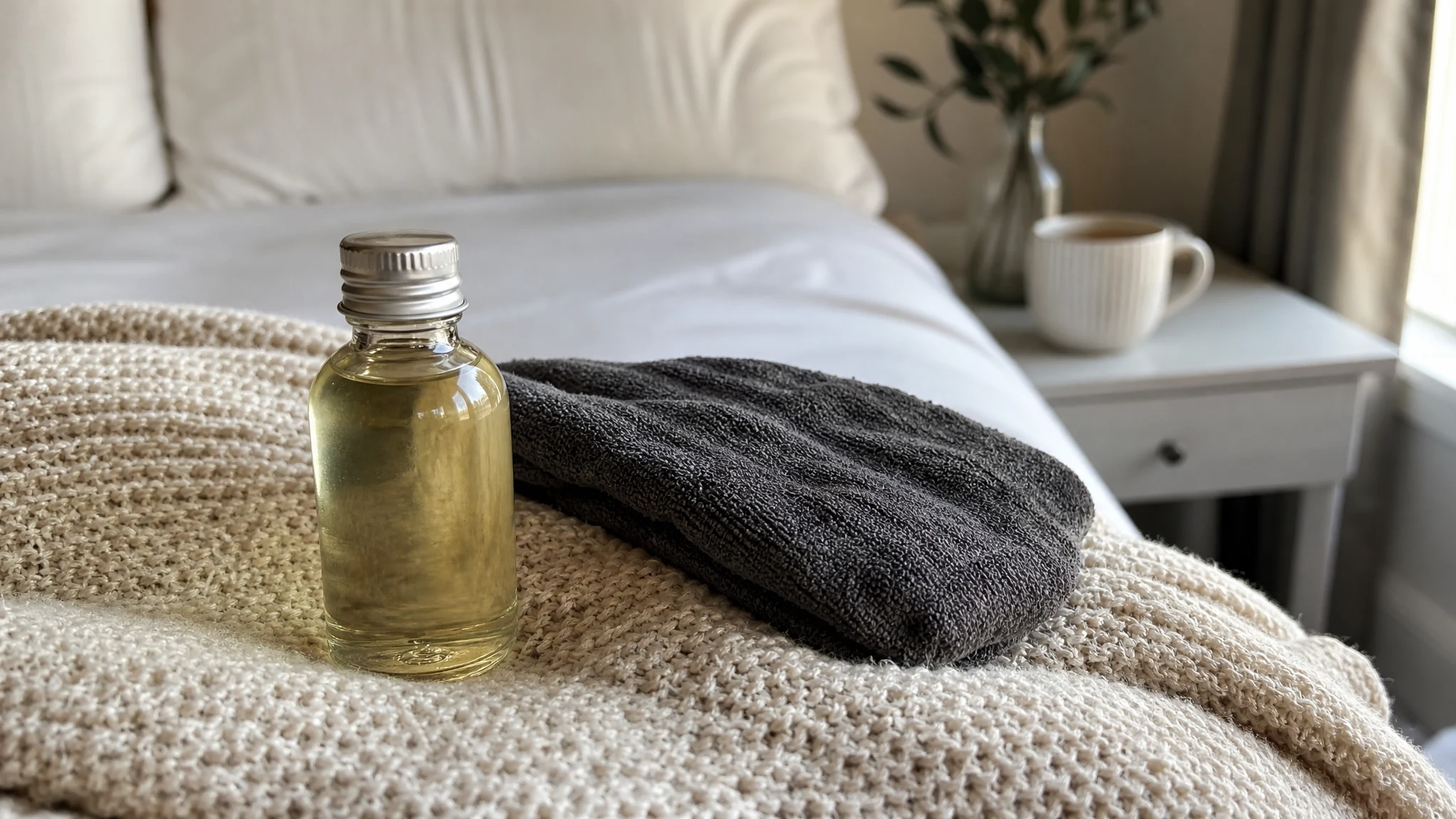
You reach for the bottle on a chilly morning and it looks different: hazy, maybe slower than usual, maybe even a little stiff. Before you decide it has gone off, take a breath. Most of the time a cloudy or sluggish castor oil is just a cold castor oil, and the check takes about two minutes.
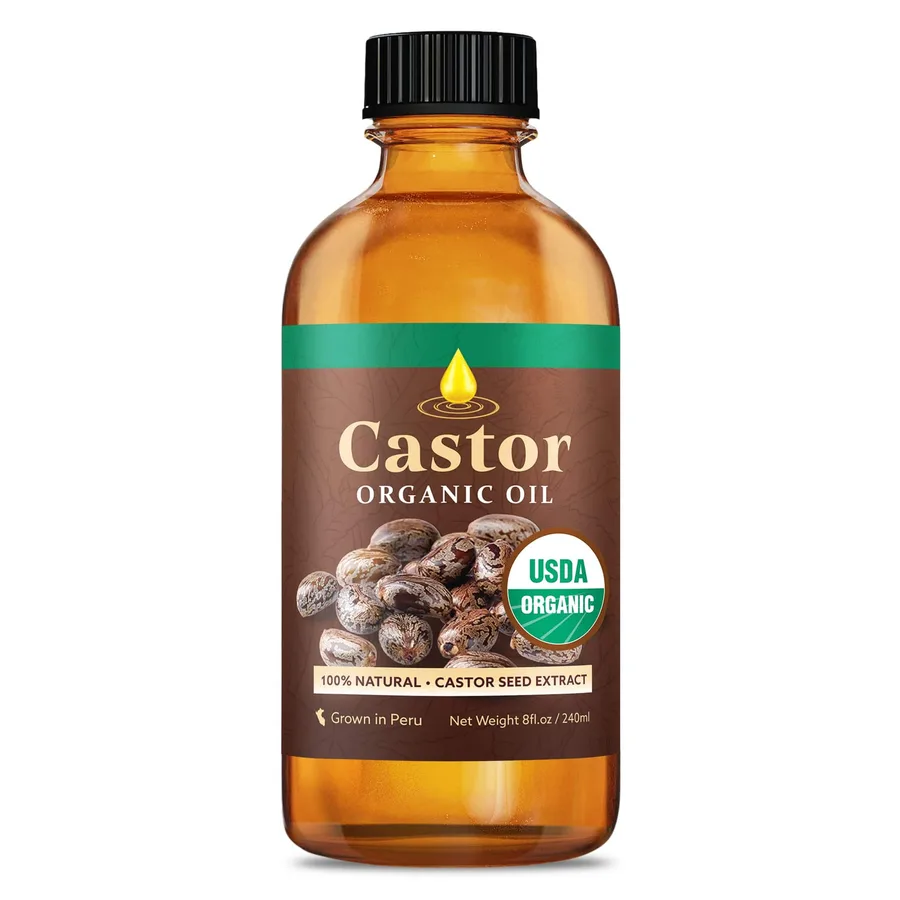
Organic Castor Oil
Cold-pressed, hexane-free castor oil, in sizes from a 0.5 oz sample to bulk drums.
From $13.99
Shop Organic Castor Oil →Cold makes oil slow
Every oil flows more slowly as it cools, and castor oil starts out slow. A 2020 rheology study found its viscosity falling steeply as the temperature rose, which means it climbs the same curve in the other direction as a room cools. NOAA's chemical database gives castor oil's melting point as 10 degrees F (NTP, 1992), about minus 12 degrees C, so an ordinary cold cupboard is nowhere near freezing it solid. Expect thick, not frozen.
A word on published numbers. Figures for castor oil vary with the sample and the method: a 2021 review quotes a viscosity of 9.3 to 10 poise at 25 degrees C from one 2015 measurement and 1.86 at 30 degrees C from another, so grade and method matter. These are ranges for castor oil in general, not a measurement of our bottle, and we do not state a cloud point for our own oil.
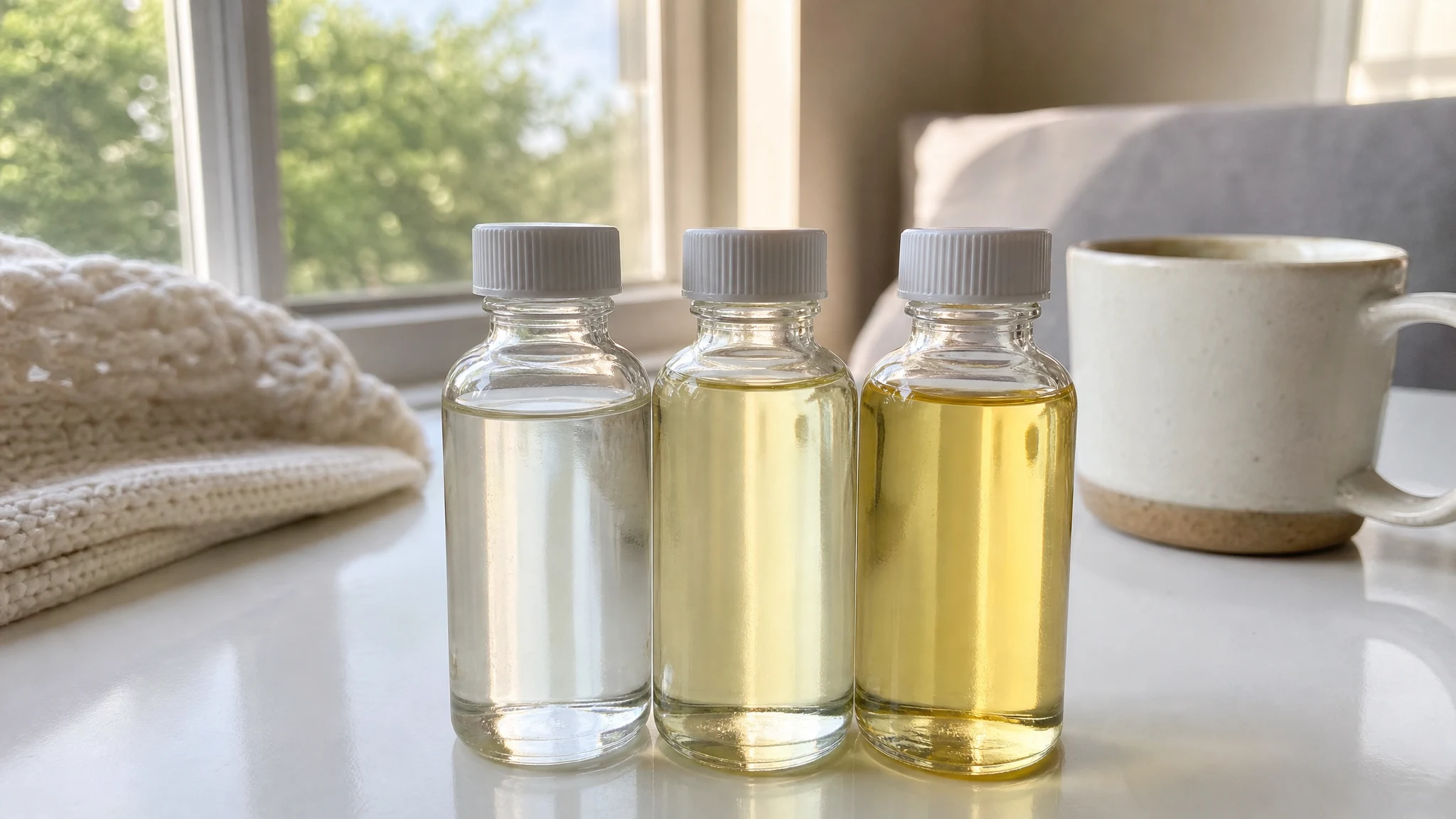
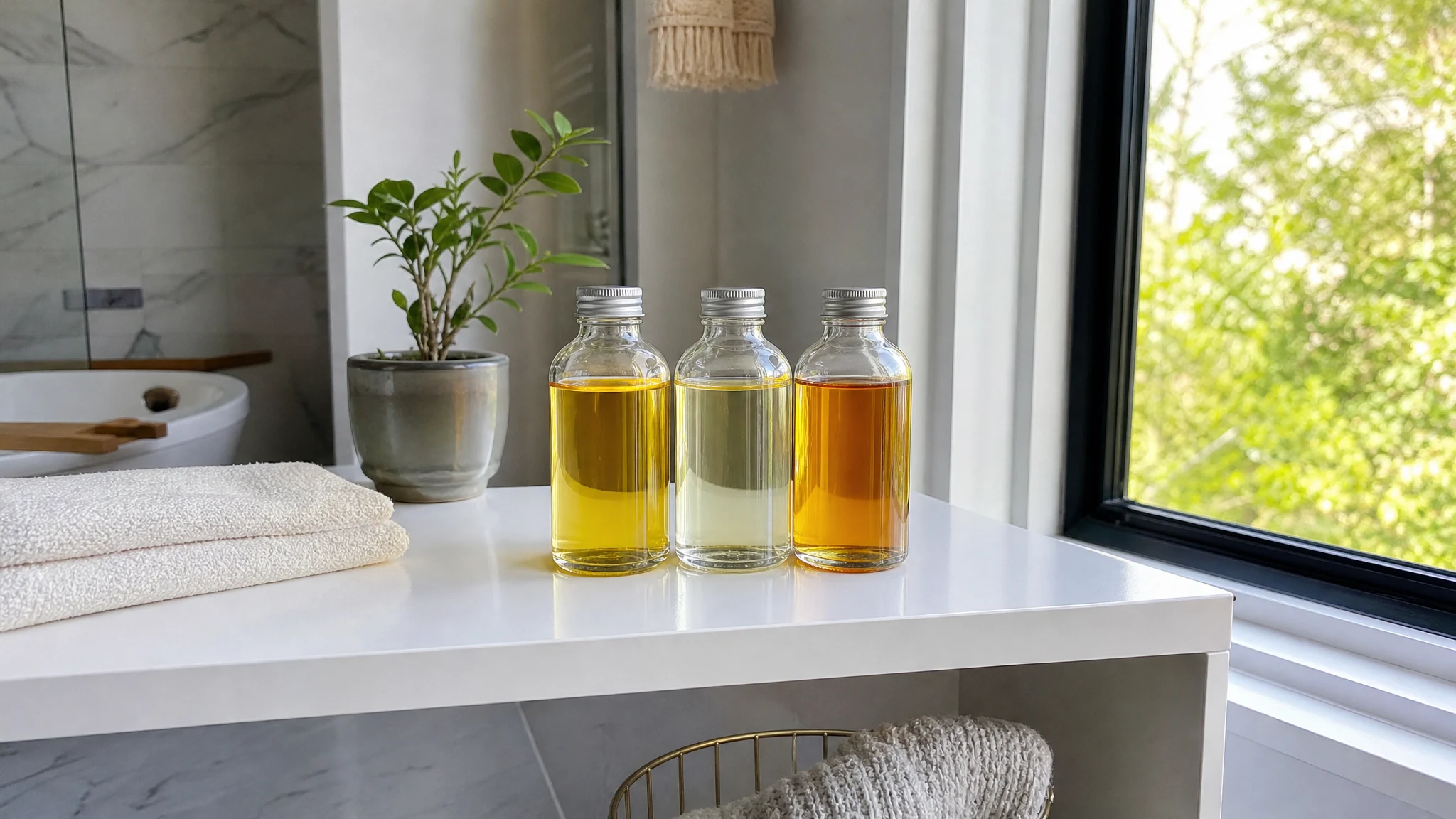
The look of it is part of the story. A bottle that has spent a night in a cold hallway can seem to thicken and turn a little misty, and it pours so slowly that you could wonder if it has set. Pale gold turns almost opaque. It looks dramatic, and the warm-water check below usually settles it.
What cloudy can mean
We could not find a trustworthy published cloud point for castor oil, so here is plain reasoning instead of a claim. Oils are mixtures, and if one part of the mixture stiffens at a slightly higher temperature than the rest, the result is a haze. The test is simple: warm it and watch.
| What you see | Likely reading | What to do |
|---|---|---|
| Hazy or slow in a cold room, normal smell | Temperature | Warm gently, as below |
| Haze clears when warm | Temperature | Carry on as usual |
| Haze or droplets stay when warm | Possibly water or something else in the bottle | Do not use it; replace the bottle |
| Sharp, sour or crayon-like smell, or darker colour | Possibly gone off | Replace it |
Water is our reasoning for the third row: NOAA lists castor oil's water solubility as under 1 mg per ml, so water has nowhere to go but to sit in the oil as cloud or droplets. It usually arrives on wet fingers or in a damp spot.
Warming it back
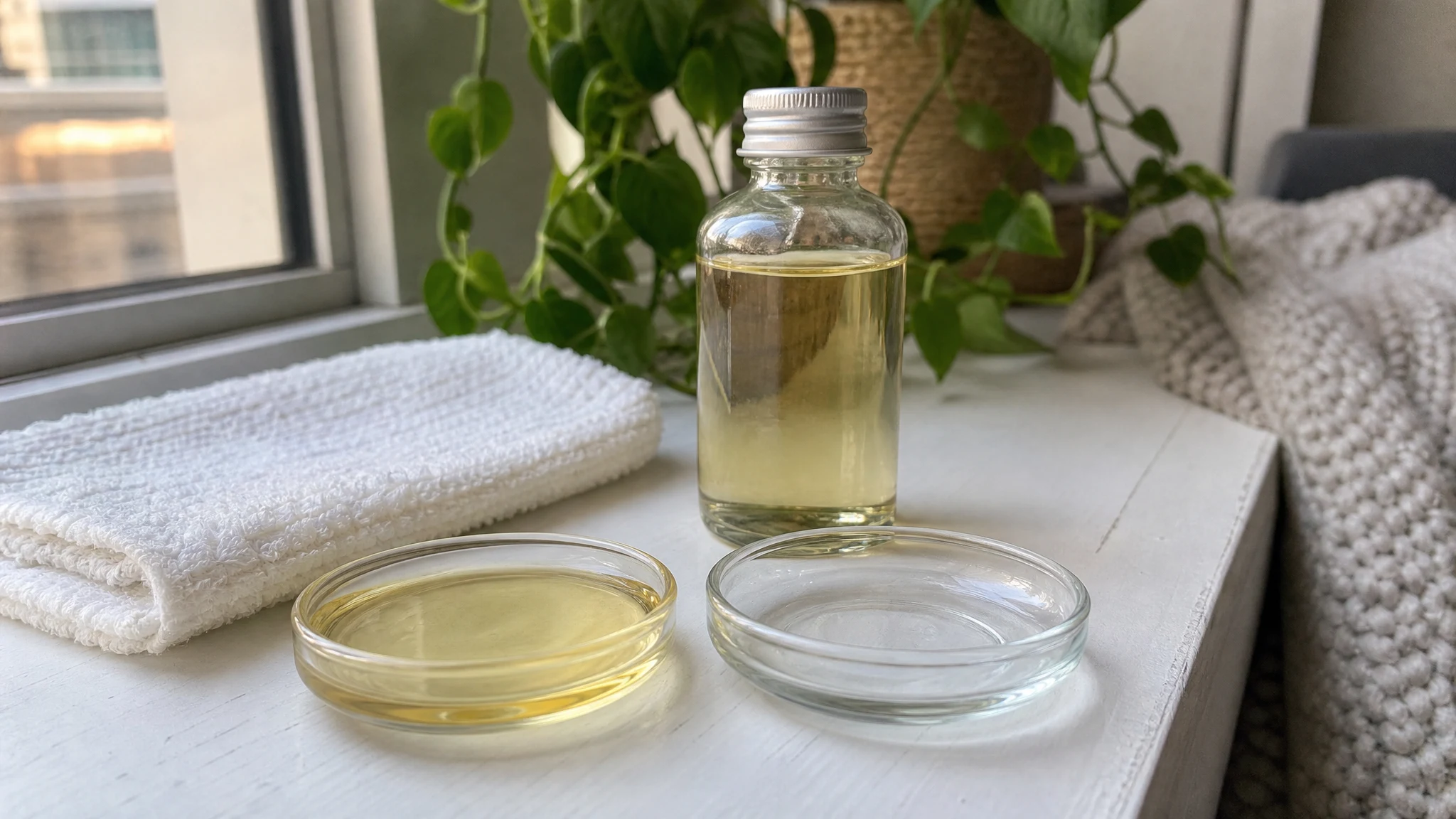
Stand the closed bottle in a bowl of warm tap water for a few minutes, then dry it and check. Our guide to thinning castor oil covers the details, including why we skip the microwave. If the haze melts away and the oil smells as it did, you are done.
When it really has turned
Oils go off when oxygen reacts with their fatty acids. The first products, hydroperoxides, are odourless, according to a 2021 study, and they later break down into aldehydes and other volatile compounds that carry the off notes. That is why your nose is the earliest reliable test: a sharp, sour or crayon-like smell means the change has begun. The same study names temperature and heating time as the most important outside influences, so heat and a sunny shelf are what hurry it along.
The FDA's guidance is brief: protect cosmetics from temperature extremes, keep containers clean and tightly closed, and discard products that change colour or smell different. Do not try to rescue a bottle that smells off. And if a bottle ever irritates your skin, stop using it and speak to your doctor.
Our advice is simple: keep the bottle somewhere cool and out of direct sun, with the cap on, and do not worry about a morning chill. If your kitchen is cold in winter, a shelf in an interior room or a drawer near the bedroom is a sensible spot, and you will rarely need the warm-water step at all.
Castor oil is a patient oil
Castor oil's chemistry works in its favour. The hydroxyl group on ricinoleic acid helps prevent hydroperoxides forming, which is how reviews explain its oxidative stability, and our post on ricinoleic acid explains it in plain terms. A 2016 review gives refined castor oil about 12 months when it is kept away from excessive heat, a general figure that is not a promise about any bottle. Our shelf life post covers storage and how to judge age, and how to tell if castor oil is pure is a good companion read.
So, a hazy bottle on a cold morning is usually just shy and slow. Warm it, smell it and trust what you find.
Organic Castor Oil
Cold-pressed, hexane-free organic castor oil, from a 0.5 oz sample to bulk sizes.
From $13.99
Shop Organic Castor Oil →Sources & Further Reading
- Stanciu I. Rheological Characteristics of Castor oil used as Biodegradable Lubricant. Oriental Journal of Chemistry, 2020.
- NOAA. CASTOR OIL. CAMEO Chemicals.
- Yeboah A, Ying S, Lu J, et al. Castor oil (Ricinus communis): a review on the chemical composition and physicochemical properties. Food Science and Technology, 2021.
- Grebenteuch S, Kroh LW, Drusch S, Rohn S. Formation of Secondary and Tertiary Volatile Compounds Resulting from the Lipid Oxidation of Rapeseed Oil. Foods, 2021.
- Patel VR, Dumancas GG, Kasi Viswanath LC, Maples R, Subong BJJ. Castor Oil: Properties, Uses, and Optimization of Processing Parameters in Commercial Production. Lipid Insights, 2016.
- U.S. Food and Drug Administration. Using Cosmetics Safely.