How to Thin Castor Oil So It Is Easier to Apply
Castor oil does not pour so much as stroll. If you have ever tipped the bottle and waited for a bead of oil to reach the lip, you already know why "how do I thin castor oil" is one of the questions we hear most. The honest answer is that you rarely need to change the oil at all. You change its temperature, its company or the way you apply it.
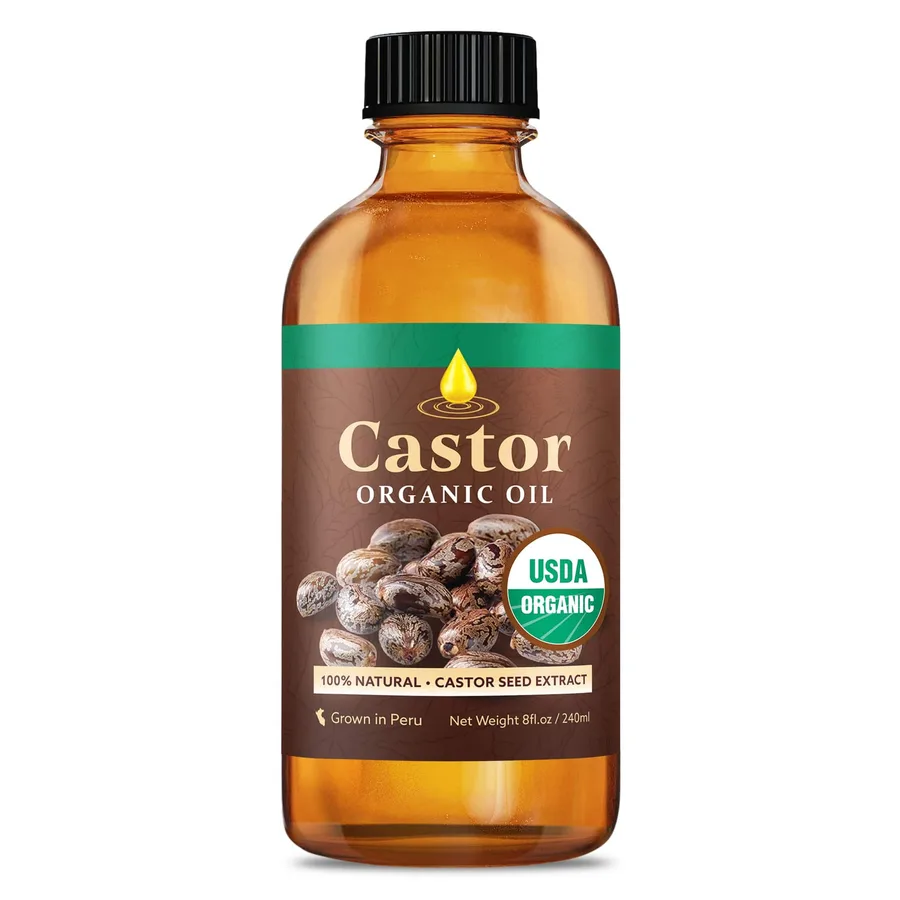
Organic Castor Oil
Cold-pressed, hexane-free castor oil, in sizes from a 0.5 oz sample to bulk drums.
From $13.99
Shop Organic Castor Oil →Honestly, we have come to love the slow pour. It makes you stop for a moment, and that pause tends to mean you use less. Thinning it is really about making the oil easier to enjoy, not about turning it into something it is not.
Why it is so thick
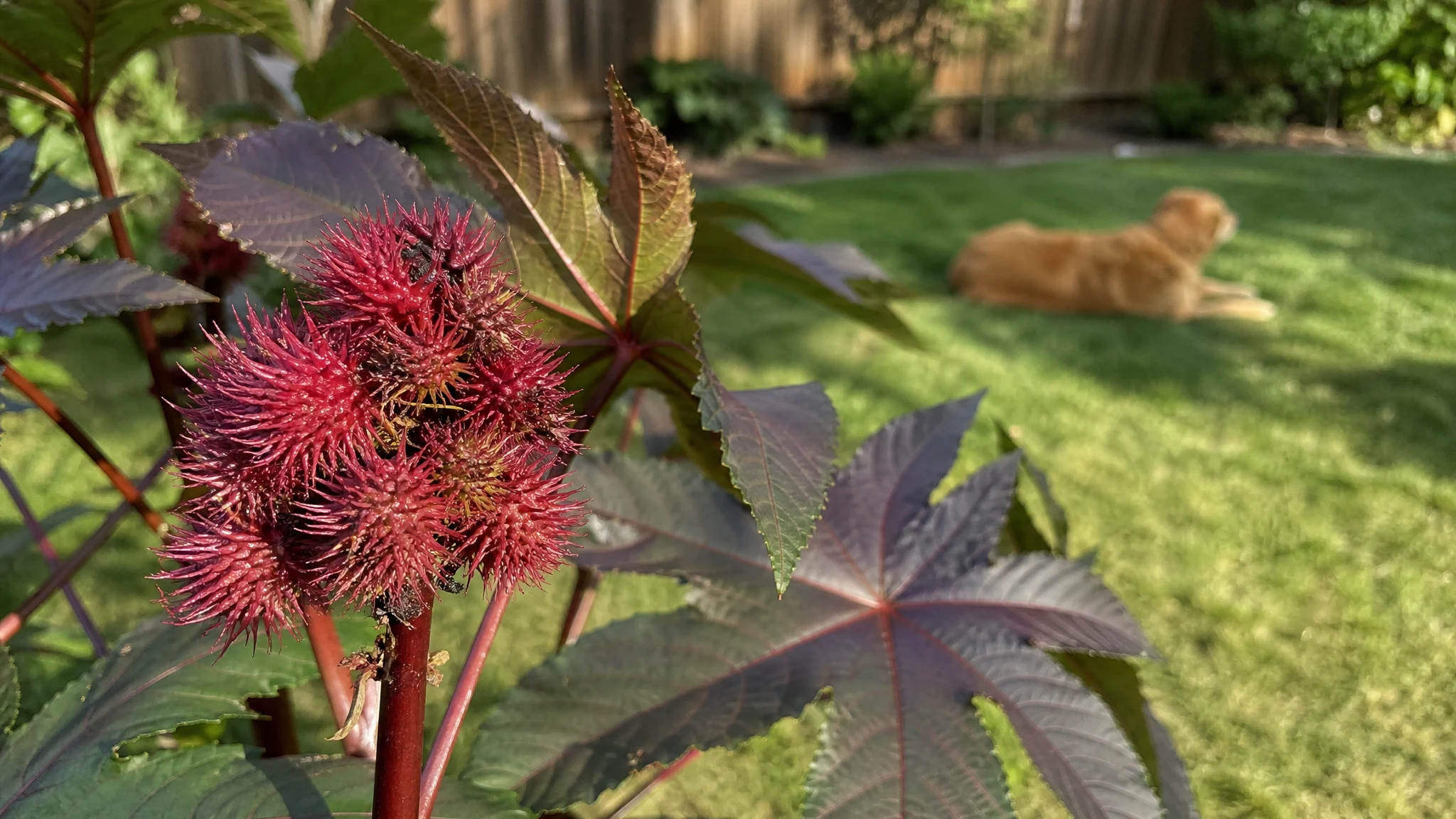
Most plant oils are built from fatty acids with plain carbon chains. Castor oil is mostly ricinoleic acid, and that fatty acid carries an extra hydroxyl group, which a 2016 review in Lipid Insights credits with making castor oil a natural polyol. A 2012 study found that an oil's viscosity tracks its fatty acid make-up, and from there we reason that this unusual structure is behind castor oil's slow, syrupy flow. If that chemistry interests you, our post on ricinoleic acid tells the whole story. For everyday purposes, take away this: thick is simply what castor oil is made of, and it is the same quality that makes it feel so rich on skin.
Route one: warm the bottle
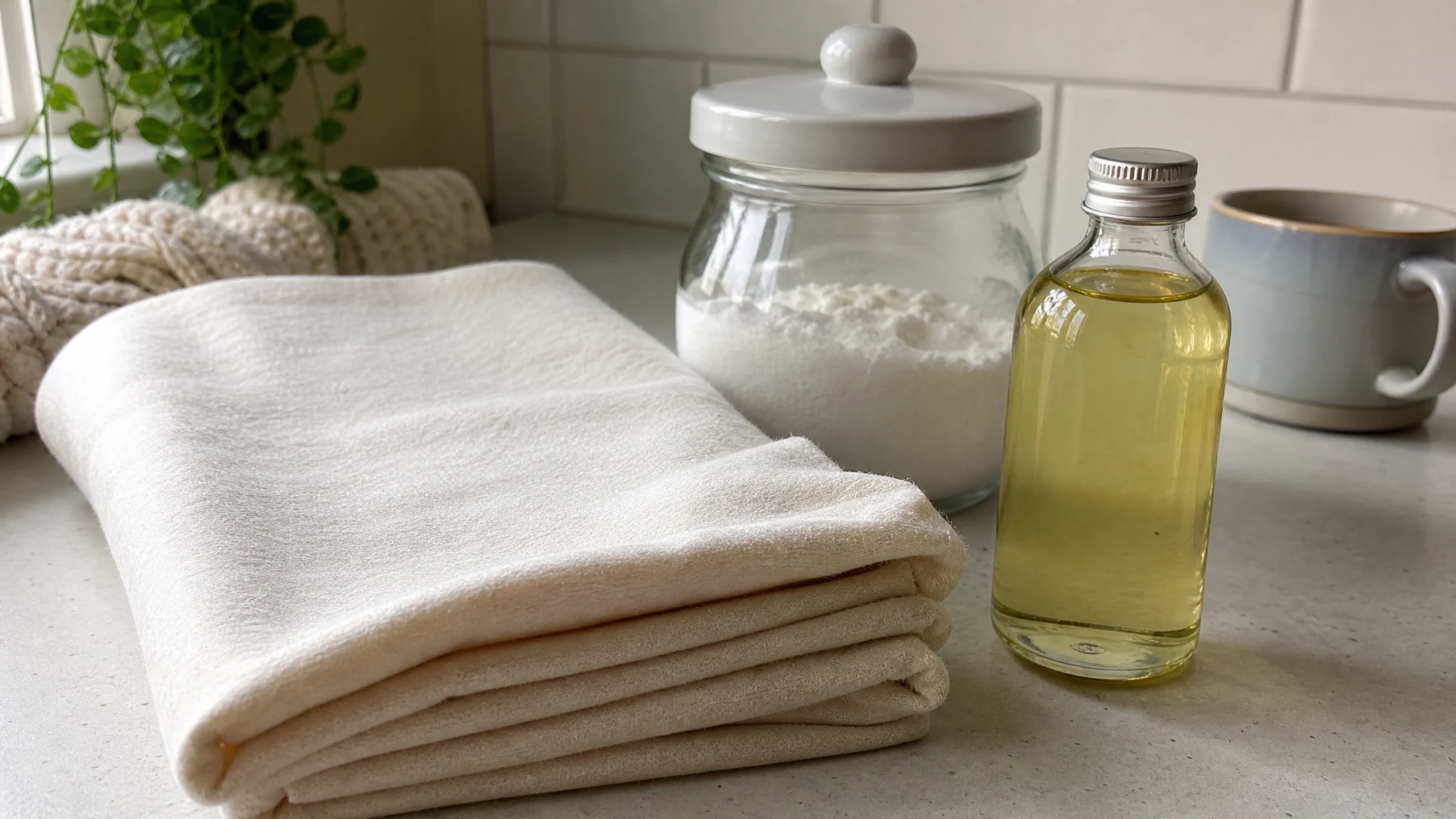
Temperature is the easiest dial. A 2020 rheology study that measured castor oil from 40 up to 100 degrees C found its viscosity falling steeply as the temperature rose, then flattening out at the hot end. We cannot say how much looser a gently warmed bottle becomes, but the direction is clear, and the practical recipe is short:
- Keep the cap on tight so water and dust stay out.
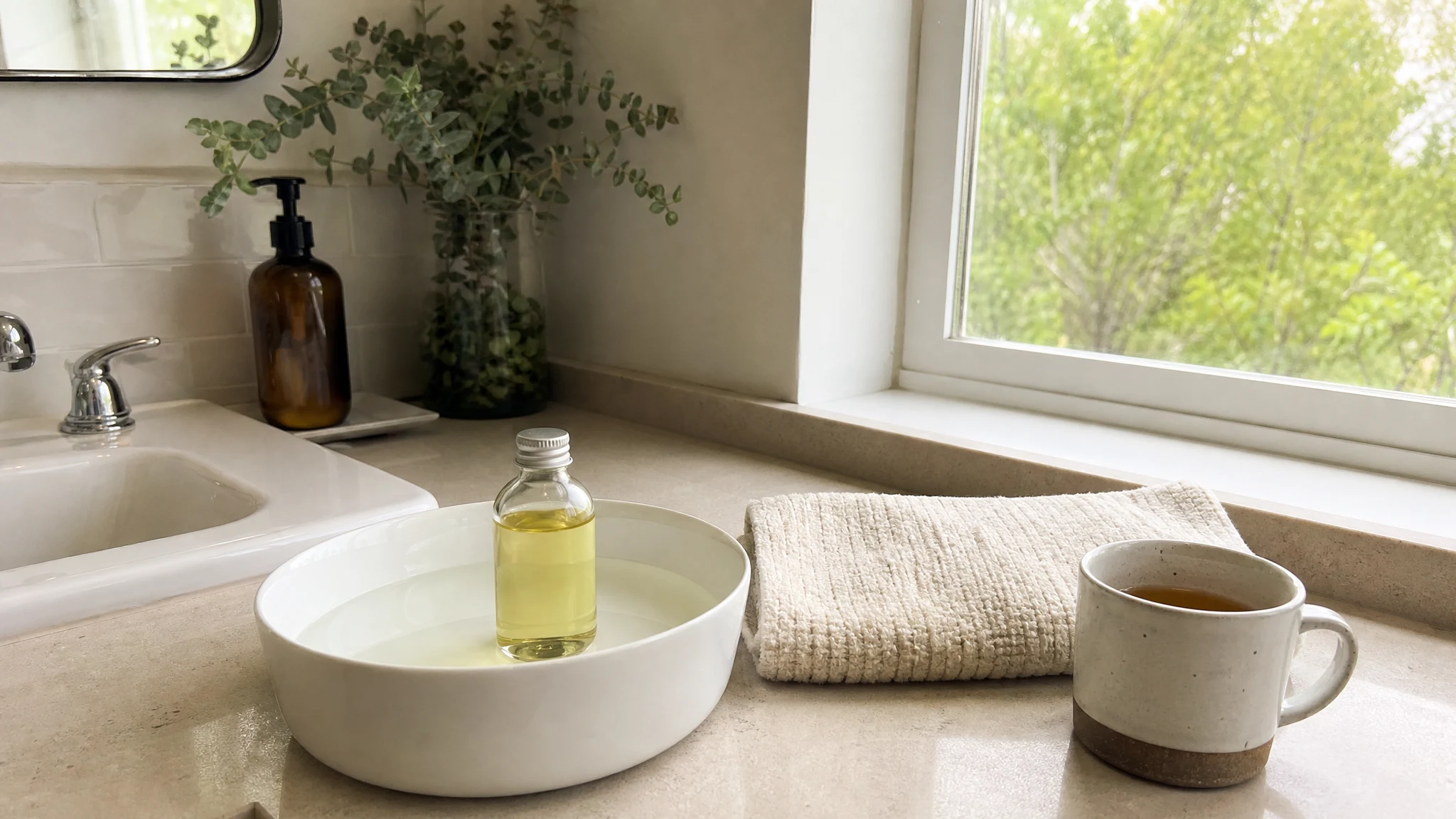
- Stand the bottle in a bowl of warm water for a few minutes. Think warm bath, not kettle: Australia's product safety regulator advises hot tap water rather than boiling for hot water bottles, and the same restraint suits oil.
- Dry the bottle, then test a drop on your wrist. It should feel comfortably warm, never hot.
We would skip the microwave, because it heats unevenly and it is easy to overshoot. A small bowl of warm water, a favourite mug or a sink works nicely, and while you wait you can get everything else ready. There is a second reason to be gentle: a 2021 study of lipid oxidation names temperature and heating time as the most important outside influences on how fast an oil oxidises. A short warm soak and then back to a cool cupboard is the kind way to treat it.
Route two: a lighter partner
If you want an oil that is thin every time, not just while warm, blend it. A spoonful of castor oil in a spoonful or three of a lighter oil is a very different texture, and our dilution guide sets out the ratios by area. We do not sell the lighter oils, so a pharmacy or beauty-supply shop is the place to look.
Route three: let the water help
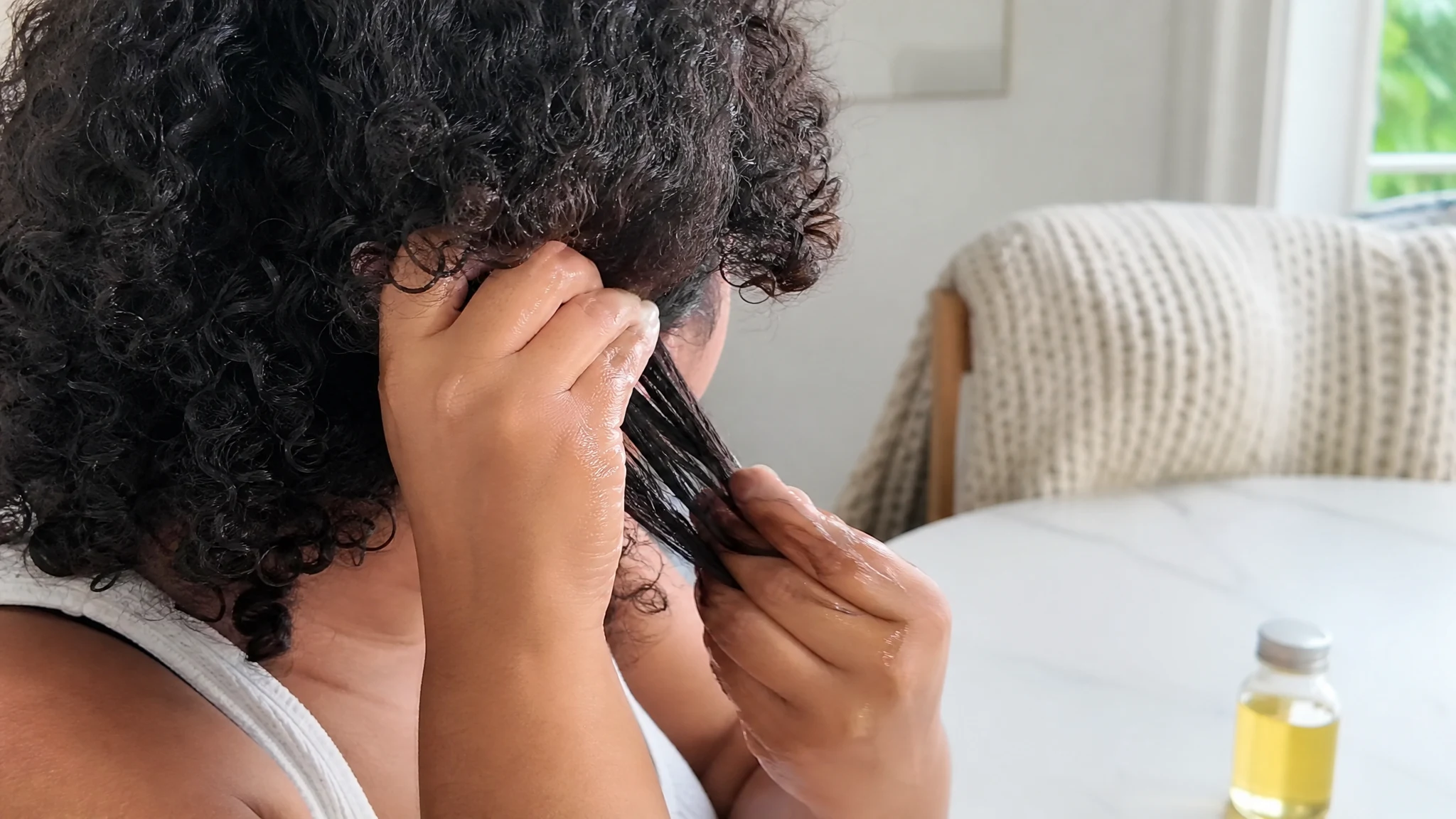
Oil and water do not mix, and NOAA's chemical database lists castor oil's water solubility as under 1 mg per ml, which is why a little oil goes a long way on a damp surface. The American Academy of Dermatology advises moisturizing right after a shower, and we would follow the same rhythm. On damp hair or freshly washed skin, a small amount spreads further than on dry skin, in our reasoning. This is a handling tip, not a test result, so give it a go and see what suits your hair and skin.
The tools help too
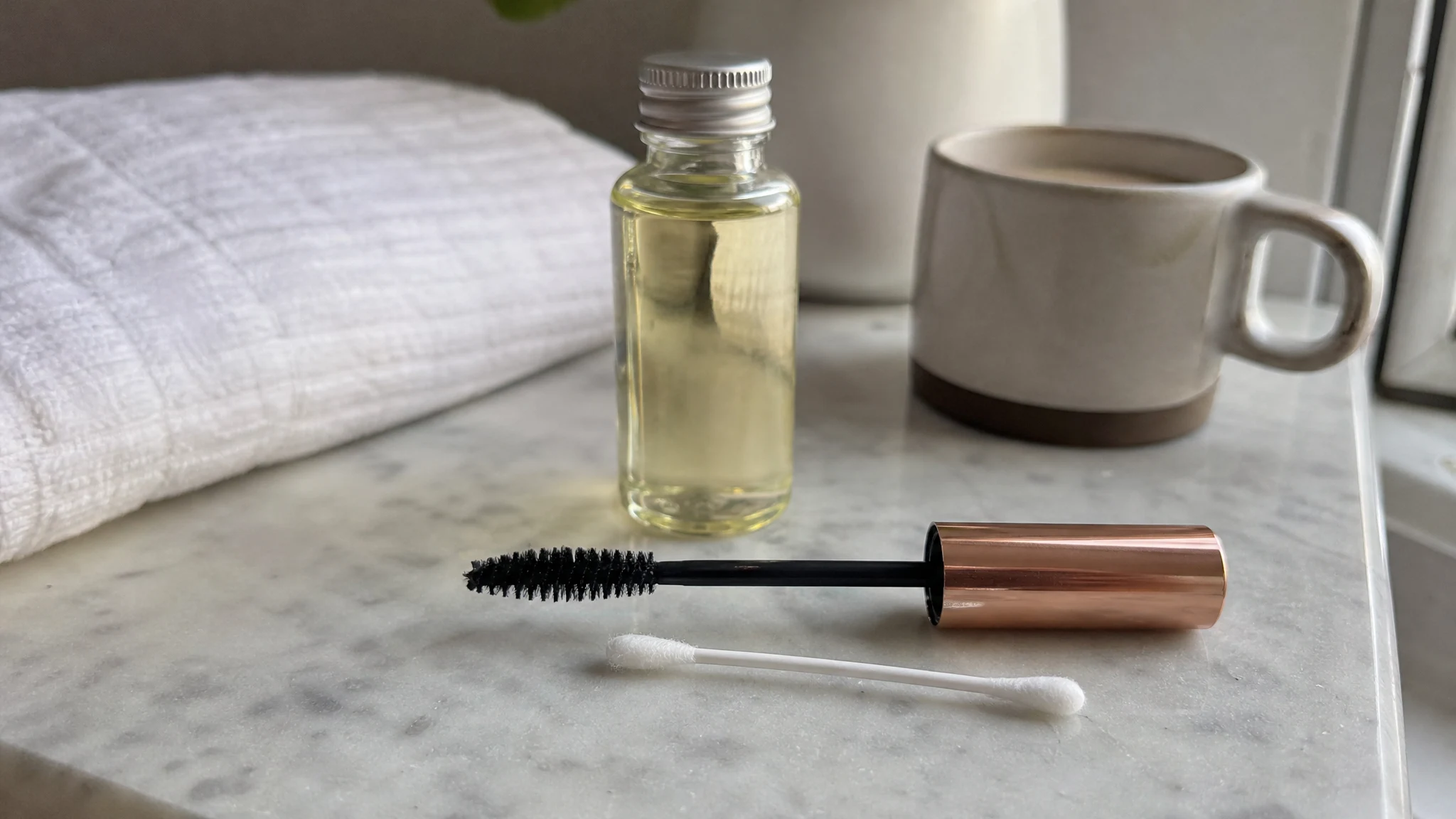
A small applicator bottle with a narrow tip lets you place oil exactly where you want it, and a clean spoolie or a wide-toothed comb helps move it through hair. We do not sell either, and you will find them at a beauty-supply shop or pharmacy. Wash tools between uses so old oil does not sit in them. Even a clean teaspoon works as a pouring spoon: scoop a little, warm it in your palm and put the cap straight back on.
Which route for which job
- Scalp and lengths: warm the bottle, then apply to damp hair in sections. How long you leave it is covered in how long to leave castor oil in hair, and washing it out is easier than people fear.
- Face: blend it with a lighter oil first, and start with a tiny amount.
- Body: warm the bottle and apply right after the shower.
Castor oil's slow, golden weight is part of its charm. Give it a little warmth and a little patience, and it spreads more willingly than you would expect.
Organic Castor Oil
Cold-pressed, hexane-free organic castor oil, from a 0.5 oz sample to bulk sizes.
From $13.99
Shop Organic Castor Oil →Sources & Further Reading
- Patel VR, Dumancas GG, Kasi Viswanath LC, Maples R, Subong BJJ. Castor Oil: Properties, Uses, and Optimization of Processing Parameters in Commercial Production. Lipid Insights, 2016.
- Yalcin H, Toker OS, Dogan M. Effect of oil type and fatty acid composition on dynamic and steady shear rheology of vegetable oils. Journal of Oleo Science, 2012.
- Stanciu I. Rheological Characteristics of Castor oil used as Biodegradable Lubricant. Oriental Journal of Chemistry, 2020.
- Grebenteuch S, Kroh LW, Drusch S, Rohn S. Formation of Secondary and Tertiary Volatile Compounds Resulting from the Lipid Oxidation of Rapeseed Oil. Foods, 2021.
- ACCC. Hot water bottles guide. Product Safety Australia.
- NOAA. CASTOR OIL. CAMEO Chemicals.
- American Academy of Dermatology. How to pick the right moisturizer for your skin.