How Castor Oil Is Made: From Bean to Bottle
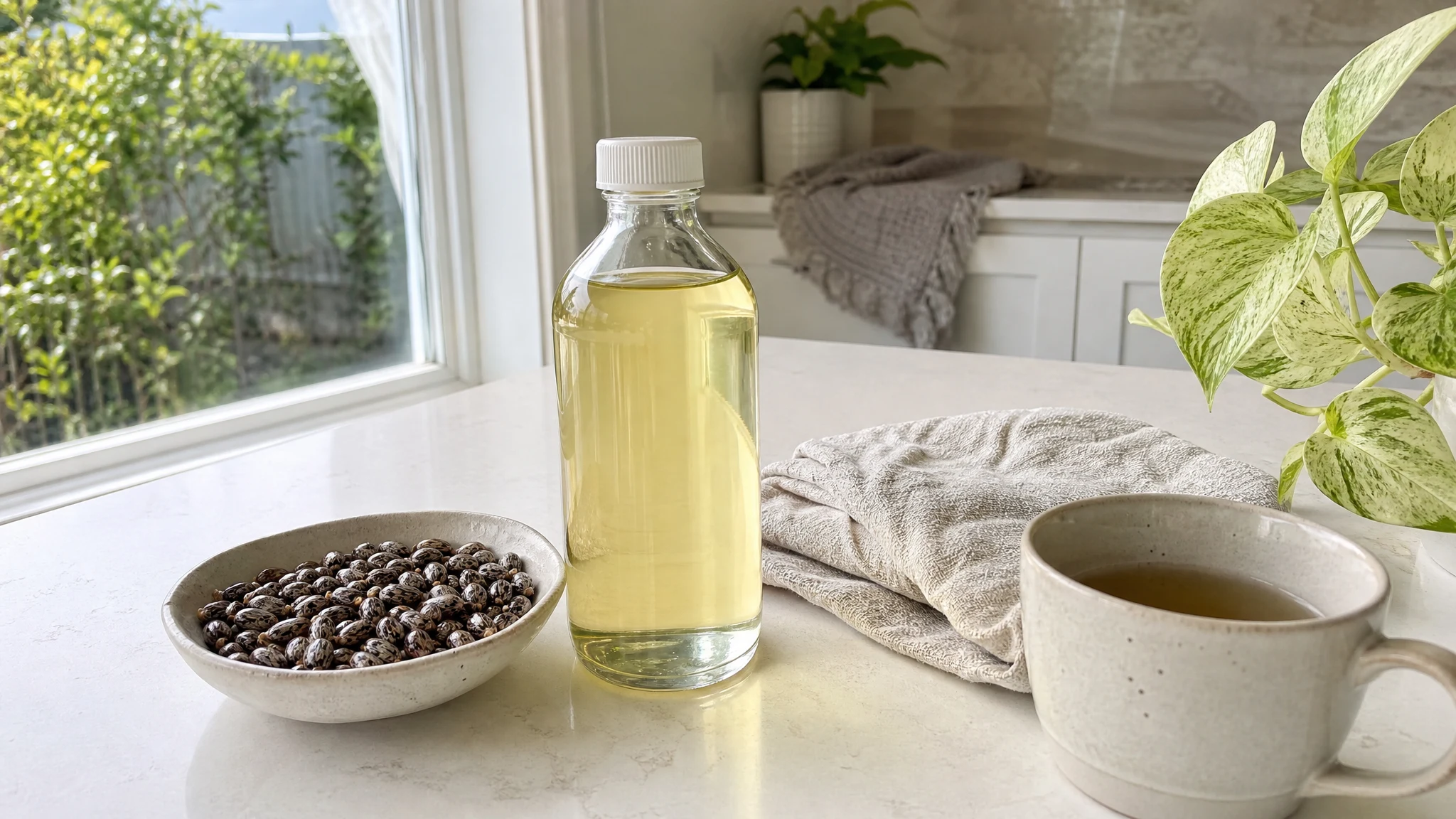
A castor bean looks like a small, glossy, mottled pebble, and it is hard to believe that a pale golden, honey-slow oil is hiding inside it. Getting from one to the other is a short chain of simple steps, and every step leaves a fingerprint on the oil you end up with.
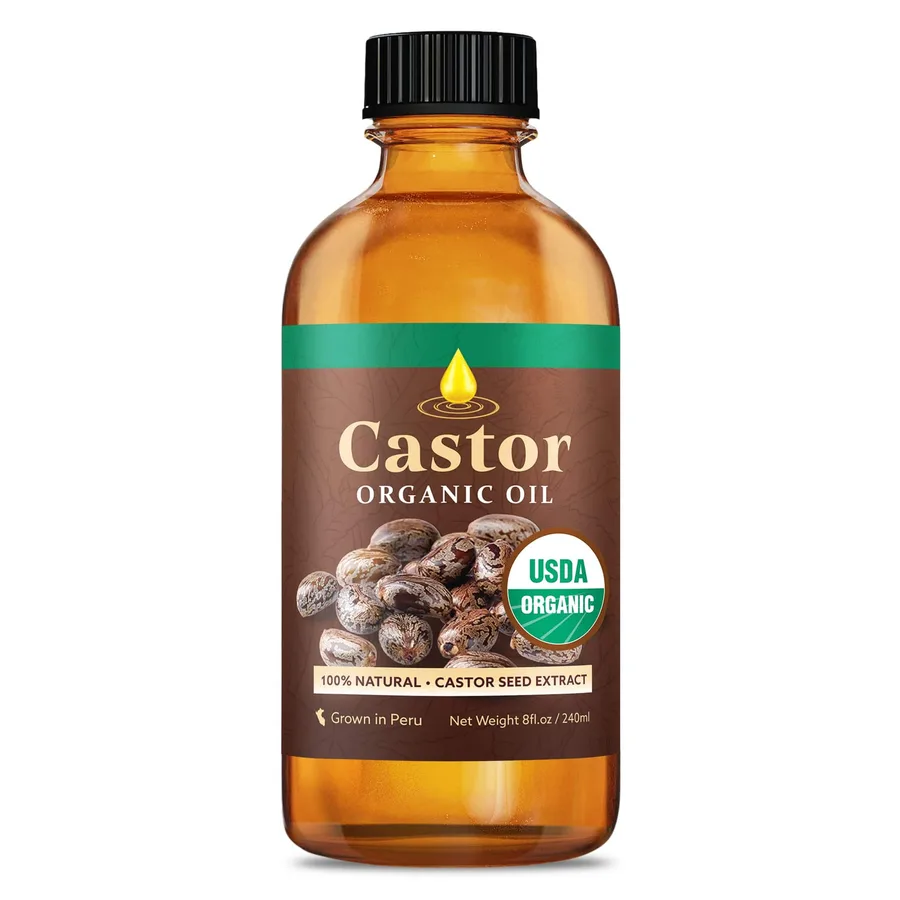
Organic Castor Oil
Cold-pressed, hexane-free castor oil, in sizes from a 0.5 oz sample to bulk drums.
From $13.99
Shop Organic Castor Oil →Start with a tall, leafy plant
Castor oil comes from the seeds of Ricinus communis, a broad-leaved plant that bears its seeds in spiky capsules. India is the world leader in castor seed and oil production and leads the international trade in the oil, according to a 2016 review of commercial processing in Lipid Insights. A 2021 review of castor oil chemistry names India, China and Brazil as the main producing countries.
For us it starts on organic farms, where the beans are hand-harvested. We began pressing oil in 2001, a handful of us at the start, and the shape of that first year has not changed much: the oil is only as good as what goes into the press.
Drying until the hull lets go
After harvest the seeds are laid out to dry until the hull splits. Then the hull has to come off, and there are two ways to do it: a mechanical dehuller, or by hand. Machines are preferred where the volume justifies them, according to the 2016 review.
It is an unglamorous step, and it is one of the reasons clean, light-coloured oil does not happen by accident.
Pressing without heat or solvents
Here is where the road forks. The same seed can become oil in two very different ways, and it is worth knowing which one is in your bottle.
- Cold pressing. Dehulled seed goes through a mechanical press and the oil is squeezed out, with no added heat and no chemical solvent. The 2016 review describes cold-pressed castor oil as lighter in colour, with lower acid and iodine values than solvent-extracted oil.
- Solvent extraction. Oil is dissolved out of the seed or the pressed cake with a solvent. A 2021 review states that more than 90 percent of the world's castor oil is obtained this way, which tells you something about where most of it ends up: industrial supply chains, where yield per ton is what counts.
We pick the first road. Our castor oil is pressed with no heat and no chemicals, which is why we can call it cold-pressed and hexane-free. If you want to go further into what that word does and does not mean, our post on cold-pressed versus refined castor oil picks it up from here.
Filtering, checking, bottling
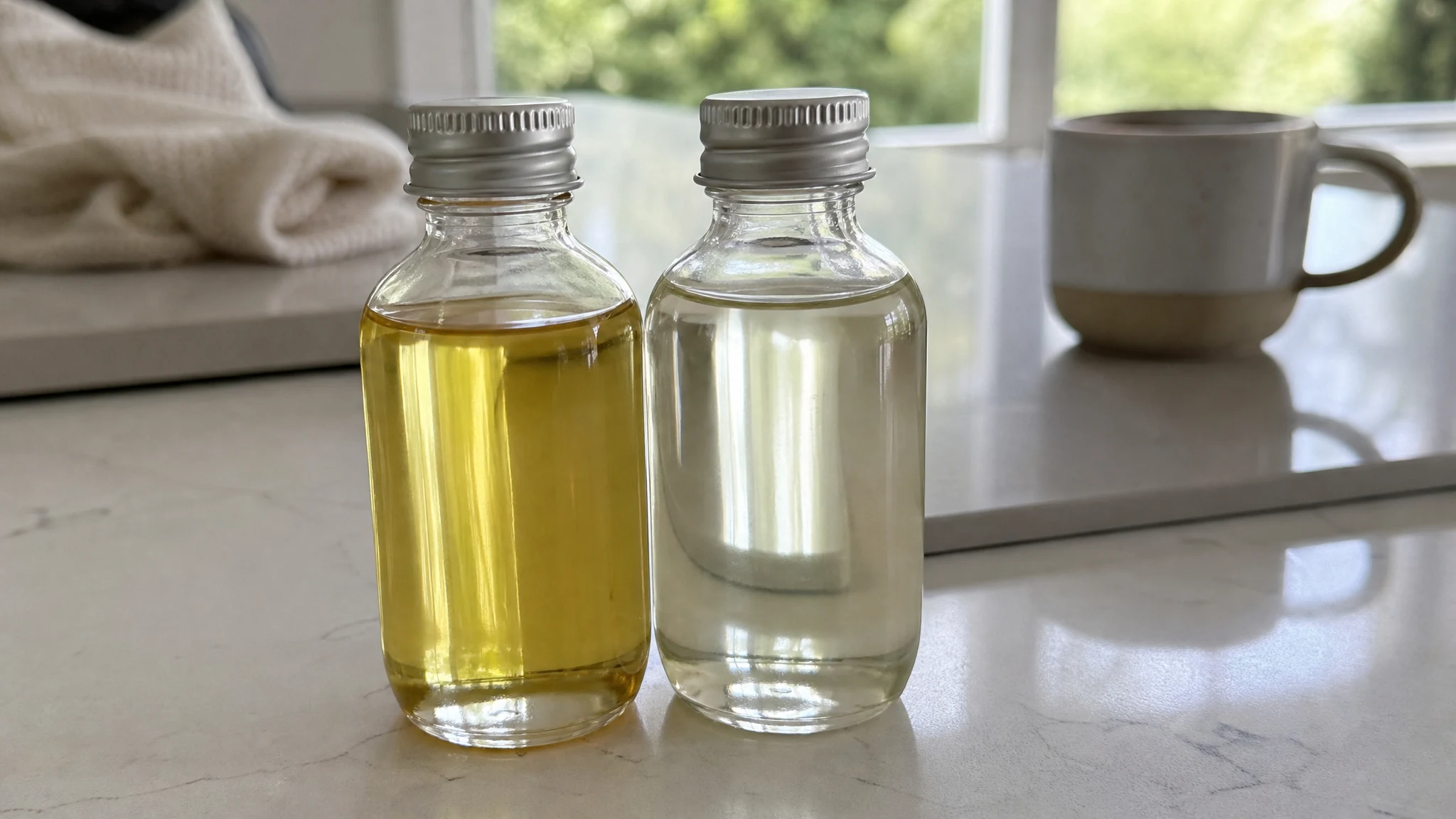
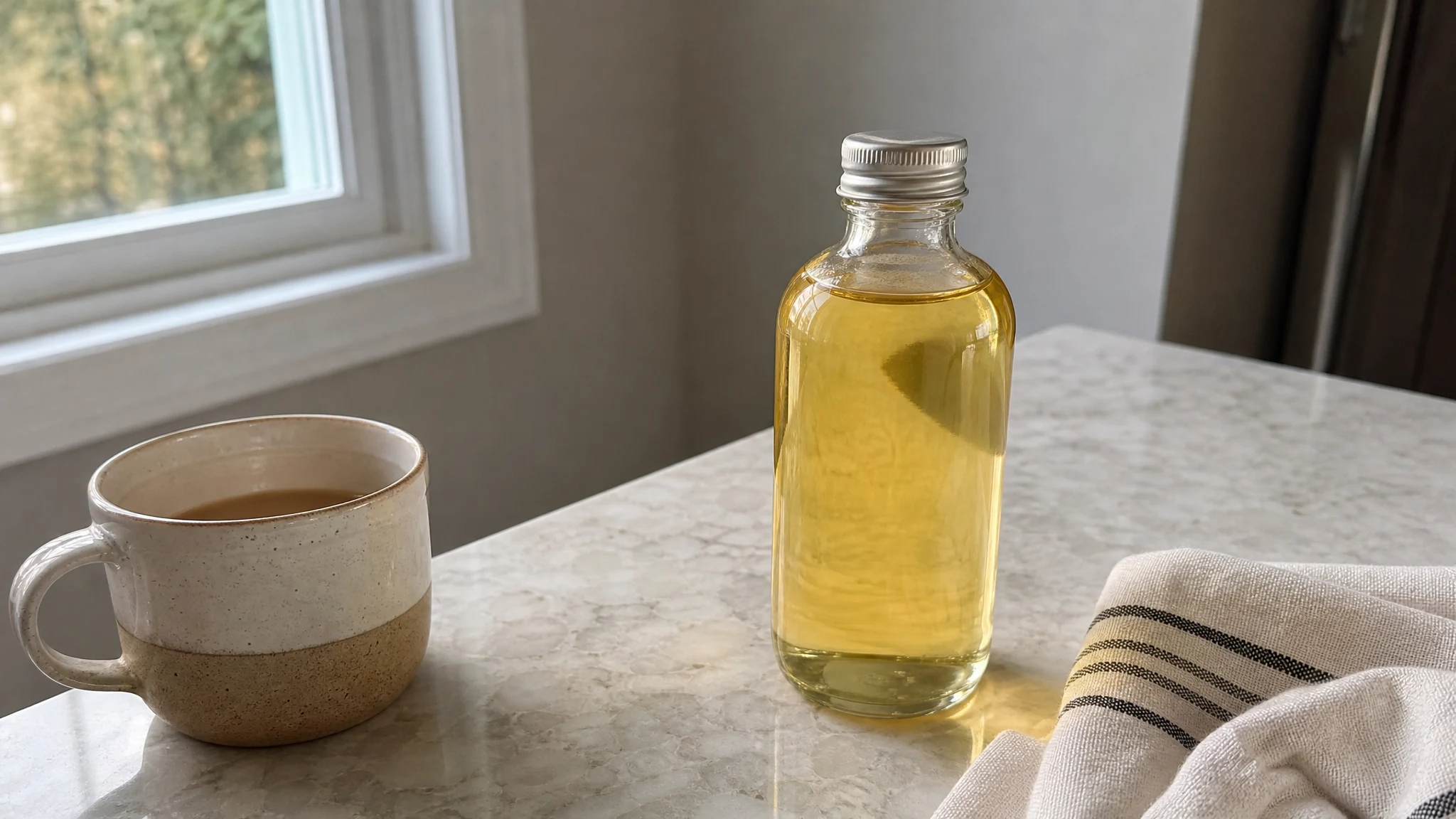
Fresh from the press the oil carries a little seed debris, so it is carefully filtered until it runs clear and pale gold. Every batch is checked for purity and cleanliness before it goes anywhere near a bottle. Then the bottling is done by hand, in glass.
There is only one ingredient in the bottle: castor oil. No fragrance, no dye, no filler. The sizes run from a half-ounce sample up to bulk drums, and every size is the same oil from the same lots, so the small bottle really is a fair preview of the big one.
What the process leaves behind
The oil that comes out of the press is almost entirely one fatty acid. A 2021 review puts ricinoleic acid at about 75 to 90 percent of castor oil, and the 2016 review says up to 90 percent. That single molecule is why the oil is so thick and slow, and why it feels so cushioned on dry skin. We give it a post of its own: ricinoleic acid, the fatty acid behind castor oil.
It also explains the character you will notice the first time you pour a little into your palm. The oil moves like cold honey, and it takes a moment to spread. That is not something to fix; it is simply what a high-ricinoleic oil does, and a small amount goes a long way.
Organic is a farming question, not a pressing one
Organic describes how the beans were farmed, while cold-pressed describes how the oil was made. They answer different questions, and an oil can claim one without the other. Our bulk listing states USDA organic certification, and if you ever buy castor oil from anyone, the sensible move is to ask for the paperwork behind the claim. Our guide to organic versus regular castor oil explains what to look for, and the basics of the oil itself live in what castor oil is.
Next time you see a bottle of castor oil on a shelf, you will know that behind the golden colour there is a plant, a dry hull, a press, and a decision about heat. That is the whole story, and we think it is a good one.
Organic Castor Oil
Cold-pressed, hexane-free organic castor oil, from a 0.5 oz sample to bulk sizes.
From $13.99
Shop Organic Castor Oil →Sources & Further Reading
- Patel VR, Dumancas GG, Kasi Viswanath LC, Maples R, Subong BJJ. Castor Oil: Properties, Uses, and Optimization of Processing Parameters in Commercial Production. Lipid Insights, 2016.
- Yeboah A, Ying S, Lu J, et al. Castor oil (Ricinus communis): a review on the chemical composition and physicochemical properties. Food Science and Technology, 2021.