Is It Real Castor Oil? Simple Home Checks and Their Limits
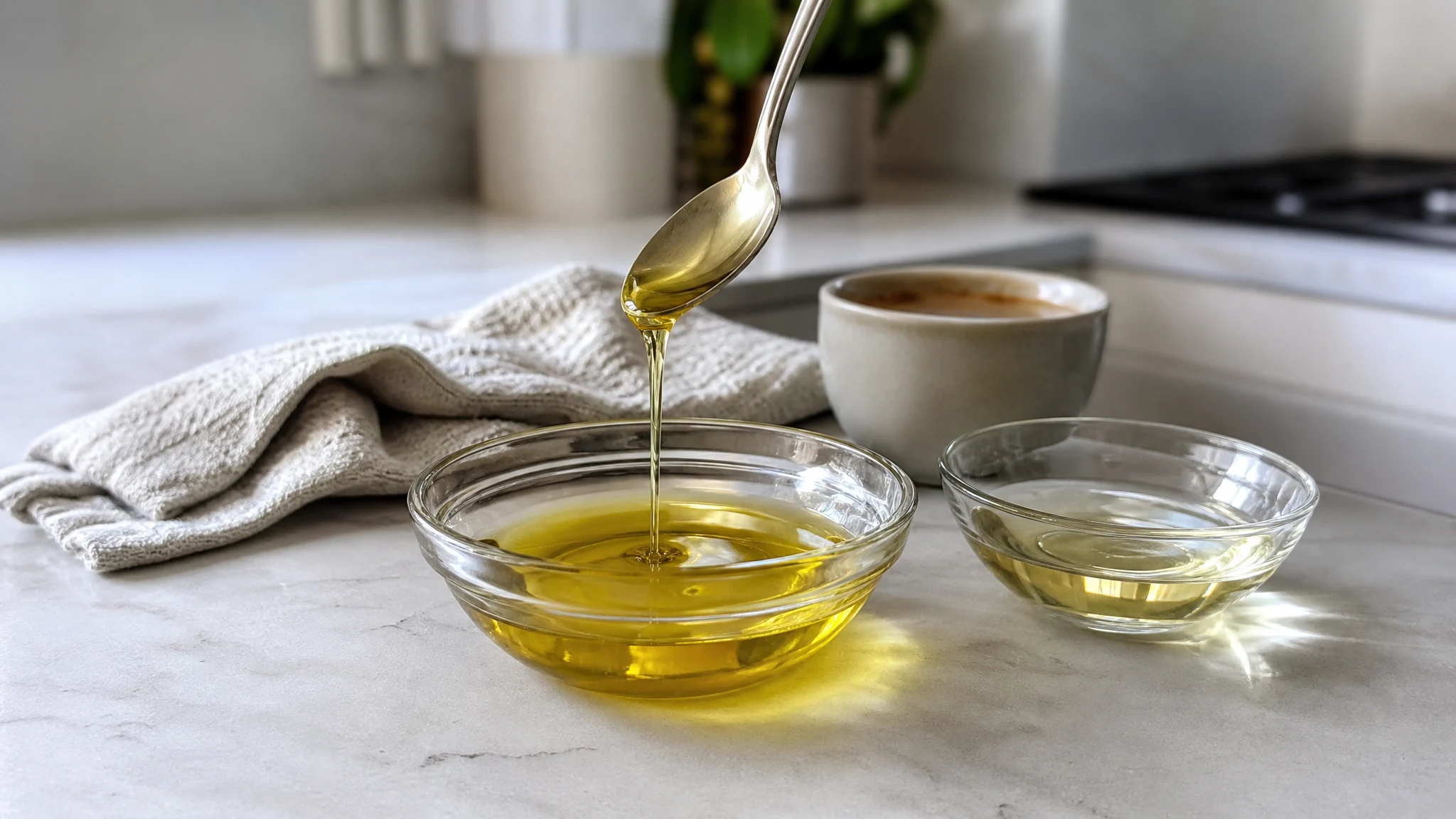
Pour a spoonful of real castor oil and watch it fall: it slides off in a slow, glossy ribbon that makes other oils look hasty. That slow pour is the best-known home check, and it is a decent clue. It is also only a clue, and knowing how far each check can take you saves a lot of guessing.
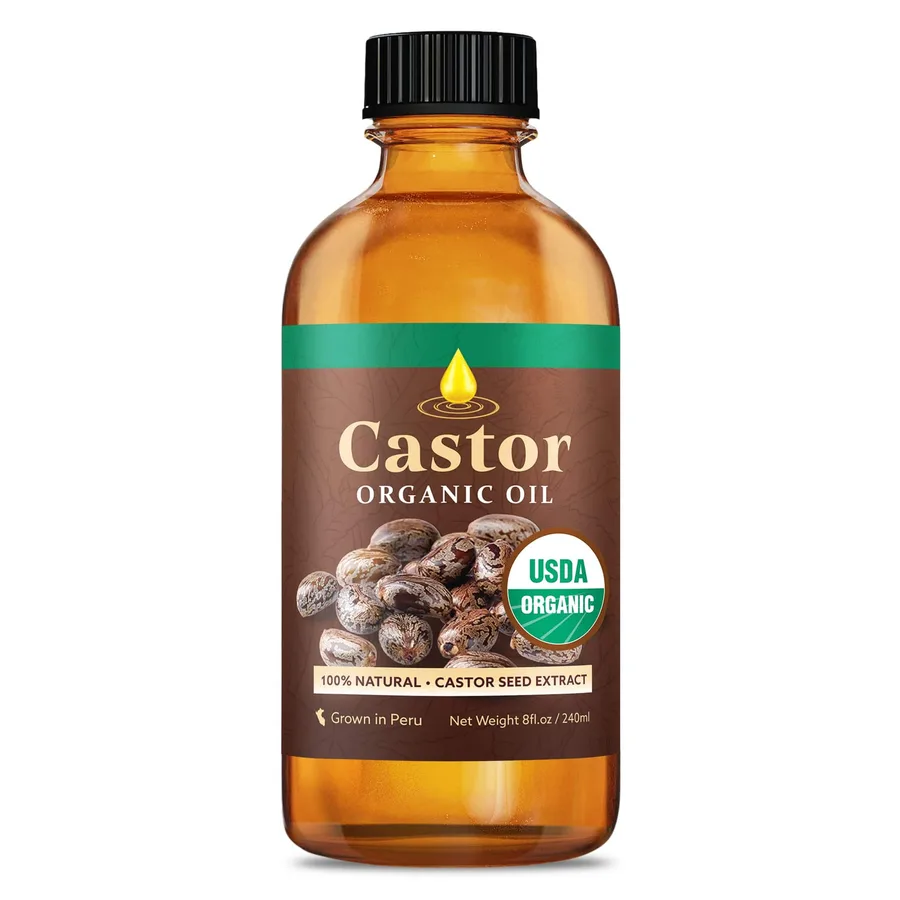
Organic Castor Oil
Cold-pressed, hexane-free castor oil, in sizes from a 0.5 oz sample to bulk drums.
From $13.99
Shop Organic Castor Oil →The pour
Castor oil is a viscous liquid, far heavier than the oils most of us keep in the kitchen. If you pour yours beside a spoonful of olive oil and the two move at the same speed, something is off. A slow pour tells you the oil is thick, but a thick oil could still be a blend that has been stiffened, so treat it as a first impression.
Colour and scent
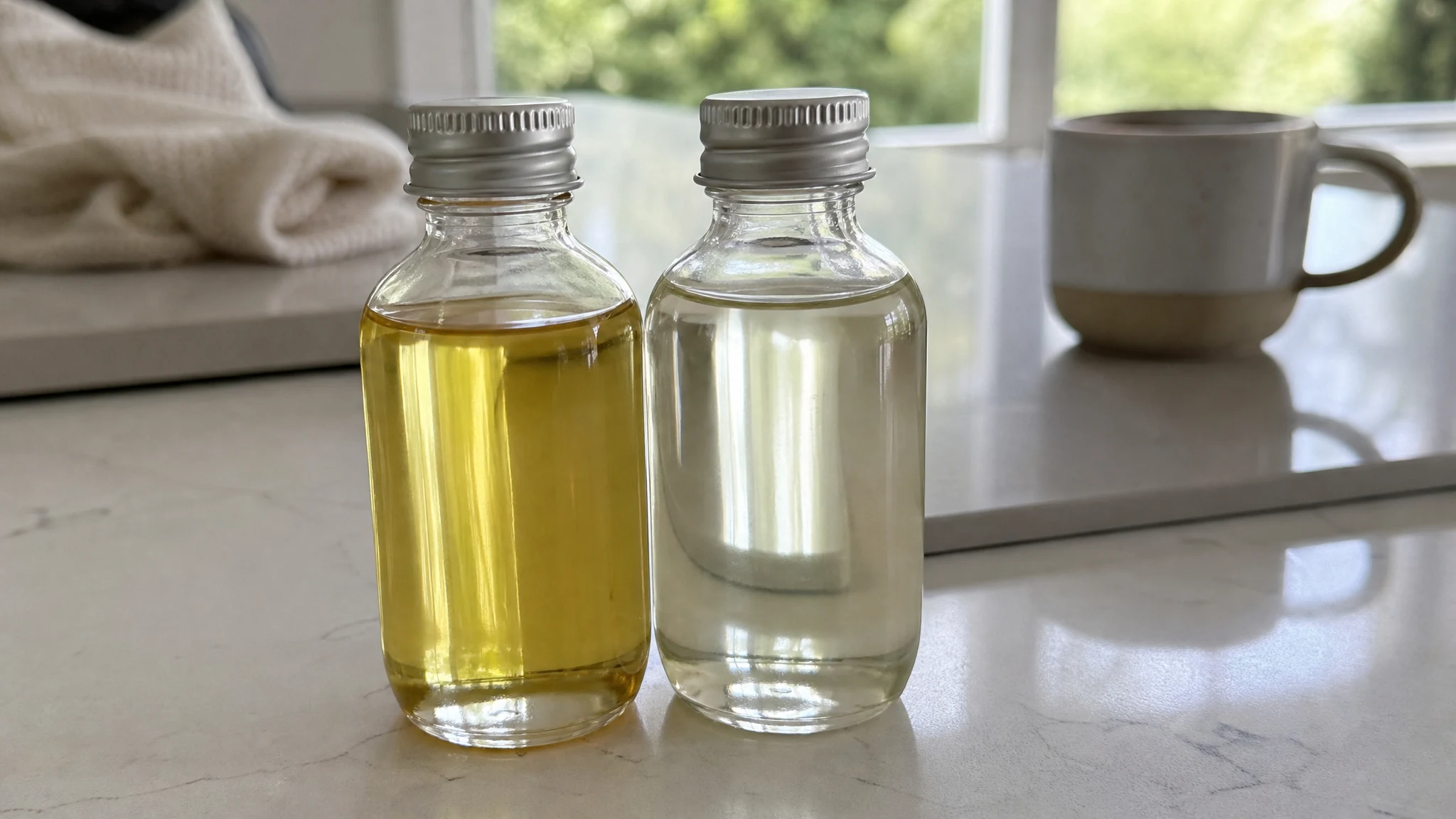
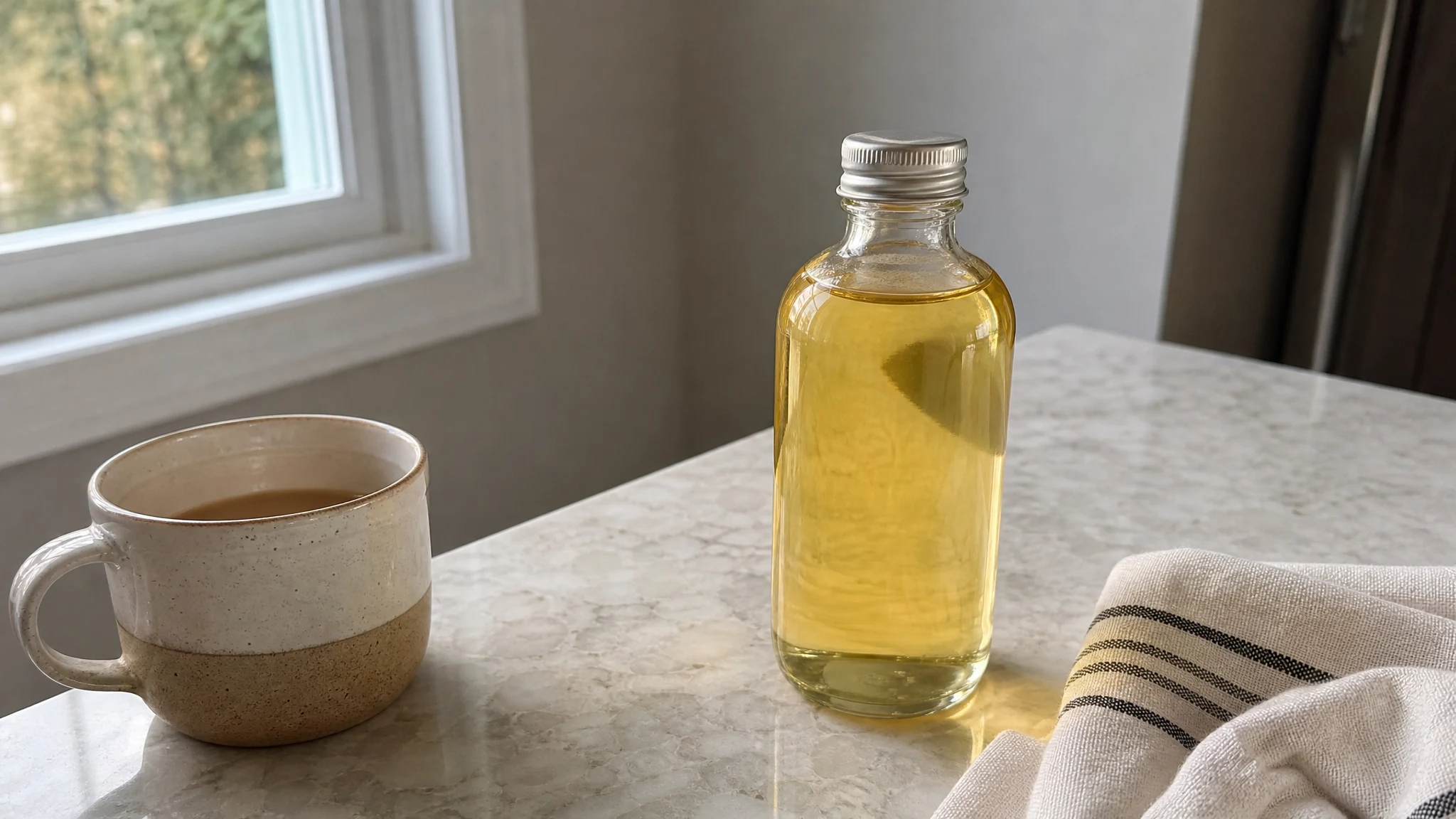
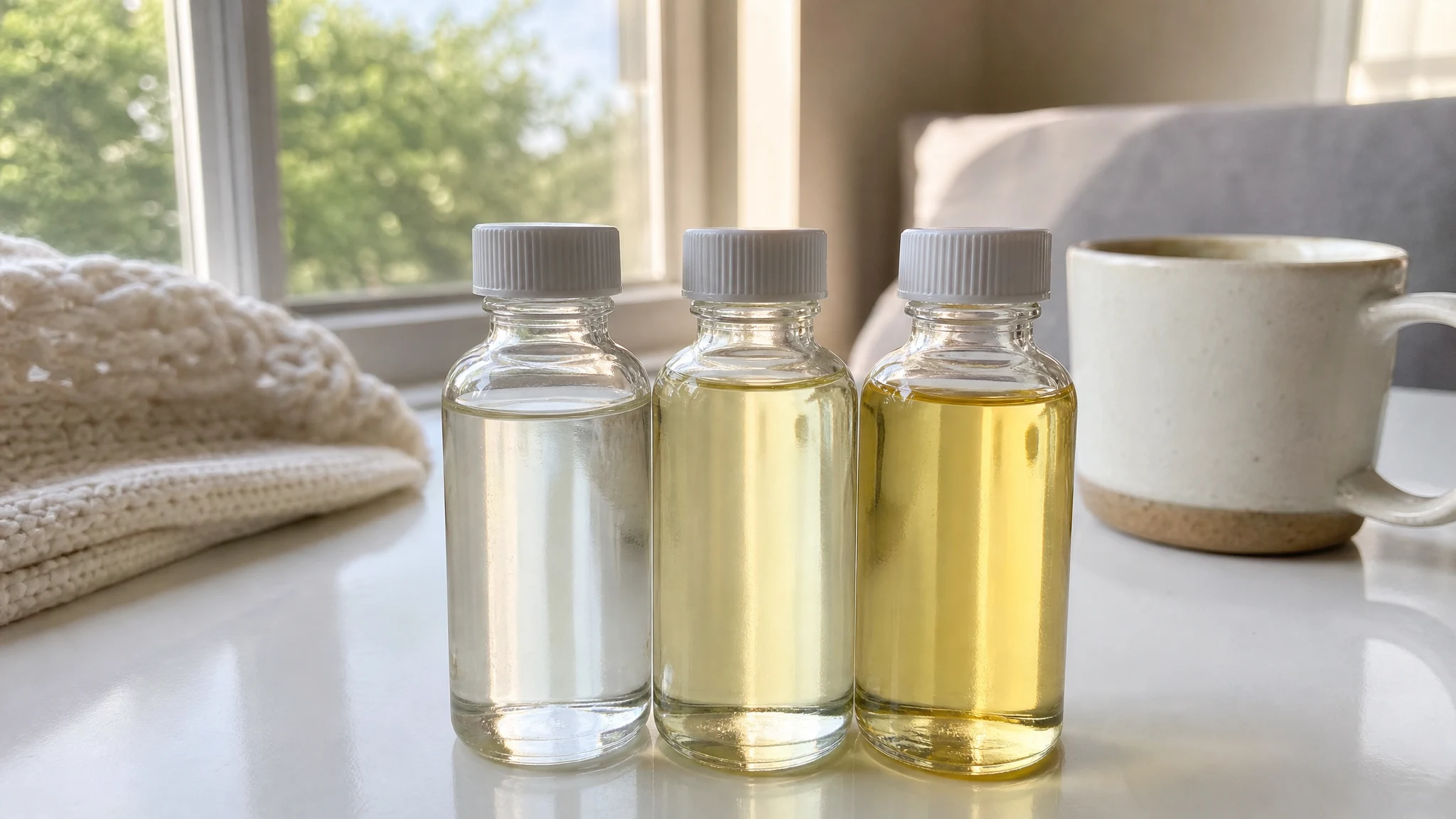
Reference data describe castor oil as a pale yellow or almost colourless, transparent liquid with a faint, mild odour. So a pale gold oil with barely any smell is what you expect. Notice, though, that almost colourless is also on that list: refined and bleached castor oil can be colourless or near colourless, so colour alone cannot tell you whether an oil was cold-pressed. The check works best as a way to spot an oil that is very dark, strongly scented or cloudy when it should not be.
The cold test
Popular advice says to put castor oil in the fridge and watch it. Here is what the numbers say: the melting point is listed as about 10 degrees Fahrenheit (around minus 12 Celsius), well below a household fridge. So a fridge makes castor oil stiffer and slower, but it will not turn it solid, and we would not use stiffness as a verdict either way. A cloud or a solid in the fridge does not prove anything we can source.
The water drop
A drop on water that beads up and floats is true of castor oil, which does not dissolve in water and is a little lighter than it. It is also true of almost every oil, so this tells you the bottle holds oil, not which oil.
Making a fair comparison
If you want to use the pour test properly, compare like with like. Keep both oils at the same room temperature, use the same spoon, and pour from the same height. A reference oil you already trust, such as a fresh bottle from a supplier that shows its paperwork, makes a better yardstick than memory. If your bottle runs noticeably thinner than the reference, or smells strongly of something other than a mild oil, set it aside and ask the seller about it.
What actually tells you
Home checks can raise a flag, but a label and paperwork are what answer the question. In the United States, FDA requires an ingredient list on cosmetics sold at retail, so look for one that reads castor oil and nothing else, with no added fragrance or fillers. Next look at the process words: cold-pressed and hexane-free tell you how it was made, and our cold-pressed vs refined castor oil guide explains them. If organic matters to you, organic vs regular castor oil covers what that claim means. And castor oil grades shows why a word like grade needs backing up.
Ask any supplier, us included, for the documentation behind their claims. Ours is organic cold-pressed castor oil with a single ingredient and nothing added, and you can see it on our product page.
Age can change how an oil smells and looks over time, which our castor oil shelf life guide looks at, so fresh, mild and pale is the profile to expect from a new bottle.
A good habit is to pour, look, smell and read, then trust the paperwork over any single trick, and enjoy the slow, glossy ribbon while you are at it.
Organic Castor Oil
Cold-pressed, hexane-free organic castor oil, from a 0.5 oz sample to bulk sizes.
From $13.99
Shop Organic Castor Oil →Sources & Further Reading
- CASTOR OIL | CAMEO Chemicals | NOAA
- Castor Oil: Properties, Uses, and Optimization of Processing Parameters in Commercial Production (Patel et al., Lipid Insights, 2016)
- FDA Authority Over Cosmetics: How Cosmetics Are Not FDA-Approved, but Are FDA-Regulated