Castor Bean Plant vs Castor Oil: What Pet Owners Should Know
Mention castor oil to someone with a dog and, sooner or later, the word ricin comes up. The worry is understandable, and it is mostly about a different material. The seed of the castor plant and the pale golden oil pressed from it are not the same thing, and the difference matters most to anyone with pets and a garden.
Organic Castor Oil
Cold-pressed, hexane-free castor oil, in sizes from a 0.5 oz sample to bulk drums.
From $13.99
Shop Organic Castor Oil →The plant is the one to watch
The castor plant, Ricinus communis, is listed by Pet Poison Helpline as toxic to dogs. The page says the seed holds the highly potent toxin ricin, and that chewing and swallowing one or two seeds can lead to severe gastrointestinal signs, organ failure and death. A study of 98 dog cases reported to the ASPCA's poison control centre found the most common signs were vomiting, depression and diarrhea, and that the severity may depend on whether the beans were chewed or swallowed whole. The ASPCA's poisonous plants pages carry its 24-hour animal poison hotline for any suspected exposure.
So if you have a castor plant in your yard, or neighbours do, the plant itself is the thing to manage. Seed pods are the part to keep dogs and cats away from. If a pet has chewed a seed or any part of the plant, call a veterinarian or an animal poison line straight away: Pet Poison Helpline at (855) 764-7661, or the ASPCA Animal Poison Control Center at (888) 426-4435.
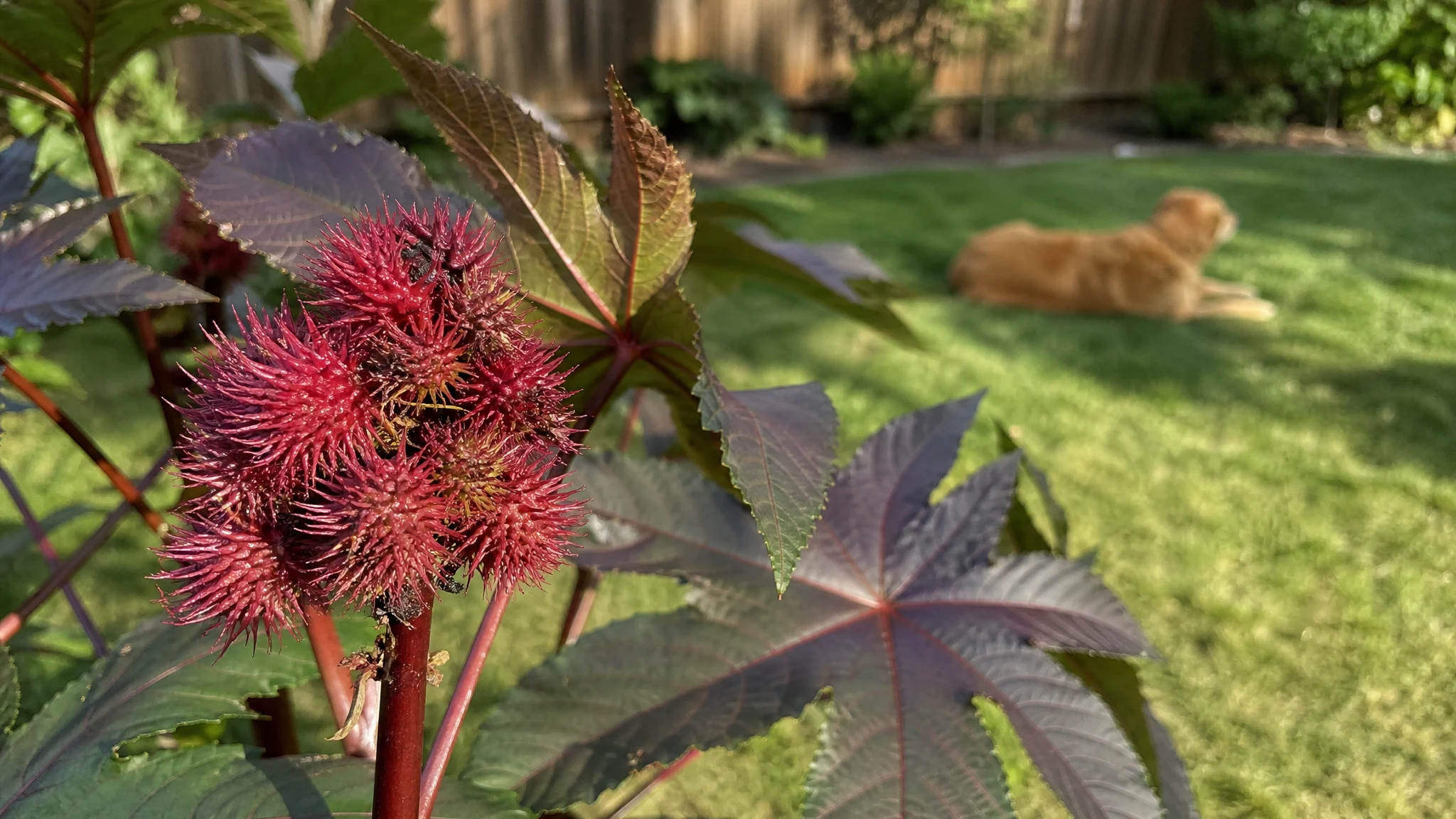
We understand why this question comes up so often. Castor plants are striking, with big star-shaped leaves and spiky seed pods, and people plant them as garden showpieces without knowing much about them. A pet owner who has read a frightening headline is right to ask, and the clearest answer is to separate the three things that get mixed up: the plant in the ground, the leftover meal from pressing, and the finished oil.
What stays in the seed meal
Ricin is a protein, and the CDC describes it as found naturally in castor beans and as part of the waste material, the mash, left over after castor oil is made. That is the key to the confusion: the oil is pressed out, and the mash is what remains. A 2011 review of real poisoning cases from veterinary and human medicine states the point directly: ricin is a water-soluble protein and is therefore not extracted into the castor oil. We are quoting what the review says, not offering our oil as a test case.
The same review also covers the other side of the story, and it is worth passing on to gardeners. After the oil is pressed out, the leftover press cake can be used as organic fertilizer, and it documents groups of dog poisonings after dogs ate fertilizer made from insufficiently treated castor meal, including nine dogs in Germany in 2010. If you buy fertilizer or soil conditioner, check what is in it before you spread it where a dog can reach.
How the oil is made, in one breath
The seeds are pressed, the oil is filtered, and the meal goes its own way. We press ours cold, without heat or solvents, and our post on how castor oil is made walks through the steps. Nothing about that process turns the oil into the seed, or the seed into the oil.
The caution that still applies
Separating the seed from the oil does not make the oil a pet product. Pets lick, and our advice is unchanged: keep bottles up high, and keep oil off animals unless your vet says otherwise. We lay that out in castor oil and dogs and castor oil and cats.
If you are not sure what is planted in your yard, a local garden centre or extension office can help you identify it, and a quick photo makes that easy. When in doubt, keep pets away from any plant you cannot name. It is a small habit that costs nothing.
A garden note
Castor oil also turns up in the yard as a mole repellent, a use that has little to do with the plant's seeds. UC Integrated Pest Management says commercial castor oil repellents show some efficacy for eastern moles, and that trapping is the most dependable method. We go through the details in castor oil for moles and gophers.
The short version for a worried pet owner: the plant and its seeds are the hazard, the pressed oil is a different material, and in either case your vet is the person to ask.
Organic Castor Oil
Cold-pressed, hexane-free organic castor oil, from a 0.5 oz sample to bulk sizes.
From $13.99
Shop Organic Castor Oil →Sources & Further Reading
- Castor Bean Is Toxic To Dogs | Pet Poison Helpline (the castor plant entry; Pet Poison Helpline 24-hour line)
- Evaluation of castor bean toxicosis in dogs: 98 cases (Journal of the American Animal Hospital Association, 2000)
- Poisonous Plants (ASPCA)
- Ricin | Chemical Emergencies | CDC
- Ricinus communis intoxications in human and veterinary medicine-a summary of real cases (Worbs et al., Toxins, 2011)
- Moles (UC Integrated Pest Management)