Is Castor Oil Comedogenic? What the Rating Really Says
The comedogenic scale looks wonderfully tidy: ingredients ranked from 0 to 5, with the low numbers meaning they should leave your pores alone. People quote it as if it were a law of nature. It is closer to a useful rumour with a good pedigree, and understanding where it came from makes the number much easier to use.
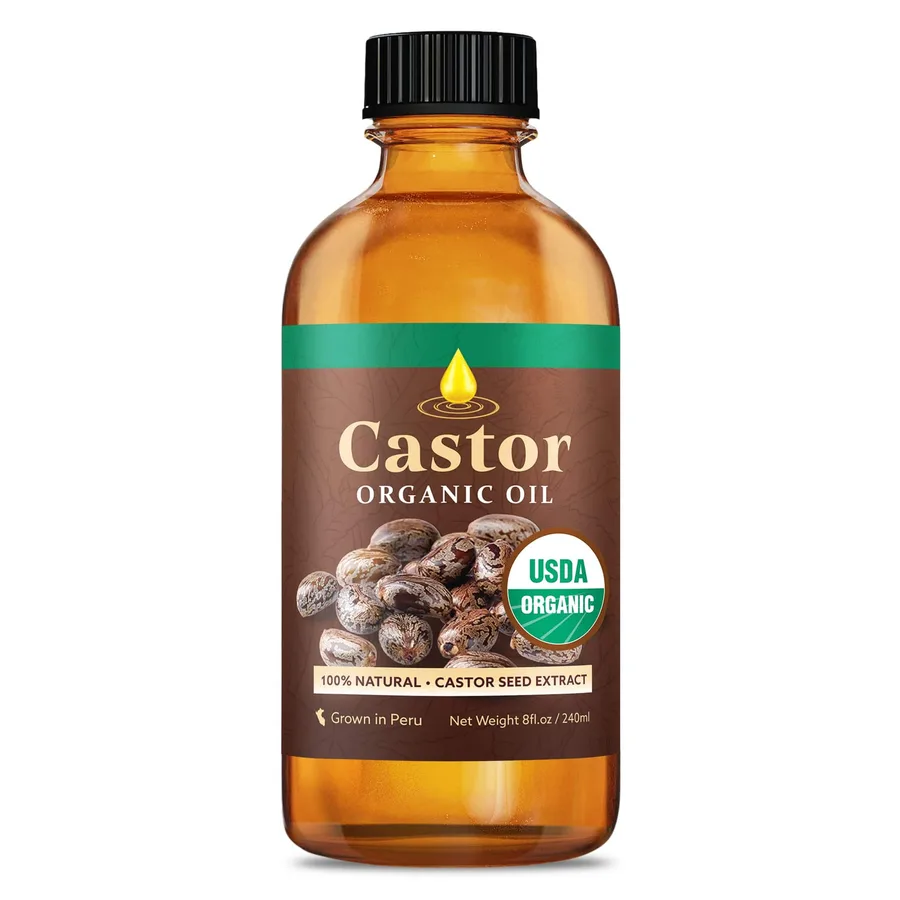
Organic Castor Oil
Cold-pressed, hexane-free castor oil, in sizes from a 0.5 oz sample to bulk drums.
From $13.99
Shop Organic Castor Oil →A scale that started with rabbit ears
The numbers come from the rabbit ear test, developed by the dermatologists Albert Kligman and James Fulton in the 1970s. A substance is applied to the inner ear of a rabbit for a few weeks, and researchers look at whether the pores block. An ingredient scores 0 if nothing happens, up to 5 if it clearly does. Fulton and colleagues later published ratings for many common ingredients in the Journal of the Society of Cosmetic Chemists in 1989.
Rabbit ears respond faster than human skin, which produced false alarms, and petrolatum was a famous one. In 2007, the researchers Mirshahpanah and Maibach wrote that the model is only valuable for distinguishing absolute negatives. In other words, it is better at saying which ingredients are probably fine than at proving which ones cause trouble.
Where castor oil lands
On the popular charts that reprint these ratings, castor oil sits at the low end of the scale, listed at 0 to 1. That is a perfectly good clue. We want to be careful, though: those charts are copies of copies, and the rating reflects a lab test on rabbits, not how your face will feel after a week of use.
Why the number is only a clue
Three things weaken the idea that a rating predicts what will happen to you.
- Finished products are not raw ingredients. In 2006, Draelos and DiNardo tested finished cosmetic products rather than raw ingredients, with six volunteers wearing patches on the upper back three times a week for four weeks. Their conclusion was that finished products using comedogenic ingredients are not necessarily comedogenic. The ingredient list alone does not settle it.
- Amount and blend matter. The tests apply an ingredient neat. A few drops in a blended oil or lotion is a different experience, which is how most people use castor oil.
- Skin varies. The same oil can feel great on one person and heavy on another. A chart cannot know which you are.
How we would use a rating
We treat it like a weather forecast for a day trip: worth glancing at, never worth cancelling the trip over. If you are choosing between two oils, a low number is a small point in favour. It does not replace the simplest test there is, which is trying a little on a small area. Our patch test guide shows how, and a few days of watching one small patch tells you more than any chart.
The American Academy of Dermatology suggests looking for moisturizers labelled non-comedogenic, which it says means they do not block pores. Castor oil is a single ingredient and carries no such claim, so we leave it to you to decide whether it suits your skin. Our honest view: a rich oil like ours is lovely on hands, elbows and heels, and on the face it works best in small proportions. That is the idea behind our oil cleansing method, and our guide to castor oil for skin shows where else it fits.
If you choose oils carefully
If your skin is acne-prone, the person to ask is a dermatologist, who can tell you what suits you far better than a table of numbers. For the rest of us, a lighter partner oil is an easy way to enjoy a heavy one, and our post comparing castor oil and jojoba oil gives you something to compare it with.
Numbers are comforting, but your own skin is the final word, and it is always happy to be asked.
Organic Castor Oil
Cold-pressed, hexane-free organic castor oil, from a 0.5 oz sample to bulk sizes.
From $13.99
Shop Organic Castor Oil →Sources & Further Reading
- Lab Muffin Beauty Science, How to Use Comedogenicity Ratings
- Draelos ZD, DiNardo JC, A re-evaluation of the comedogenicity concept, Journal of the American Academy of Dermatology, 2006;54(3):507-512 (Europe PMC record).
- American Academy of Dermatology, How to pick the right moisturizer for your skin