How to Dilute Castor Oil: Carrier Ratios for Face and Body
Pour castor oil into a spoon and you will notice it takes its time, a slow golden ribbon that clings to the metal. That unhurried quality is the best argument for blending it with something lighter, and the good news is that the arithmetic is as easy as mixing squash.
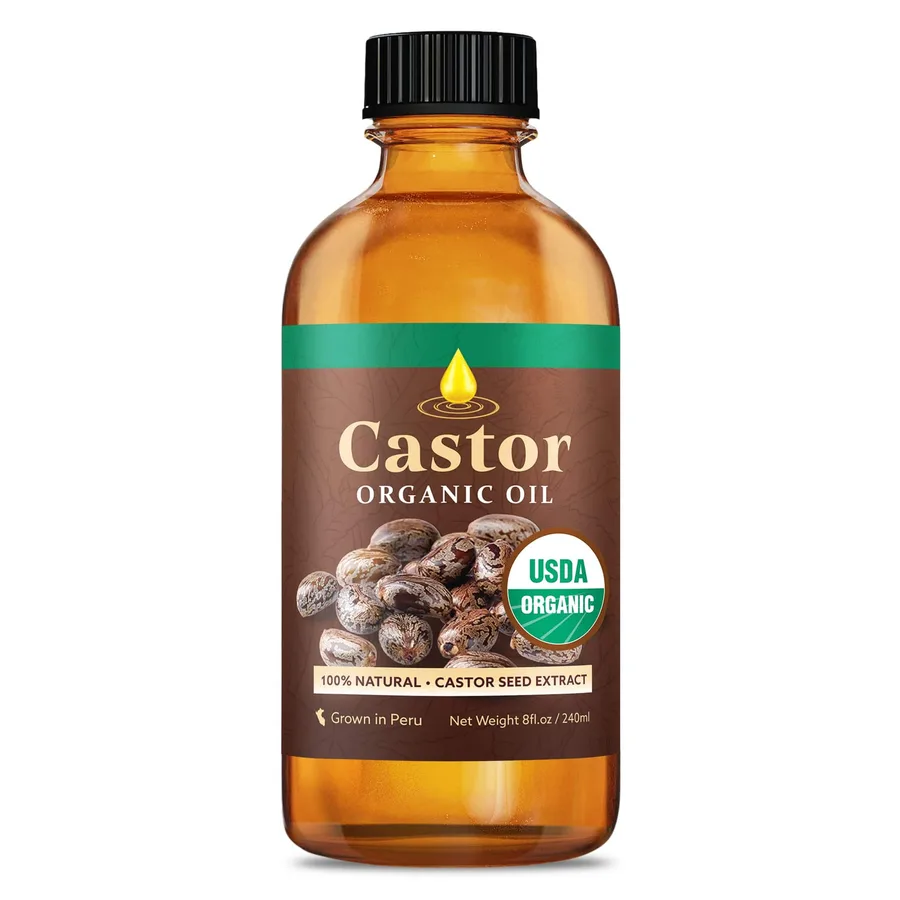
Organic Castor Oil
Cold-pressed, hexane-free castor oil, in sizes from a 0.5 oz sample to bulk drums.
From $13.99
Shop Organic Castor Oil →We like to think of it the way you would think of coffee: some people want it strong and some want it mild, and neither is wrong. A little castor oil in a lighter oil keeps its glossy, cushioned feel while making it much easier to spread on a busy morning.
How much heavier is it, really?
A 2021 review of castor oil's properties reports a viscosity of 9.3 to 10 poise at 25 degrees C, which is roughly 930 to 1,000 mPa s. A 2012 rheology study measured olive oil at 61.2 mPa s and sunflower oil at 48.2 mPa s at the same 25 degrees C. These are different studies on different samples, so take the comparison loosely, but it suggests castor oil is something like fifteen to twenty times more viscous than those oils. That is not a flaw to fix. It is the reason castor oil feels so cushioning, and also the reason a spoonful of it will not spread across your whole forearm unaided.
Blending by parts
Measure by spoon, not by guesswork. A level teaspoon is about 5 ml, so one teaspoon of castor oil plus three teaspoons of a lighter oil makes about 20 ml of blend that is one quarter castor oil. Everything below is plain arithmetic offered as a starting point for you to adjust, not a recipe we have tested.
| Where | Starting blend (castor : lighter oil) | Share of castor |
|---|---|---|
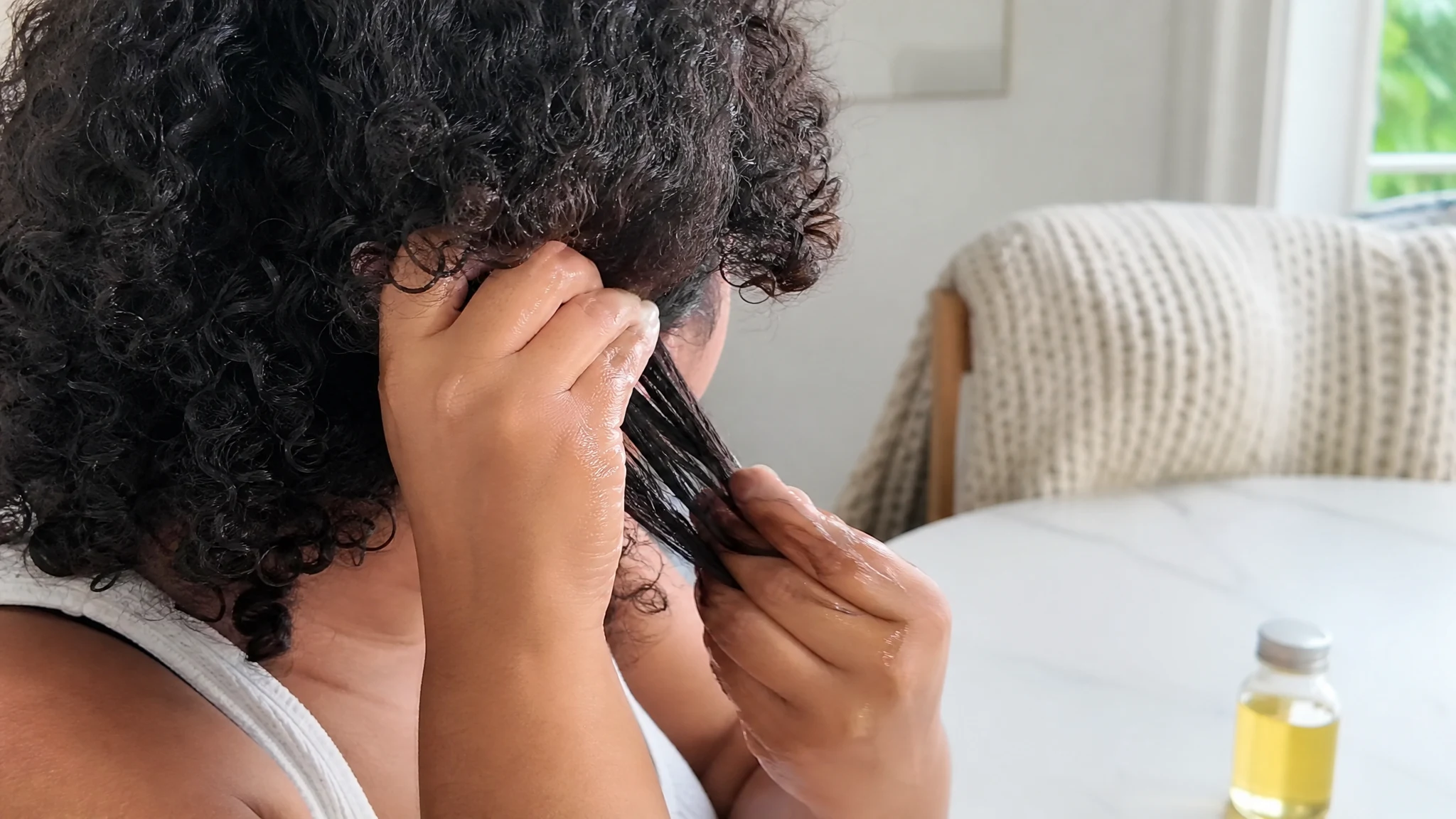
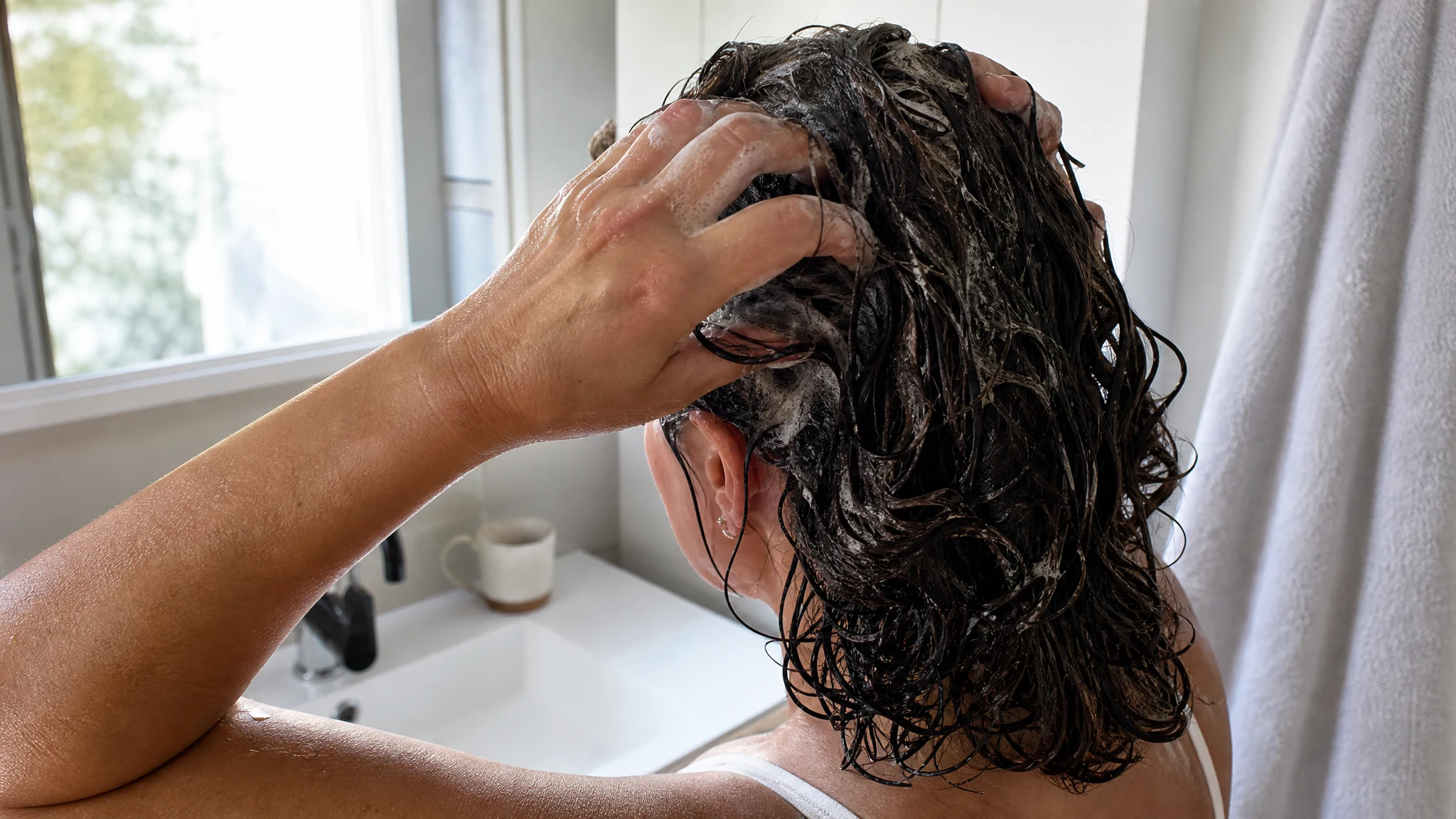
| Hair and scalp, before shampoo | 1 : 1 up to 1 : 3 | 50% down to 25% |
| Body, after a shower | 1 : 3 to 1 : 4 | 25% to 20% |
| Face | 1 : 9 | 10% |
| Around the eyes | Same as face, a tiny amount | 10% |
Why the face gets the lightest mix: the skin there is more reactive, and the Cleveland Clinic advises using a small amount around the eyes and patting with a ring finger instead of pulling or rubbing. Keep oil out of the eyes themselves, and do a patch test first, as our patch test guide describes.
Picking the lighter oil
We sell only castor oil, so you will find the partner oils at a pharmacy or a beauty-supply or craft shop. Two have documented traits worth knowing:
- Jojoba is a liquid wax rather than a fat or an oil, with low viscosity and a structure similar to skin sebum, according to a 2024 review. It is the usual lightweight partner for the face.
- Coconut melts at 78 degrees F according to Harvard's Nutrition Source, so in a cool room it is firm and needs a moment in your warm hands. Lab Muffin's comedogenicity page rates it a 4 on a 0 to 5 scale, which is why we would keep it for hair and body and out of a face blend. Castor oil sits at 0 to 1 on the same page; our post on the comedogenic rating explains how little weight those numbers deserve.
For hair, a 2003 study found coconut oil was the only one of three oils tested (mineral, sunflower, coconut) to reduce protein loss in hair. Castor oil was not part of that study, so read it as a reason coconut is a popular hair partner, not as a verdict on blends. More in our roundup of oils for hair.
Adjust for your skin
The American Academy of Dermatology notes that ointments are the thickest and most effective moisturizers for dry skin, and that you should apply moisturizer right after a shower. So if your skin runs dry, lean towards the castor-heavy end of each range and apply to damp skin. If your skin is oily or you are wary of heavy products, start at a lower share, such as 1 : 9 on the body, and move up slowly. Our guide to castor oil for skin goes deeper on routines, and castor oil for hair does the same for the scalp and lengths.
Still too thick?
If the blend still feels heavy, change the order of things before changing the ratio: warm the bottle and apply to damp skin, as we cover in how to thin castor oil. Make small batches, a teaspoon or two at a time, and keep the blend in a clean closed container.
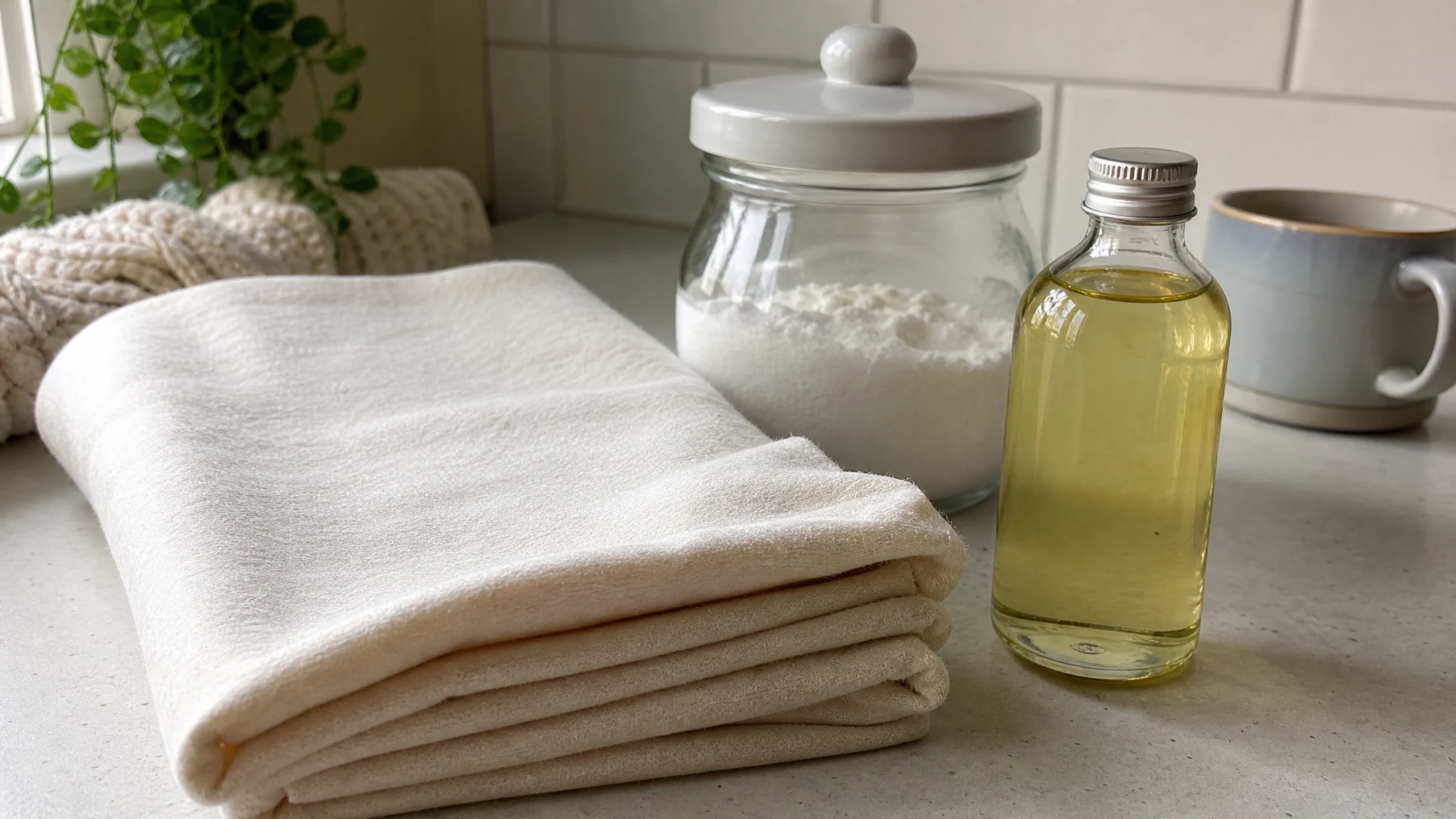
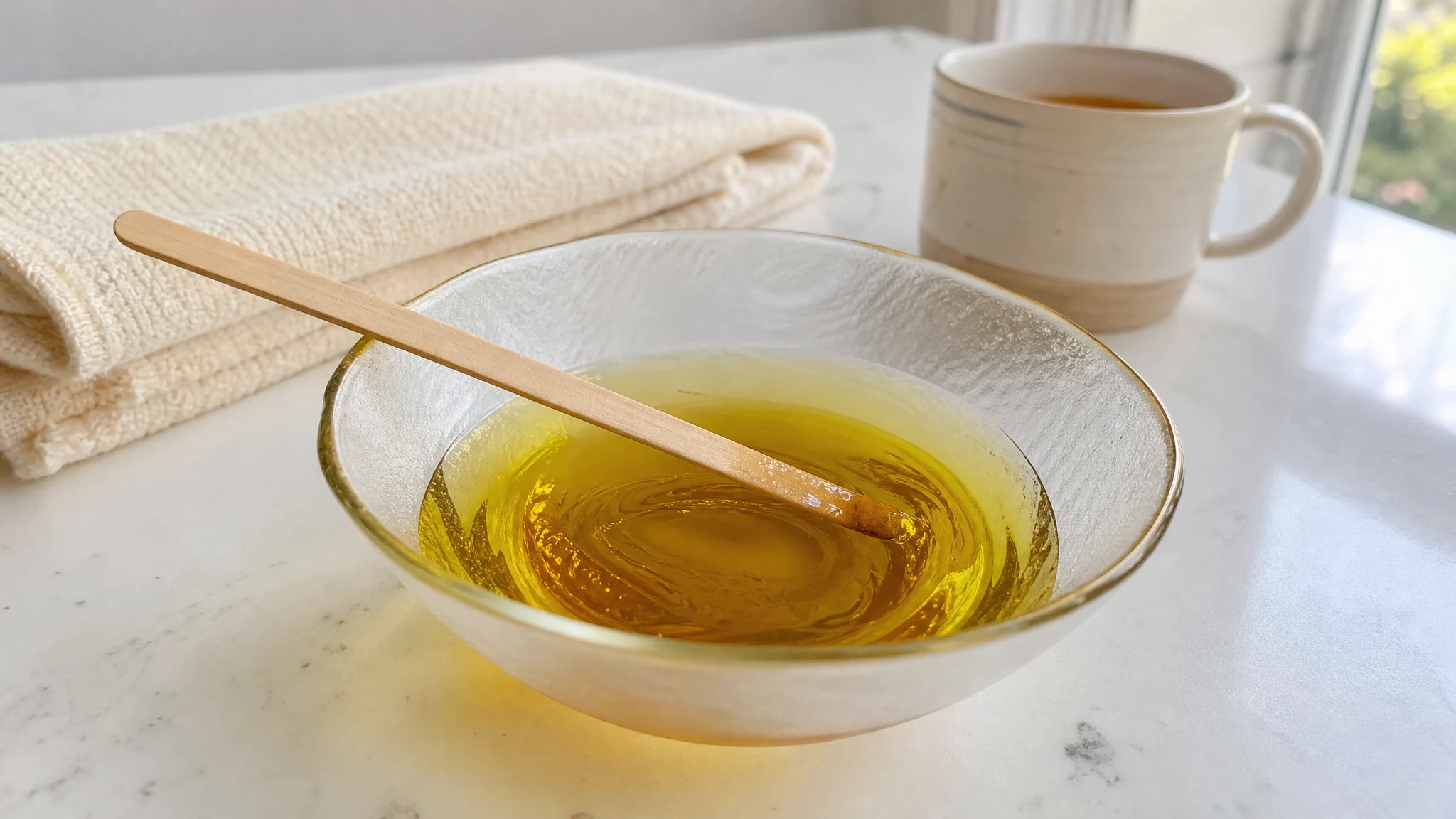
A small clean spoon makes measuring easy. Because castor oil clings, scrape the spoon against the rim of the bottle and let the last of it slide off before you mix; we find a slow, steady stir with a clean stick or the back of the spoon is enough to bring the two oils together, and you can see the moment it turns an even, clear gold.
Start modest, adjust by a spoonful, and let your skin tell you when the blend is right. Castor oil is happy to share the spotlight.
Organic Castor Oil
Cold-pressed, hexane-free organic castor oil, from a 0.5 oz sample to bulk sizes.
From $13.99
Shop Organic Castor Oil →Sources & Further Reading
- Yeboah A, Ying S, Lu J, et al. Castor oil (Ricinus communis): a review on the chemical composition and physicochemical properties. Food Science and Technology, 2021.
- Yalcin H, Toker OS, Dogan M. Effect of oil type and fatty acid composition on dynamic and steady shear rheology of vegetable oils. Journal of Oleo Science, 2012.
- Abdalla A, Aroua MK, Gew LT. A Comprehensive Review of Plant-Based Cosmetic Oils (Virgin Coconut Oil, Olive Oil, Argan Oil, and Jojoba Oil): Chemical and Biological Properties and Their Cosmeceutical Applications. ACS Omega, 2024.
- Cleveland Clinic. How To Choose the Right Eye Cream.
- American Academy of Dermatology. How to pick the right moisturizer for your skin.
- Lab Muffin Beauty Science. How to Use Comedogenicity Ratings.
- Harvard T.H. Chan School of Public Health. Coconut Oil. The Nutrition Source.
- Rele AS, Mohile RB. Effect of mineral oil, sunflower oil, and coconut oil on prevention of hair damage. Journal of Cosmetic Science, 2003.