How Long to Leave Castor Oil in Hair: Minutes to Overnight
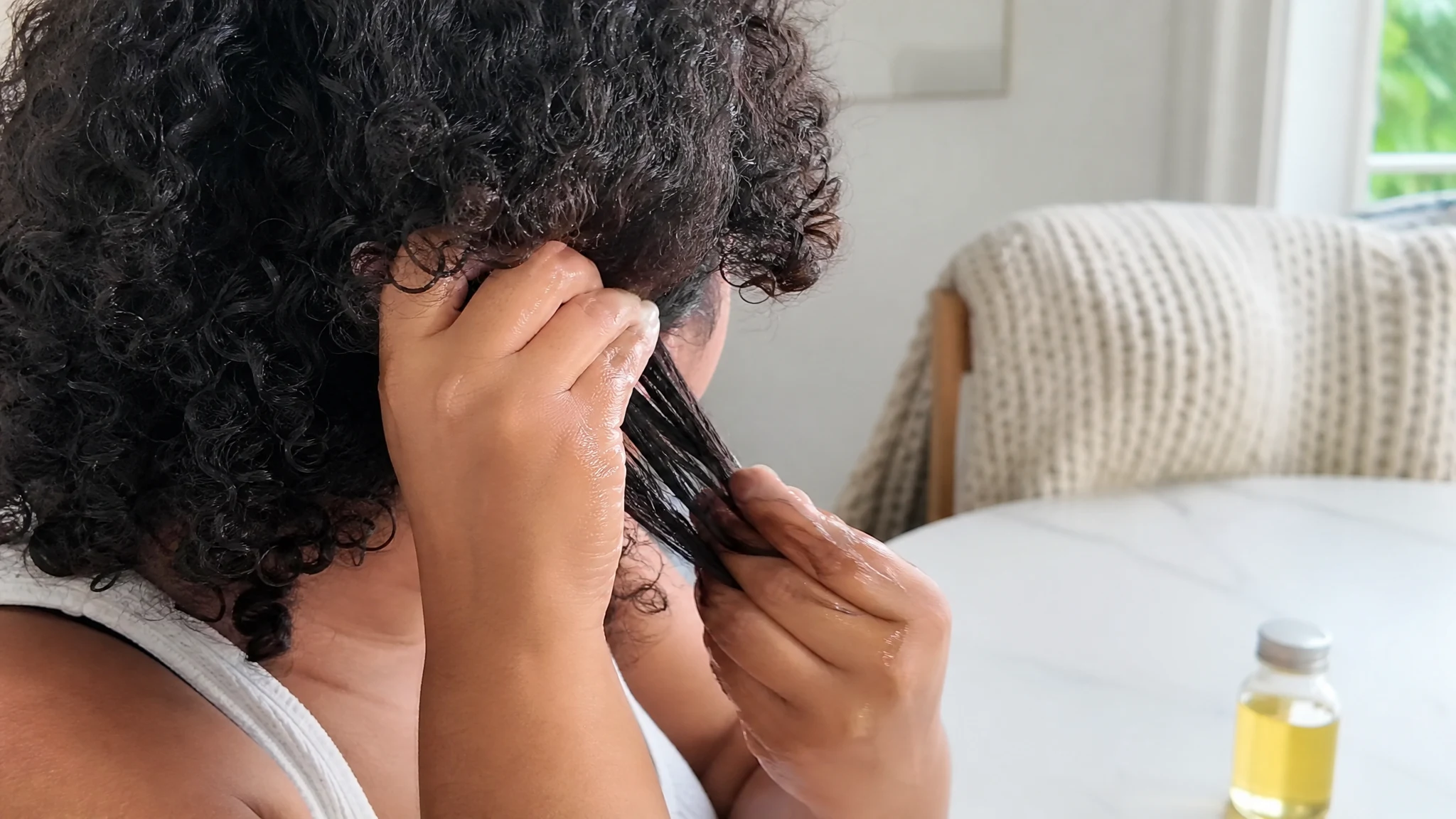
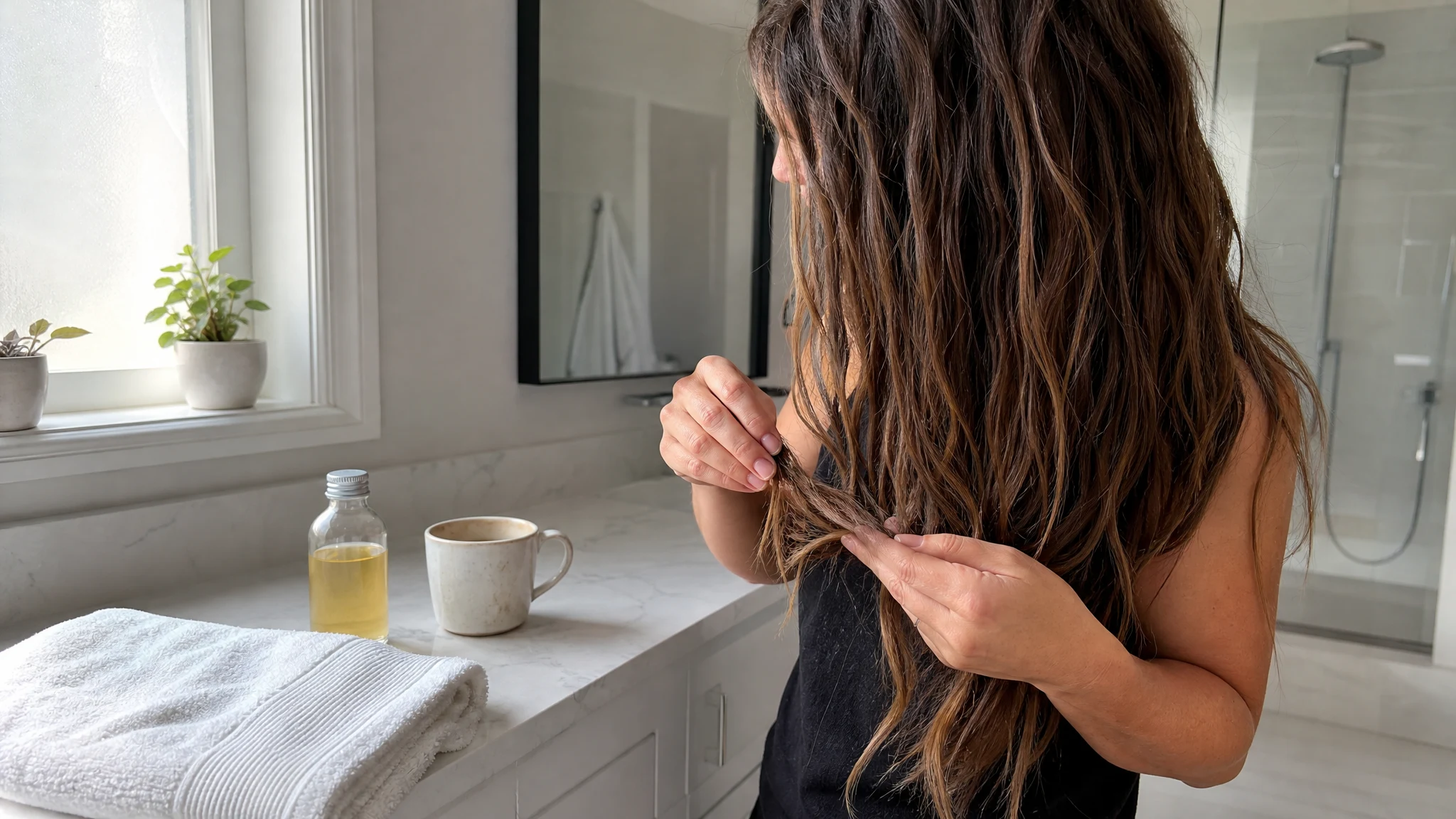
The short answer: thirty minutes to a couple of hours is plenty, and overnight is a matter of convenience rather than a requirement. Castor oil coats hair, and more time does not mean deeper results. That is good news, because it means you can fit a session into an ordinary evening.
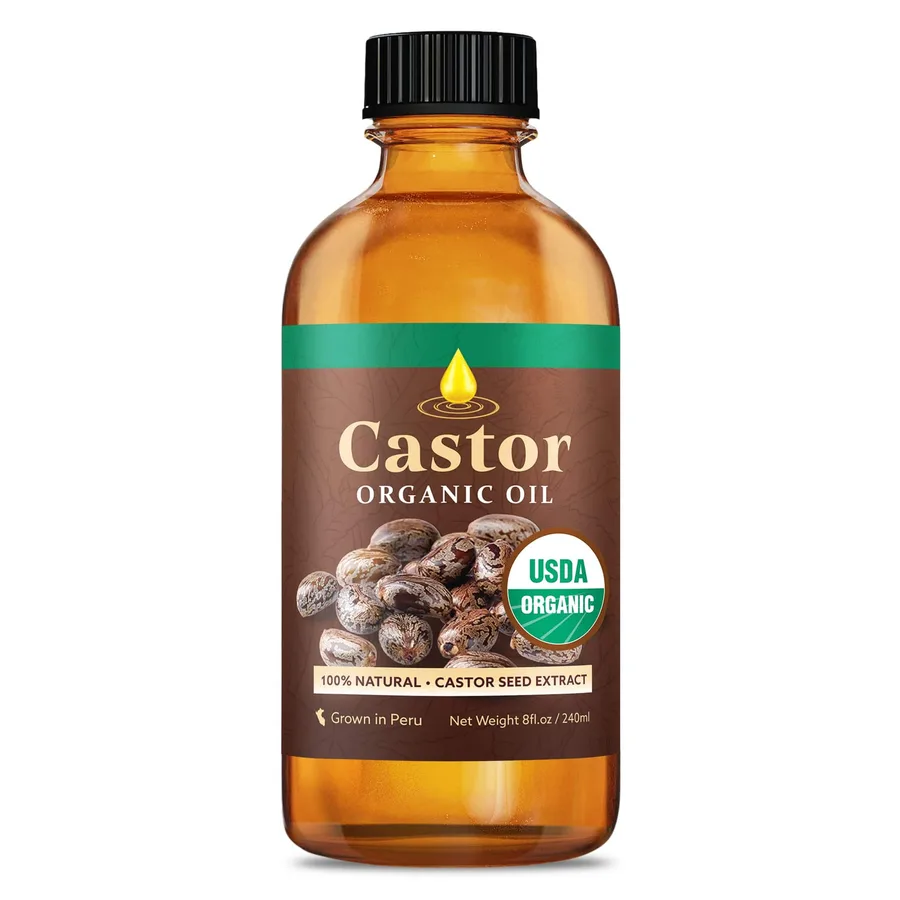
Organic Castor Oil
Cold-pressed, hexane-free castor oil, in sizes from a 0.5 oz sample to bulk drums.
From $13.99
Shop Organic Castor Oil →Why longer is not deeper
Oils behave differently on hair depending on what they are made of. Researchers who compared oils on hair fibres found that coconut oil, a small, straight-chained molecule, was drawn into the hair shaft and left a thinner film on the surface over time, while mineral oil stayed on the surface. In other words, the oil's chemistry decides what it does, not how long it sits there. Castor oil was not part of those studies, and it is a heavier, more viscous oil. Reasoning from that, we would expect it to stay on the surface as a coat rather than travel inward. A coat is established within minutes of smoothing it on.
That is why we suggest thinking of castor oil as a coating that gives softness and shine, rather than something that needs a long soak.
A sensible range
- 30 to 60 minutes: a comfortable pre-shampoo window and the one we would start with.
- A few hours: fine if you are at home for the afternoon with a loose wrap on.
- Overnight: an option for very dry, coarse or curly hair if you like waking up to extra softness. Use less oil than you think you need.
These ranges are conventions that people have settled on, not research findings, so adjust by feel. If your hair is soft and glossy after an hour, that is your answer.
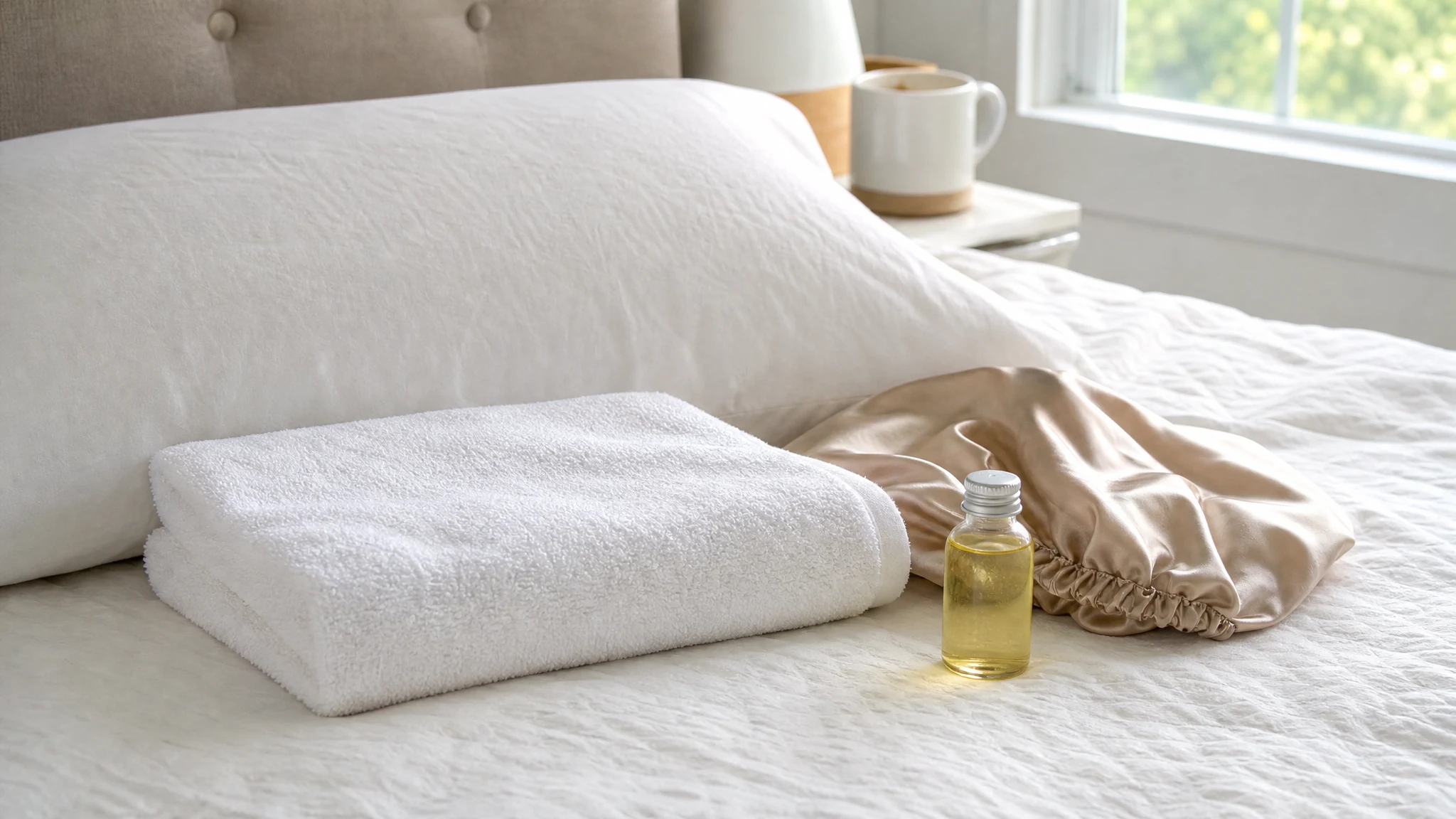
If you go overnight
Castor oil is thick and clings to fabric, so a little preparation goes a long way. Wrap your hair in a silky scarf or bonnet, put a towel over your pillowcase, and keep to a small amount focused on the ends. Oil that sits for hours tends to spread, so what feels like a modest amount at bedtime can feel like a lot in the morning.
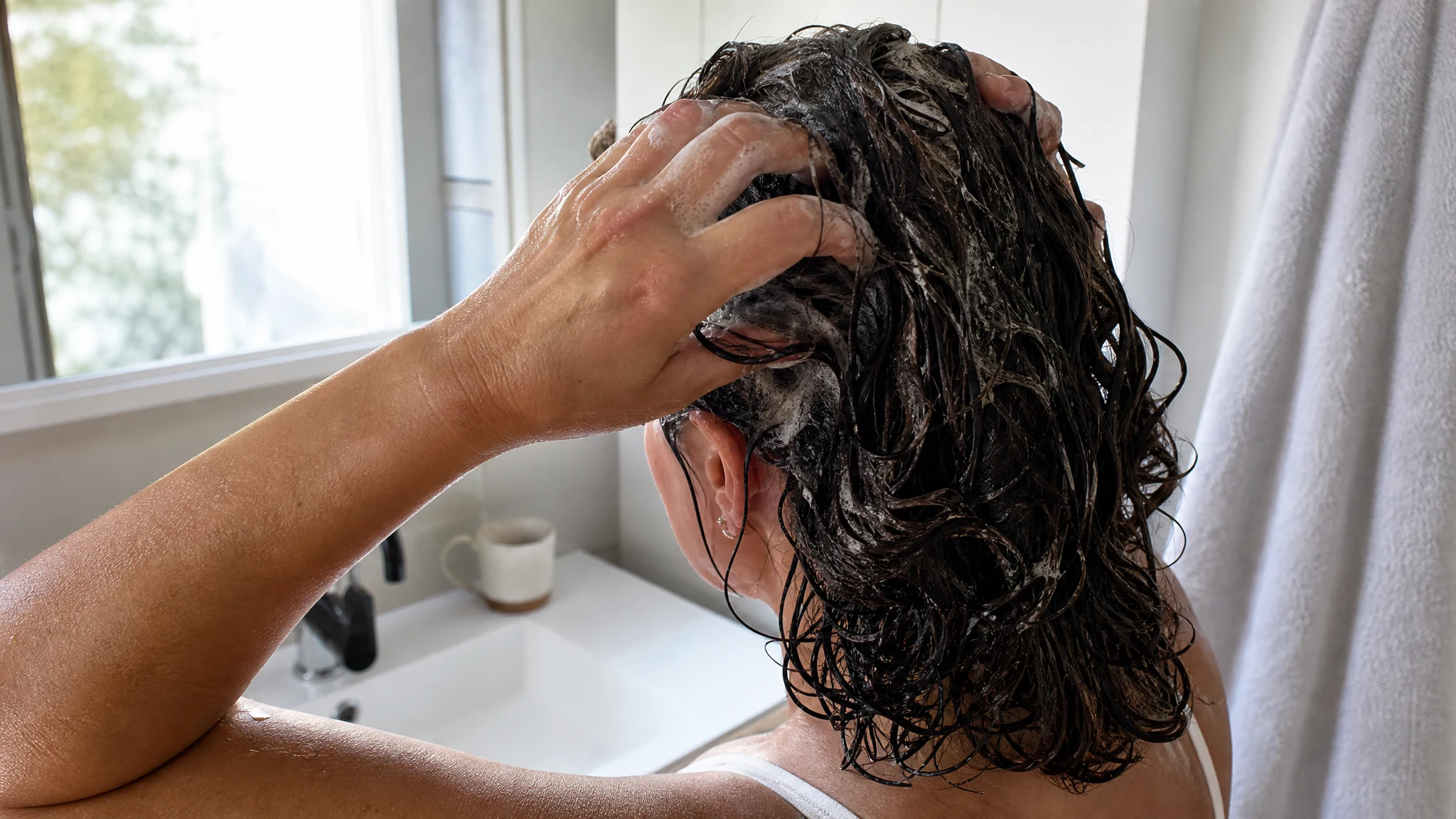
In the morning, shampoo it out before you style. Our guide to washing castor oil out of hair shows the dry-shampoo-first method that clears a thick oil in two rinses.
How often
As a rule of thumb, which is again convention rather than research:
- Dry, coarse, curly or coily hair: once a week, or every second wash.
- Medium or normal hair: every two weeks.
- Fine hair, or a scalp that gets oily: once a month, or ends only.
If your hair starts to look limp or weighed down, leave a longer gap or use fewer drops. A pre-wash oil is a weekly or fortnightly pleasure, not a daily habit.
Choosing your window
A few questions settle it. Is your hair dry, coarse or curly? Then a longer session, or an overnight one, is a reasonable indulgence. Is it fine, or does your scalp turn oily by the afternoon? Keep it to half an hour with oil on the ends only. Are you short on time? Even fifteen minutes with a light layer gives a soft, glossy coat before you shampoo, because the oil starts working the moment it is on the strand. There is no wrong answer here, only the one that fits your evening and your hair.
Making it easier
The easiest way to shorten the wait is to use less oil. A teaspoon-scale amount in a thin layer feels the same as a spoonful after half an hour. Our routine for using castor oil on hair covers the quantities by hair length, and our overview of castor oil for hair explains who gets the most from it.
If you are using our organic cold-pressed castor oil, a patch test comes first, and a few drops warmed between your palms will spread further than you expect. Keep it away from your eyes.
Put the oil on, put the kettle on, and give it an hour: that is usually all the time it needs.
Organic Castor Oil
Cold-pressed, hexane-free organic castor oil, from a 0.5 oz sample to bulk sizes.
From $13.99
Shop Organic Castor Oil →Sources & Further Reading
- Investigation of penetration abilities of various oils into human hair fibers (Keis et al., J Cosmet Sci, 2005)
- Effect of mineral oil, sunflower oil, and coconut oil on prevention of hair damage (Rele and Mohile, J Cosmet Sci, 2003)