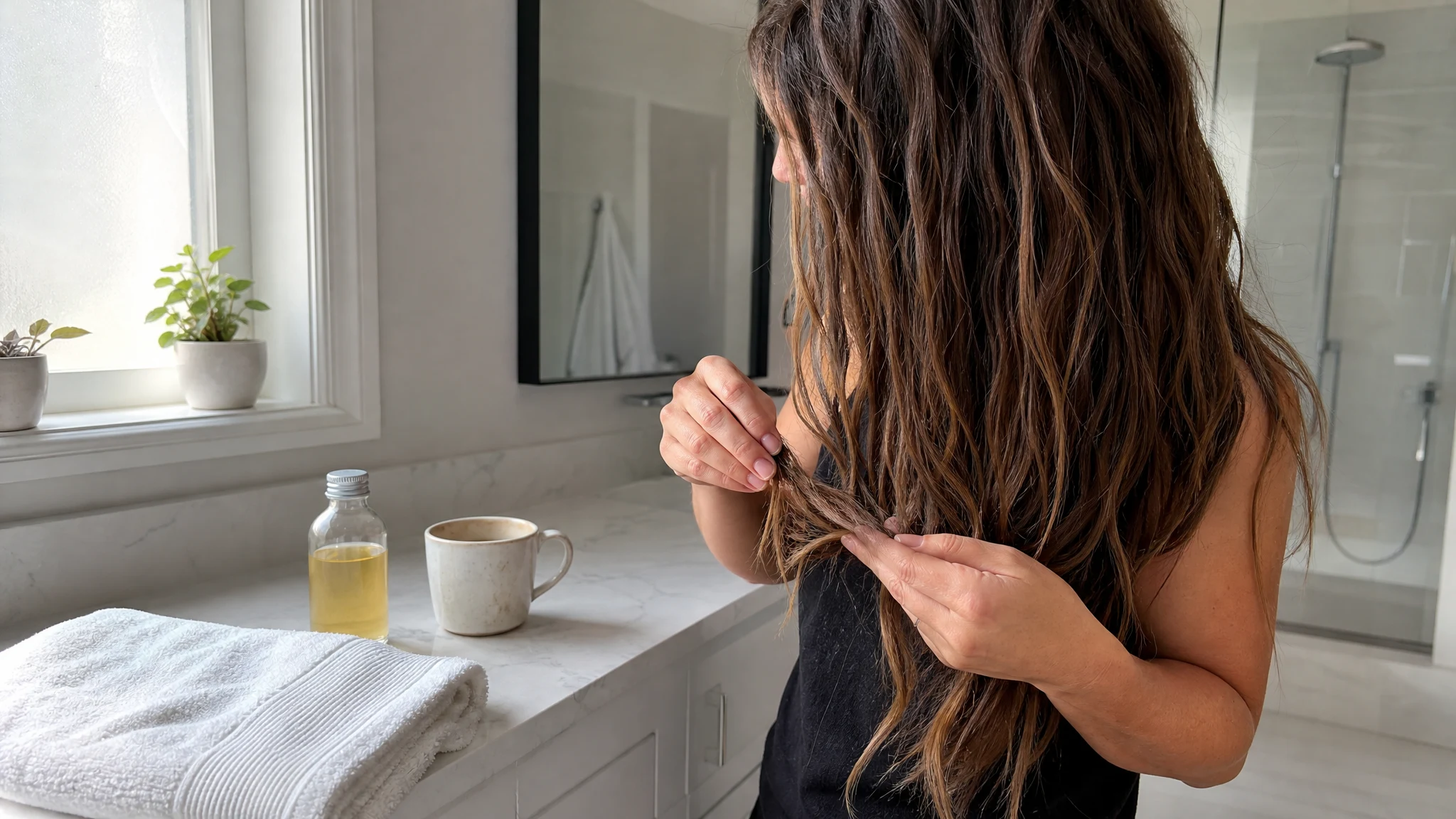
How to Use Castor Oil for Hair: A Simple Routine
Castor oil rewards patience more than quantity. It is thick enough that a spoonful feels like a lot, and the people who enjoy it most are usually the ones who learned to measure by the drop. This is a simple routine built from how oils behave on hair, with a few honest rules of thumb along the way.
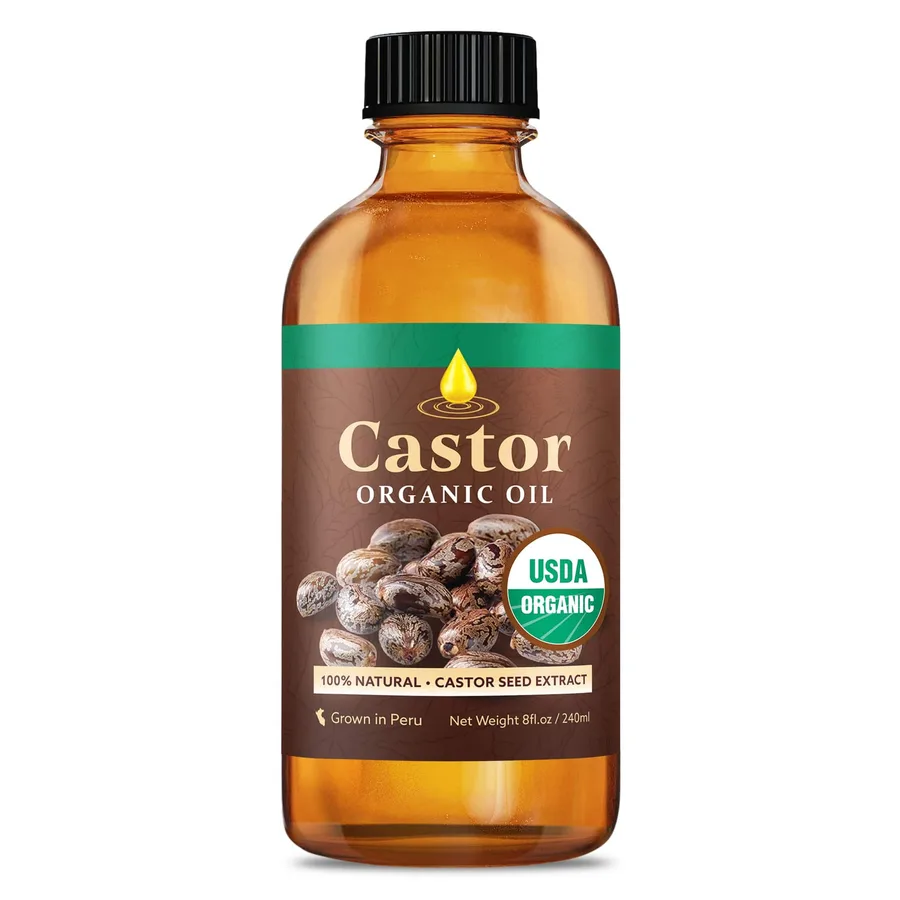
Organic Castor Oil
Cold-pressed, hexane-free castor oil, in sizes from a 0.5 oz sample to bulk drums.
From $13.99
Shop Organic Castor Oil →Before you start
Begin with a patch test: a dab on the inside of your elbow, then wait a day to see how your skin feels. Our castor oil patch test guide walks through it. Keep the oil away from your eyes, and ask a doctor or dermatologist if your scalp or skin has anything going on that is specific to you.
Castor oil is the one oil we make and sell, so shampoo, a wide-tooth comb and any lighter oils you want to blend with it will come from a pharmacy or beauty-supply shop.
How much, really?
There is no standard dose, so treat this as a rule of thumb rather than research: about half a teaspoon for short hair, a teaspoon for shoulder length, and up to two for long or very dense hair. You can always add more; taking it out takes a shampoo session.
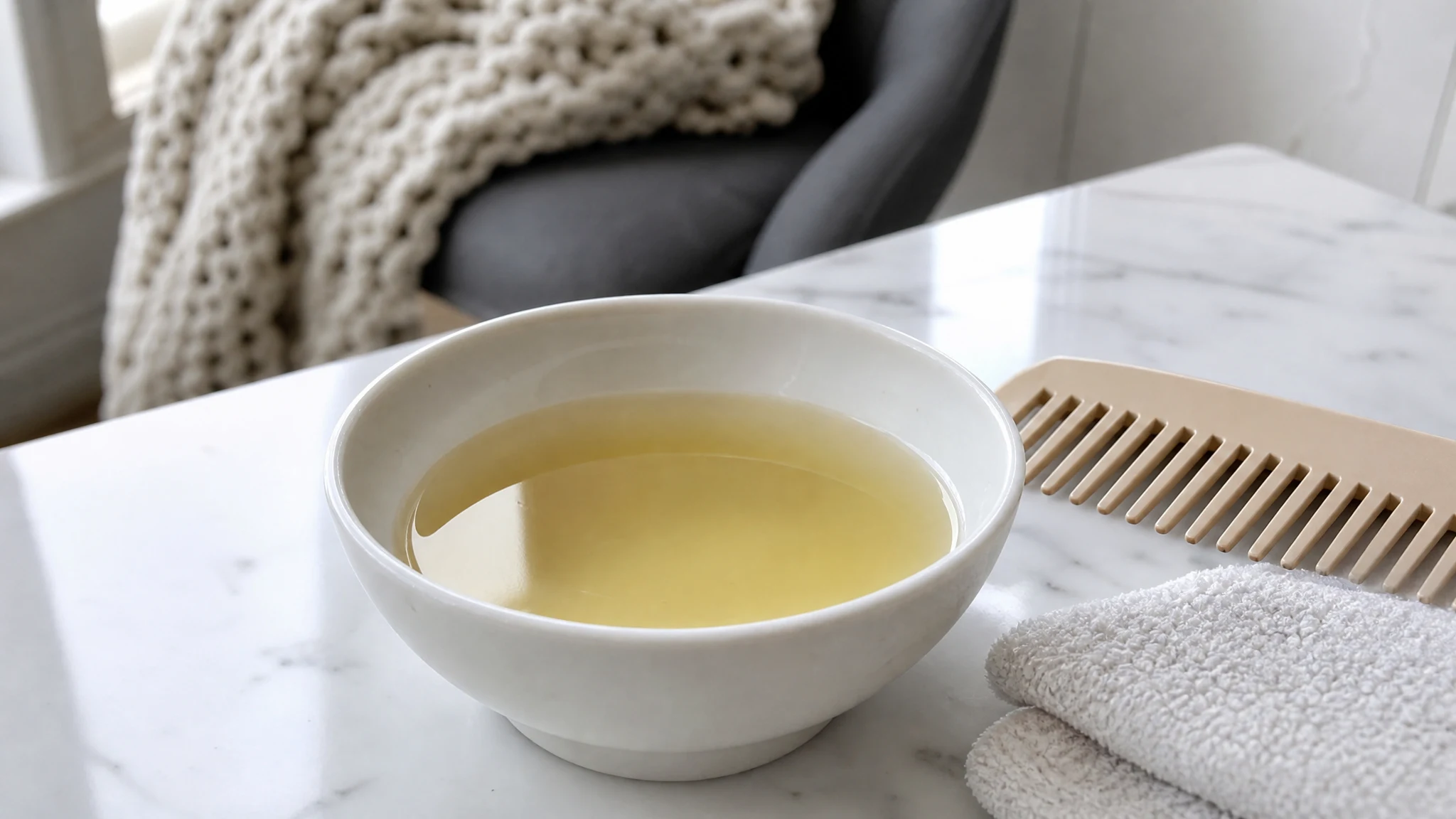
Because castor oil is so viscous, many people thin it with a lighter oil, roughly one part castor to one or two parts of something runnier. That makes it spread in seconds instead of minutes. If you like the weight of the pure oil, a warm bowl of tap water for the bottle loosens it nicely.
The routine
- Section the hair. Four sections is plenty. Oil goes on better to hair you can see.
- Warm the oil. Rub a few drops between your palms.
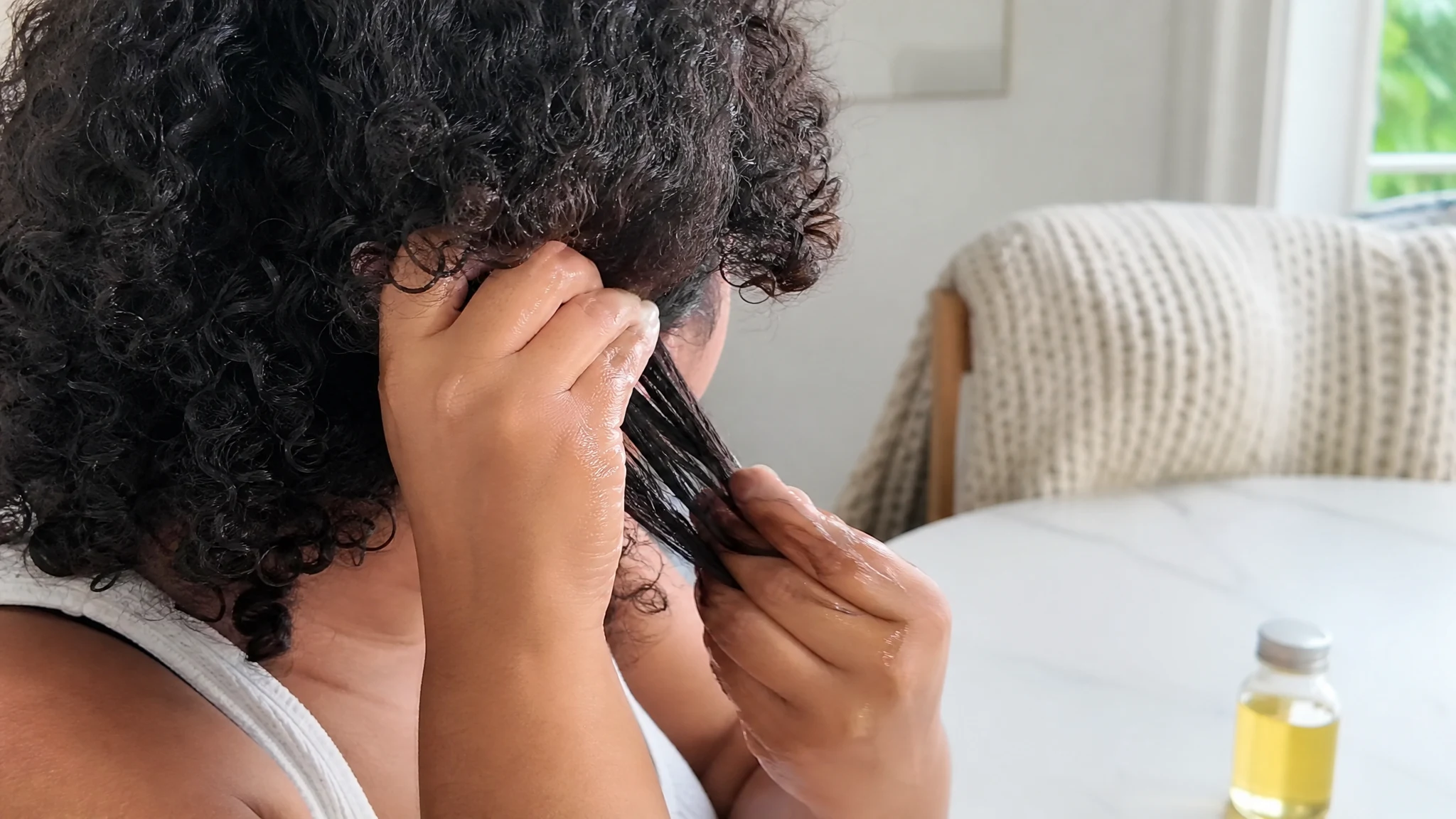
- Massage the scalp, lightly. Use your fingertips in small circles for a couple of minutes. Skip this step if your scalp tends to be oily.
- Work down the lengths. Smooth the oil from mid-lengths to ends, concentrating on the driest parts.
- Comb through gently with a wide-tooth comb to even it out.
- Wait. Thirty minutes to an hour is a comfortable pre-shampoo window; our guide to how long to leave castor oil in hair covers longer sessions.
- Wash it out. Our walkthrough on how to wash castor oil out of hair shows the shampoo-first method that works best.
What a pre-poo is
You will see the word "pre-poo" in hair forums: it simply means putting oil on hair before shampooing. A review of hair cosmetics explains that shampoo works through surfactants that grab oil and grease so water can rinse them away, and that oils on the shaft act as a lubricant. A pre-wash oil, then, is a cushion: hair goes into the shower already slick, so it combs more easily while wet.
Research on pre-wash oils has centred on coconut oil, which was reported to reduce protein loss from hair when used before washing. Castor oil was not part of that work, so we offer pre-poo as a ritual that suits thick oils rather than a proven result for ours.
Finer hair, oilier scalp
If your hair is fine or gets oily fast, go lighter in every way: fewer drops, ends only, shorter time. That is the right call for those hair types, not a failure of the oil, and our overview of castor oil for hair lists who it suits best. If you have coily or curly hair, castor oil for natural hair shows where it fits with leave-in products.
How often
Once every week or two is a common rhythm, though that is a convention, not a rule. Adjust by how your hair feels: if it looks flat by day two, space sessions out.
Whenever you are ready for a bottle, our organic cold-pressed castor oil is pure castor oil with no fragrance or fillers, which keeps a hair routine simple.
A towel over your shoulders, a quiet half hour and a few drops of golden oil: that is a routine worth settling into.
Organic Castor Oil
Cold-pressed, hexane-free organic castor oil, from a 0.5 oz sample to bulk sizes.
From $13.99
Shop Organic Castor Oil →Sources & Further Reading
- Hair cosmetics: an overview (Gavazzoni Dias, Int J Trichology, 2015)
- Effect of mineral oil, sunflower oil, and coconut oil on prevention of hair damage (Rele and Mohile, J Cosmet Sci, 2003)