Castor Oil for Leather and Wood: A Household Tip
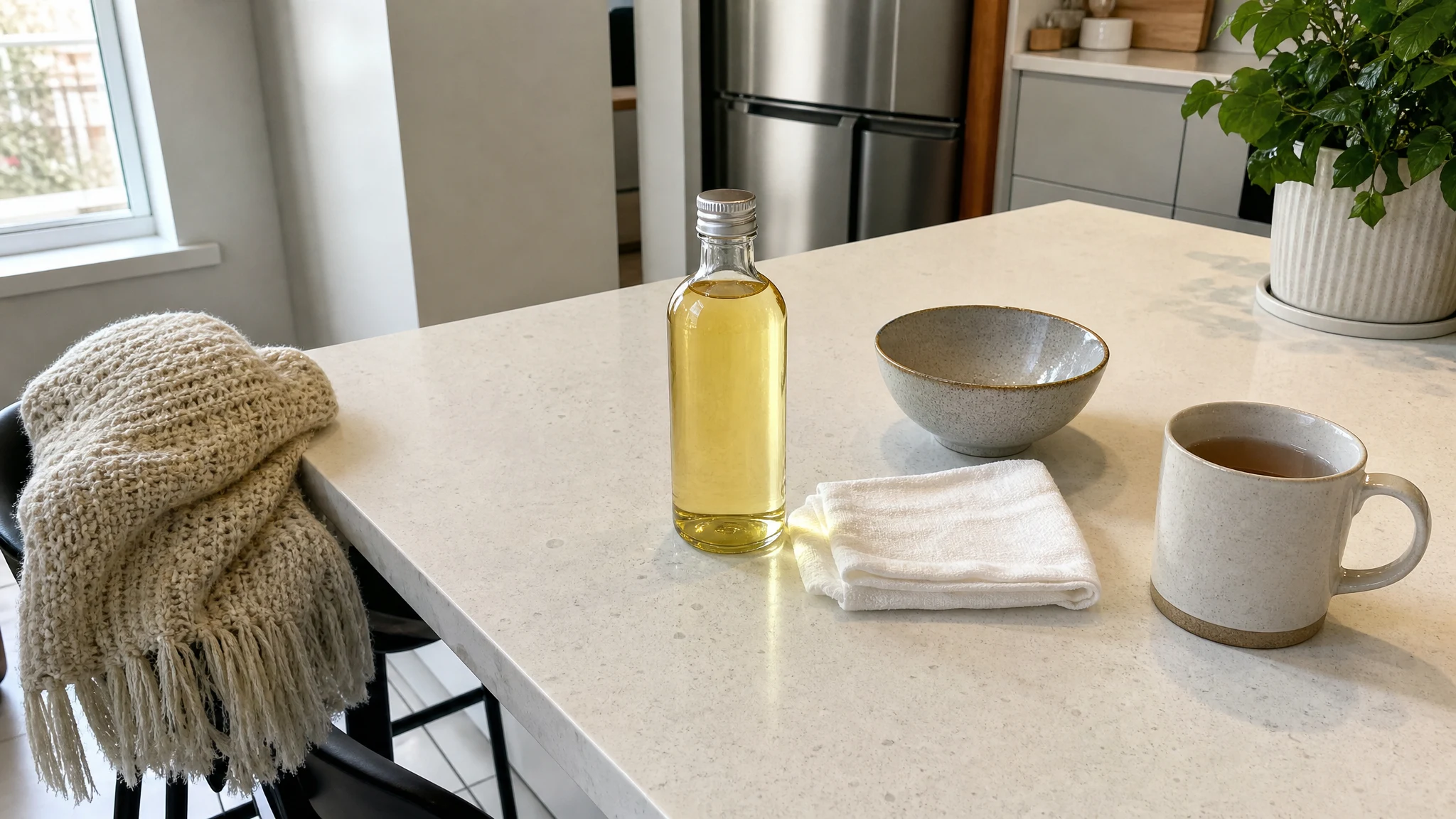
Every household has a stiff leather belt, a cracked boot or a satchel that has gone a bit parched. Castor oil, a thick, pale golden oil that sits happily in a bathroom cabinet, is a handy thing to reach for, as long as you go in with a light touch and a patch of leather nobody will see.
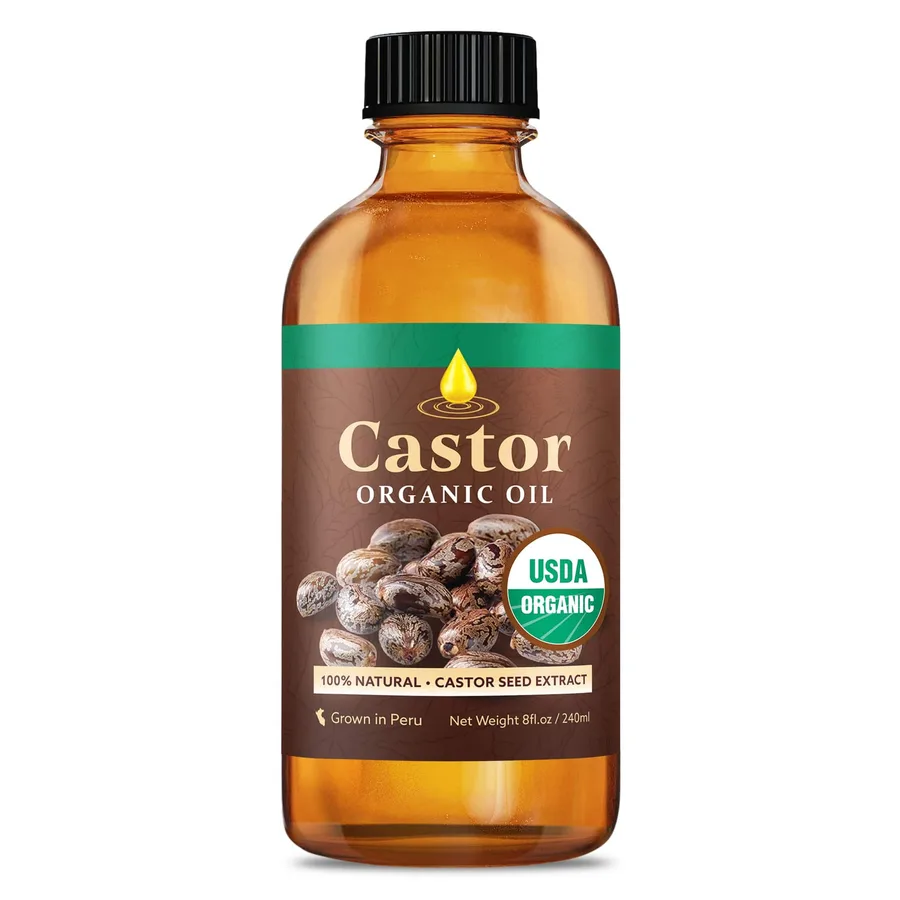
Organic Castor Oil
Cold-pressed, hexane-free castor oil, in sizes from a 0.5 oz sample to bulk drums.
From $13.99
Shop Organic Castor Oil →Why people reach for it on leather
Leather is a skin, and everyday pieces such as belts, boots and bags flex constantly. A rich oil makes them feel softer and supple again. Castor oil is thick and slow, which is a virtue here: it does not run all over the surface, and it stays where you rub it. One sensible caution comes from the Western Australian Museum's conservation manual, which notes that vegetable oils are more prone to oxidation in the long term, a process accompanied by yellowing and hardening of the oil. That is a good reason to use only a little and to avoid soaking anything.
The hidden-spot test
The same museum guidance says to always test lubricants on an inconspicuous area before large-scale use, and we could not agree more. Oil darkens most leather, and castor oil is no exception, so try it on the underside of a strap or inside a flap, wait a day, and see whether you like the colour. If you do, carry on.
Which pieces suit it
Smooth, sturdy leather is the happiest candidate: work boots, belts, a plain satchel, a dog-eared wallet. Napped finishes such as suede and nubuck are a different story, because oil flattens and darkens the surface, so we would leave those alone. Anything lined, painted or glued also deserves a cautious test, since oil can wick into seams. The rule is simple: the more precious the piece, the smaller the first test.
How to apply it
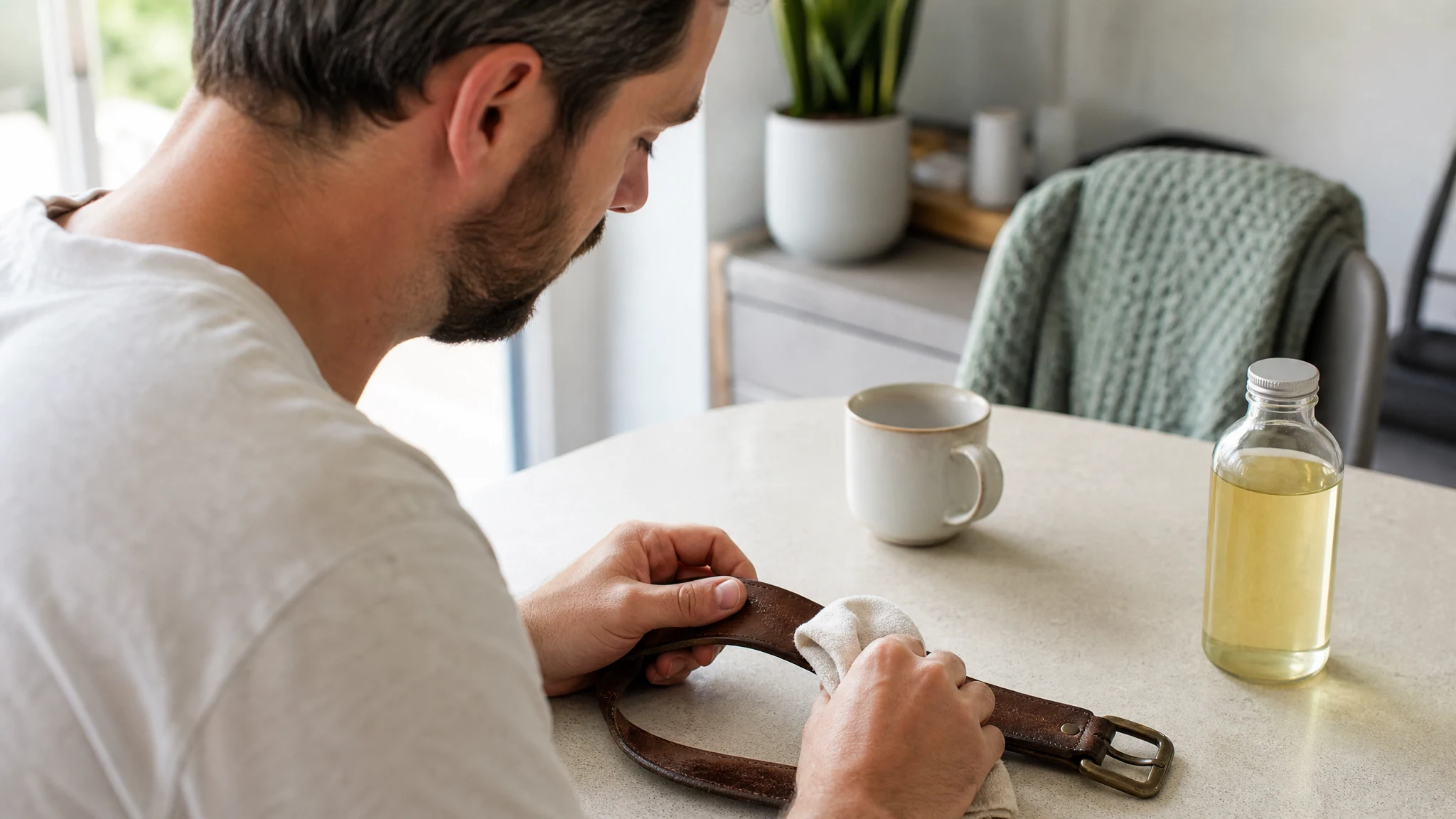
- Wipe the leather with a barely damp cloth and let it dry.
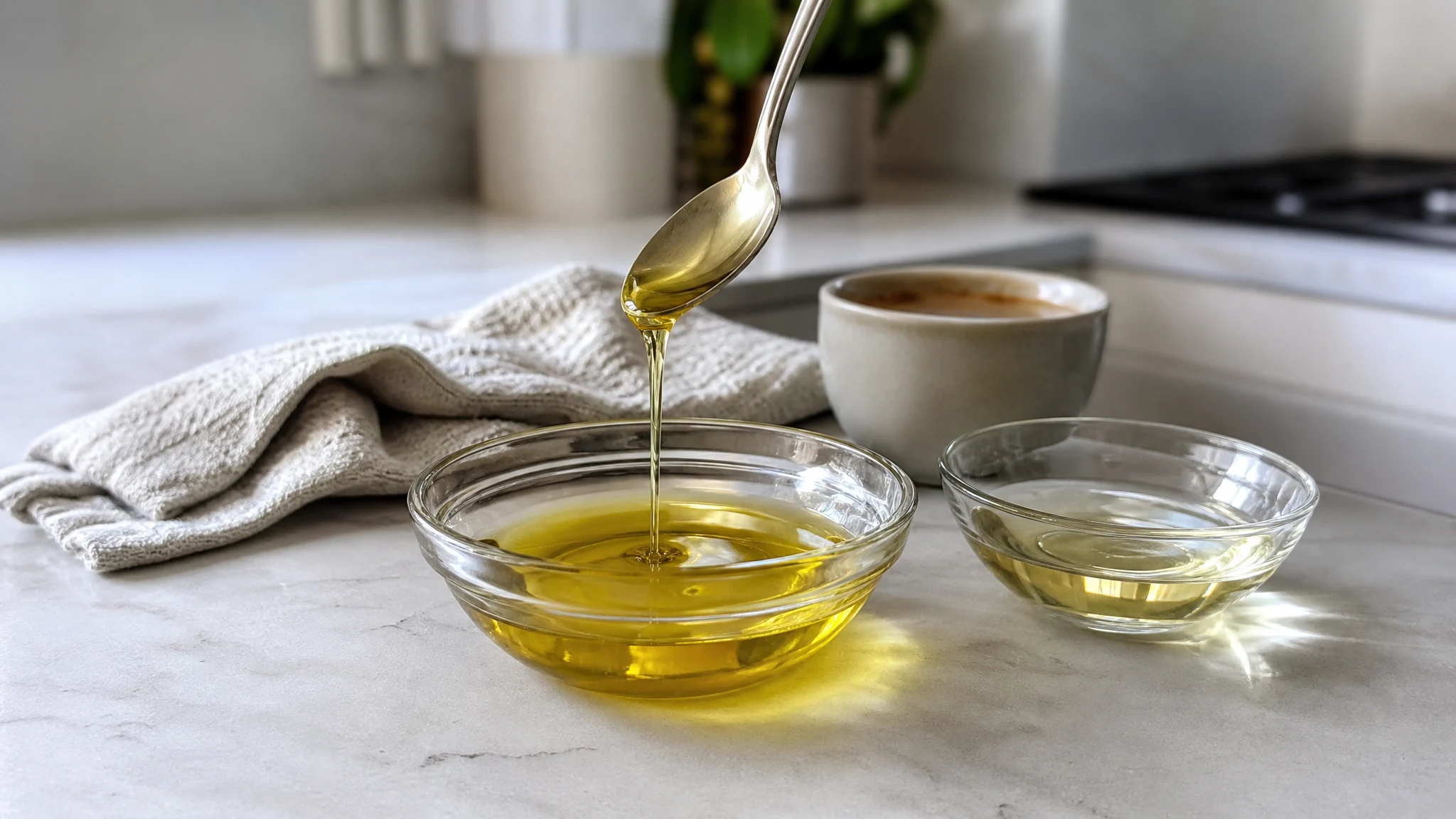
- Put a few drops of oil on a soft cloth, not on the leather. Less than you think.
- Rub in small circles, working the oil into the grain.
- Leave it for several hours, or overnight, then buff firmly with a clean dry cloth.
- If it still feels tacky, buff more. Repeat another day rather than adding more oil now.
Castor oil is slow to sink in, so patience pays. A thin coat that has had time to settle feels far better than a thick one.
A word on wood
Castor oil has a place in wood care, but it is a different kind of oil from the ones woodworkers rely on for finishing. Popular Woodworking lists castor oil among the non-drying oils, whose fatty acids do not crosslink enough to ever dry. Linseed oil is the opposite: it hardens by reacting with air. So castor oil will not harden into a protective film. It can freshen a dry, unfinished wooden spoon rack or cutting block rim, but it will stay tacky, and it is no substitute for a real finish on a table or a floor. If you want a lasting surface, use a drying oil or varnish made for wood.
When to choose something else
For fine furniture, antique saddles or a family heirloom, use a purpose-made leather conditioner from a shoe-repair or saddlery shop, or ask a conservator, because old leather rarely needs extra oil. For everyday pieces, a drop of castor oil on a cloth is a pleasant household trick. We sell castor oil only, so conditioners and wood finishes come from a hardware or leather-care shop.
If you want to know more about what makes the oil what it is, see how to tell if castor oil is pure and castor oil myths and facts. Our single-ingredient organic cold-pressed castor oil is castor oil and nothing else, which is the kind of simplicity a cloth and a belt appreciate.
A well-loved belt or bag tells a story, and a light polish now and then helps it keep telling it.
Organic Castor Oil
Cold-pressed, hexane-free organic castor oil, from a 0.5 oz sample to bulk sizes.
From $13.99
Shop Organic Castor Oil →Sources & Further Reading
- Treatments (Western Australian Museum conservation manual, leather)
- Oils in Finishing (Popular Woodworking)