Castor Oil vs Sesame Oil: Uses, Texture and Tradition
Picture a slow weekend morning: a warmed oil, a quiet room, and ten unhurried minutes spent massaging it into your own arms and shoulders. For many families in India that picture has a name, abhyanga, and a long history. Castor oil and sesame oil both turn up in traditional oiling and in modern bathrooms, and they could hardly feel more different.
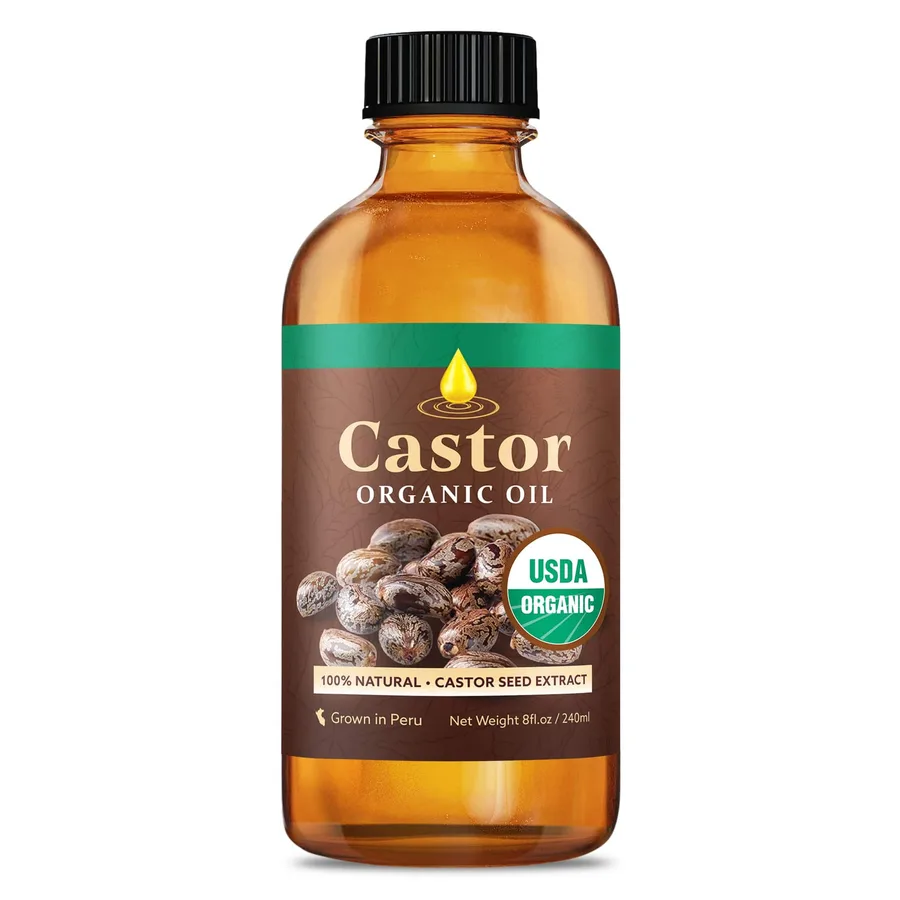
Organic Castor Oil
Cold-pressed, hexane-free castor oil, in sizes from a 0.5 oz sample to bulk drums.
From $13.99
Shop Organic Castor Oil →We sell only castor oil, so this is a friendly comparison, not a sales pitch. Sesame oil is a good oil with a long record of being loved, and the more interesting question is simply what each one is like to have in your hands.
Where sesame fits in the tradition
Abhyanga is the classic Ayurvedic oil massage. A 2011 pilot study describes it exactly that way, and adds a useful caveat: the claims people make for Ayurvedic massage rest on ancient traditions and personal experience, not on modern trials. We pass it on in that spirit, as a cultural practice rather than a health promise. A 2026 trial describes daily self-massage, Nitya-Abhyanga, as a traditional Ayurvedic practice, and the oil it uses is Tila Taila, which is sesame oil. That is the clearest documented pairing: abhyanga and sesame.
Castor oil's documented story runs elsewhere. Herodotus recorded Egyptians pressing castor-bean oil for their lamps, and its later life ran through lubricants and industry; we tell it in the history of castor oil. The sources we can verify place sesame, not castor oil, inside abhyanga itself, so we will not claim otherwise, and it is worth asking anyone who does for their source.
How they feel in your hands
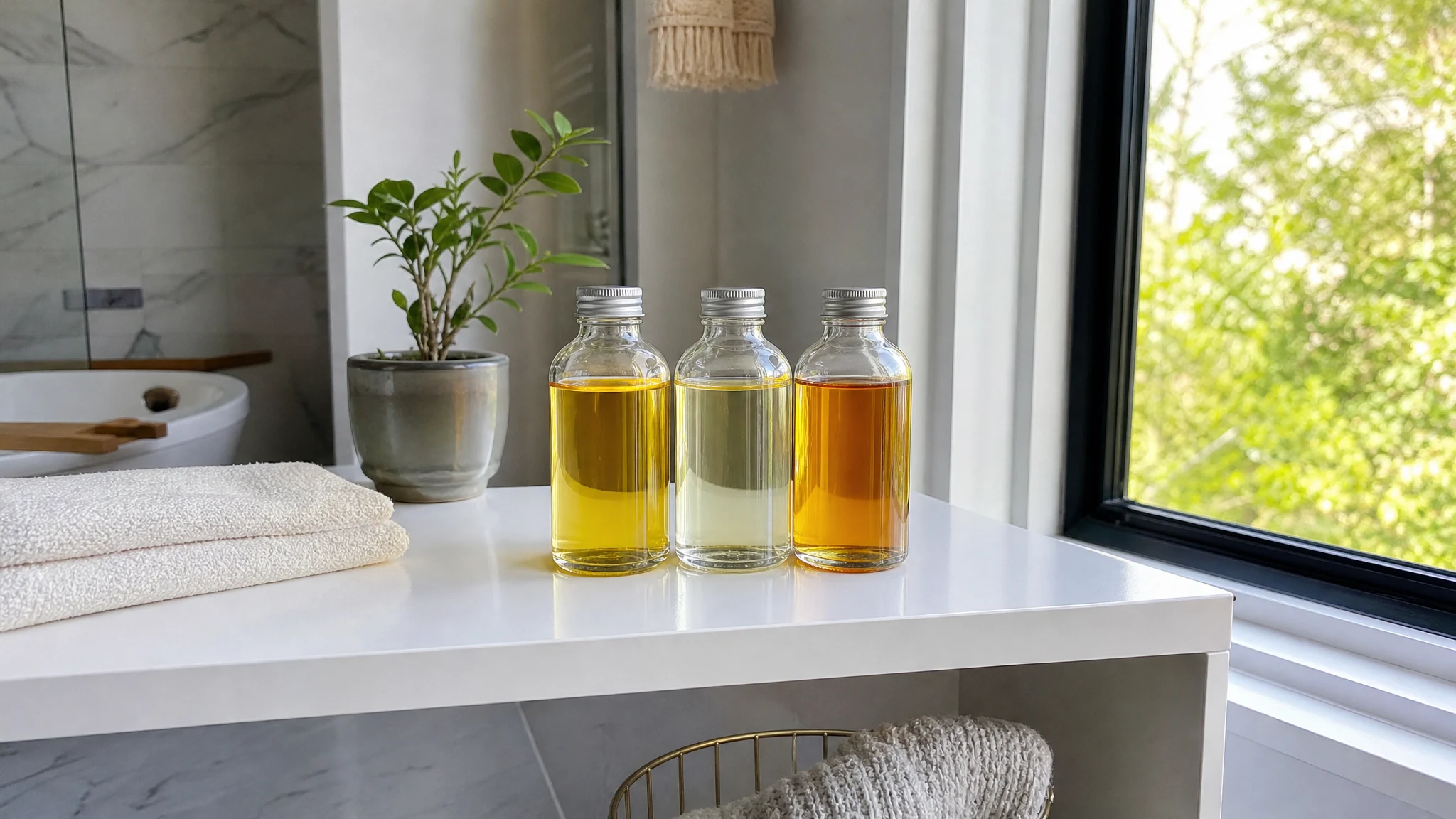
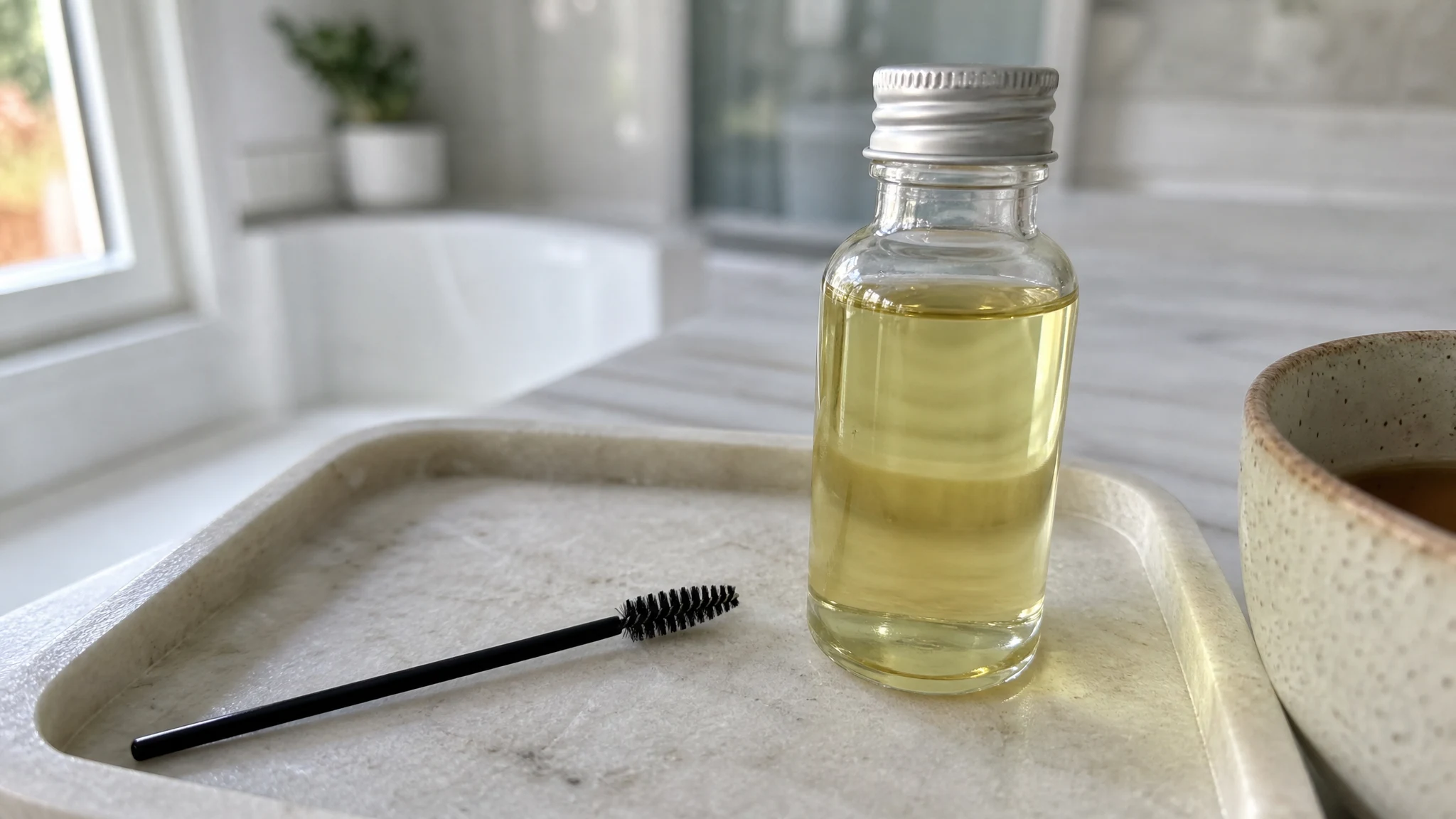
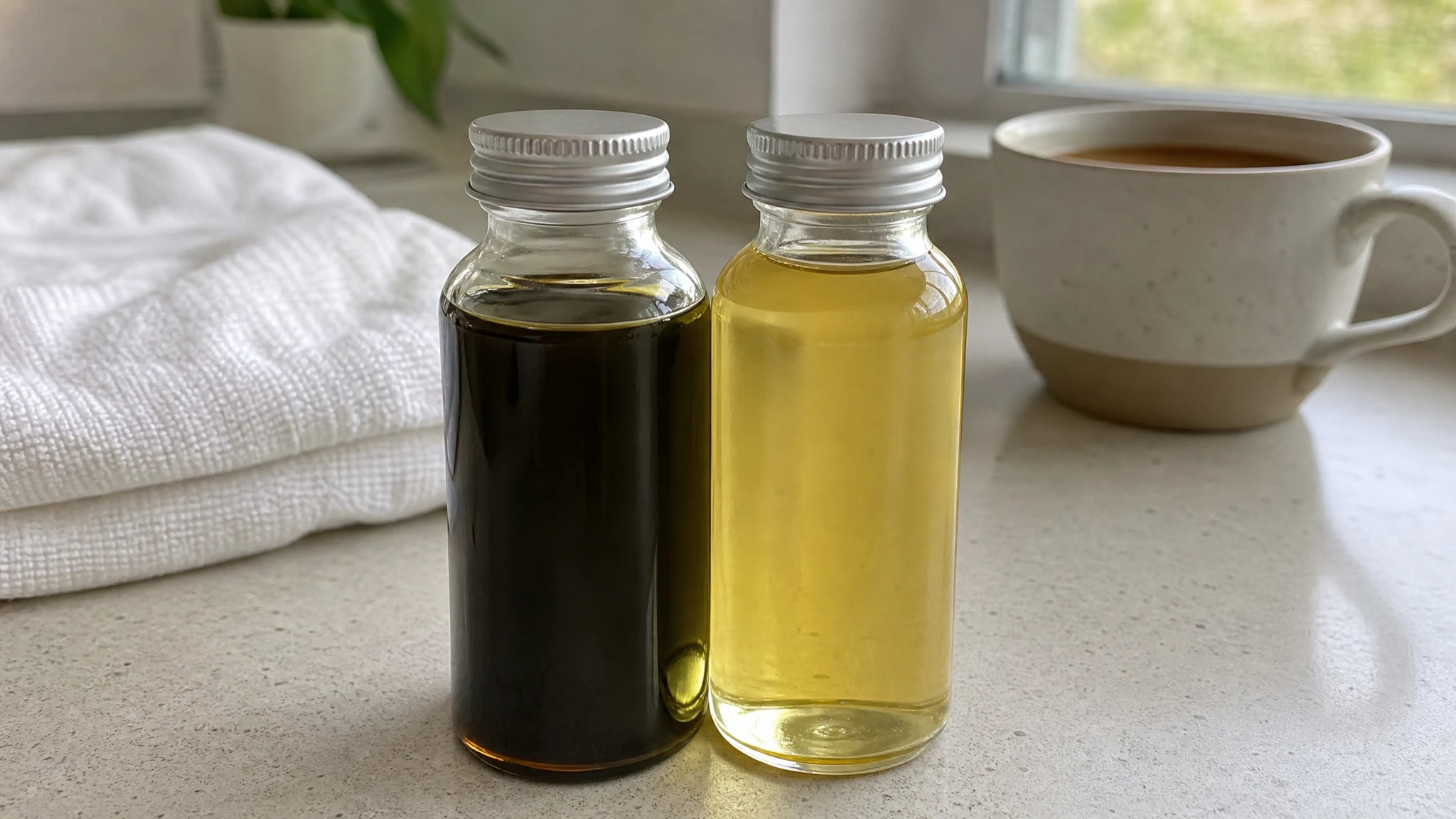
A review of cold-pressed oils lists sesame oil at about 42 percent oleic acid and 43 percent linoleic acid. Castor oil is a different animal: up to 90 percent ricinoleic acid, with a viscosity of about 9 to 10 poise at 25 degrees C, roughly a thousand times water. Reasoning from that, sesame oil should glide, which is why it works as a whole-body oil, while castor oil stays put, a luxurious slow oil you use in small amounts. We do not sell sesame oil, so you will find it at a pharmacy or beauty-supply shop; smell it before you buy, as the scent varies from oil to oil. Castor, by contrast, is mild and quiet, a gentle pale-gold oil that does not announce itself in a room.
Modern ways to use them
- Body oiling: sesame oil is the natural lead. Apply it right after a bath or shower while skin is damp, which is the AAD's advice for any moisturizer. A small amount of castor oil on dry elbows or heels adds a more lasting film.
- Massage: castor oil's slow glide makes it a pleasant slip for slower massage over small areas; for a whole arm or back, a lighter oil goes further.
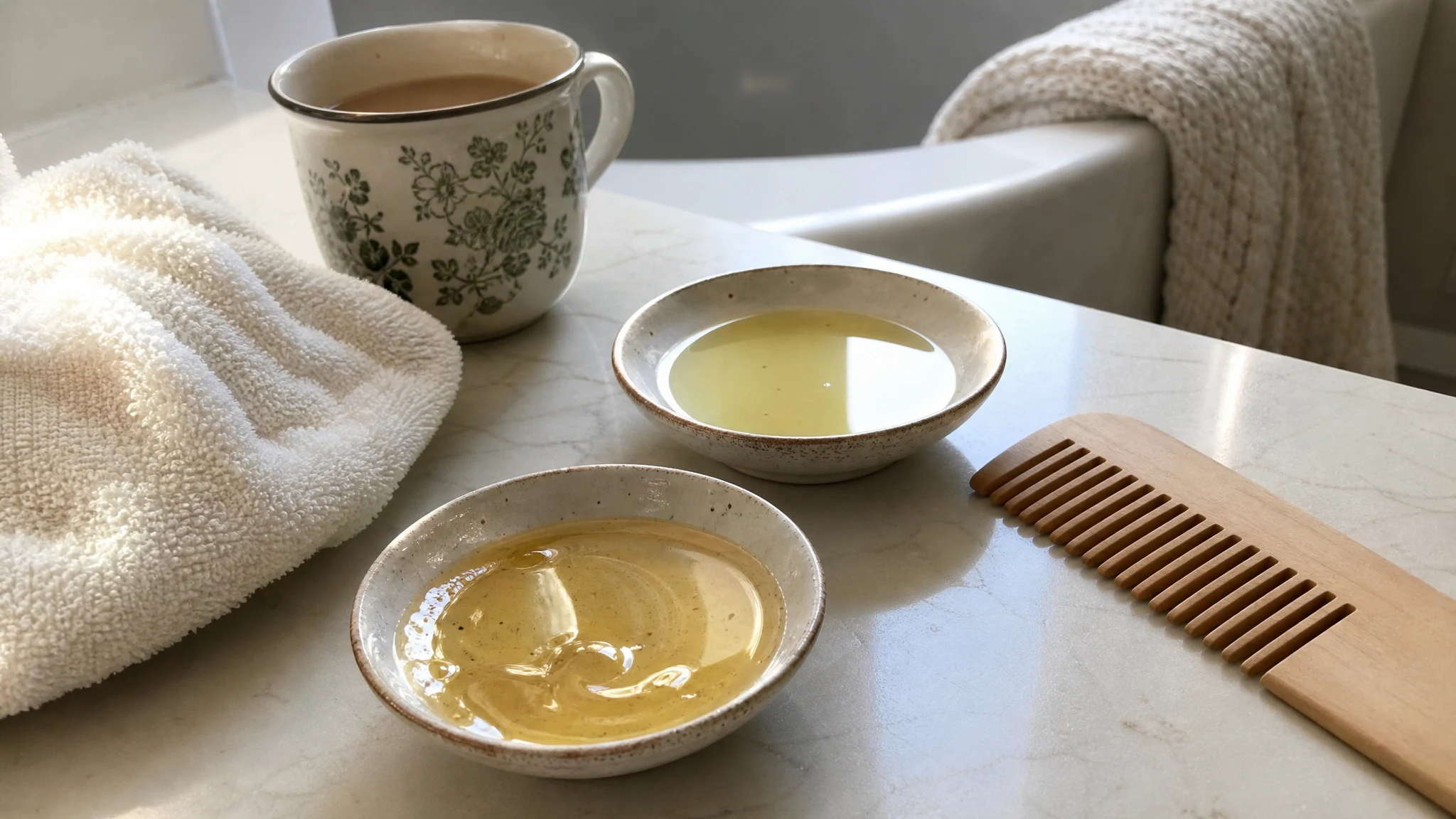
- Hair: either oil can add softness and shine to dry-feeling ends. Castor oil for hair covers handling and washing out.
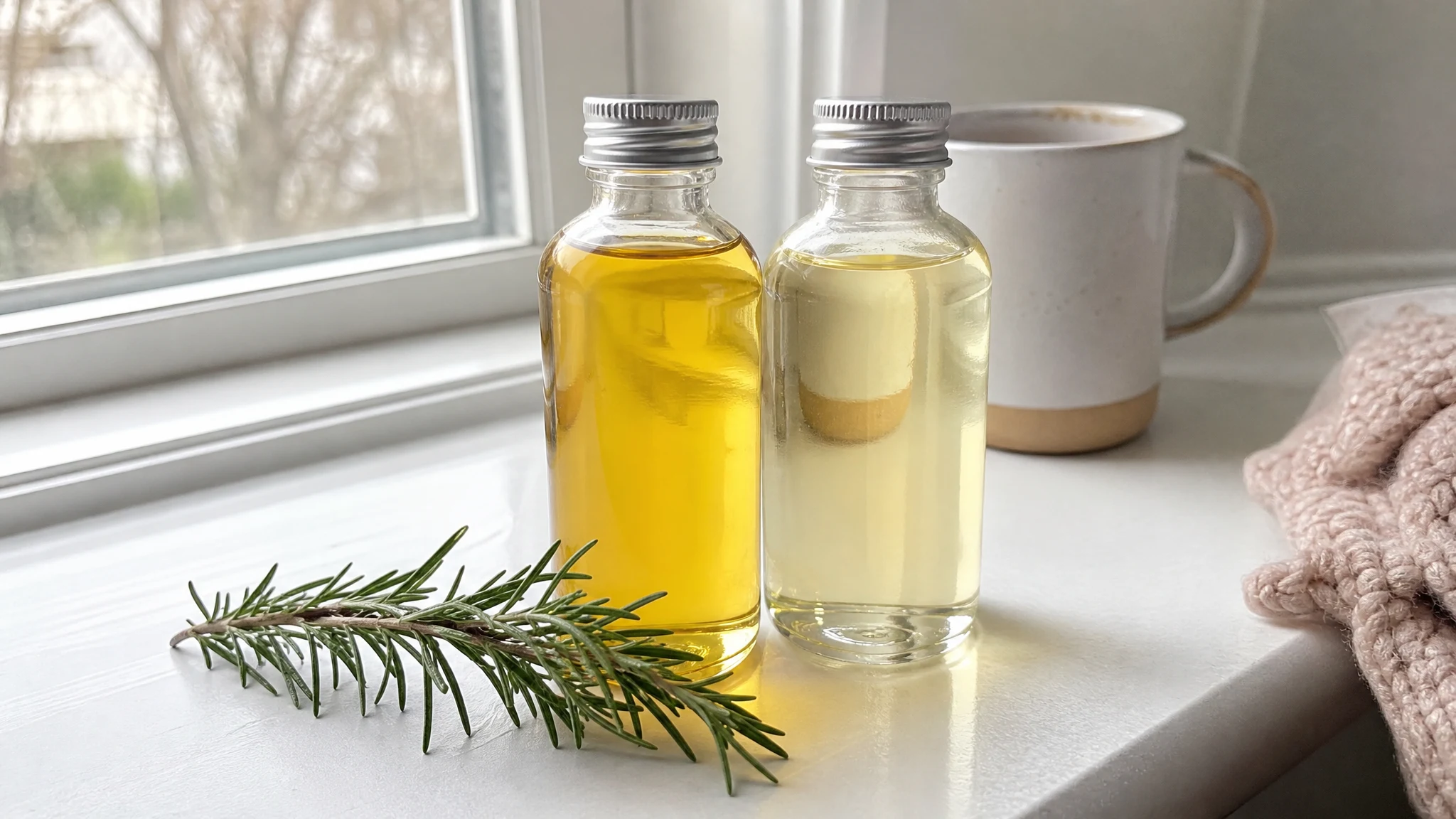
The best of both is a blend: castor oil diluted in a lighter oil gives you a body oil that is rich and still easy to spread. Our guide to diluting castor oil has the arithmetic, and castor oil for skin shows where it sits in a routine.
One allergy note
Sesame is on the list of major allergens, and sesame seed oil does appear in skincare: a 2023 screen of 396 skincare products found sesame derivatives in 11 of them, 2.8 percent. If you or anyone in your household has a sesame allergy, skip sesame oil entirely and ask your doctor or an allergist what is right for you. With any new oil, patch test a small spot first and keep it out of the eyes.
Whichever oil you reach for,If we were setting up a small bathroom shelf, we would probably keep a lighter oil for the whole body and a little castor oil for the spots that want extra cushion. That is simply our preference, and it keeps each bottle doing what it does best.
Whichever oil you reach for, the real tradition is the pause: warm hands, a quiet room and a few minutes that belong to you.
Organic Castor Oil
Cold-pressed, hexane-free organic castor oil, from a 0.5 oz sample to bulk sizes.
From $13.99
Shop Organic Castor Oil →Sources & Further Reading
- Pilot study investigating the effects of Ayurvedic Abhyanga massage on subjective stress experience (Basler, Journal of Alternative and Complementary Medicine, 2011)
- Effect of Nitya-Abhyaṅga (self-massage) combined with stretching on hamstring extensibility, muscle stiffness, and stretch tolerance in college students: a randomized controlled trial (Frontiers in Sports and Active Living, 2026)
- The Histories, Book 2, chapter 94 (Herodotus, Godley translation, 1920)
- Cold pressed oils: a systematic review on physicochemical properties, nutritional composition and pharmacological activities (Frontiers in Nutrition, 2026)
- Castor Oil: Properties, Uses, and Optimization of Processing Parameters in Commercial Production (Patel et al., Lipid Insights, 2016)
- Castor oil (Ricinus communis): a review on the chemical composition and physicochemical properties (Yeboah et al., Food Science and Technology, 2021)
- Prevalence of major food allergens in skincare products for atopic dermatitis (Postepy Dermatologii i Alergologii, 2023)
- How to pick the right moisturizer for your skin (American Academy of Dermatology)