Jamaican Black Castor Oil vs Castor Oil: Which Fits You?
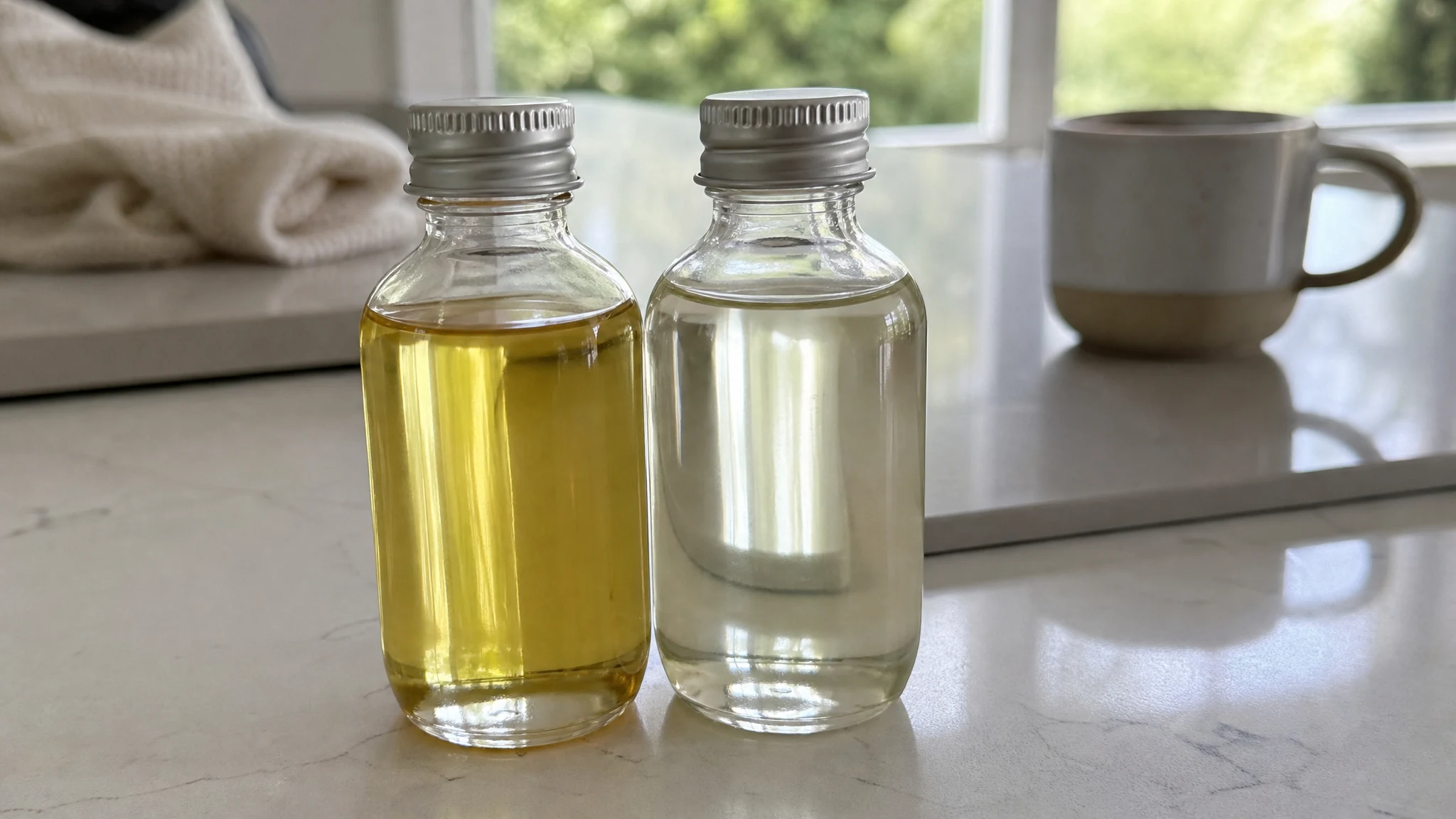
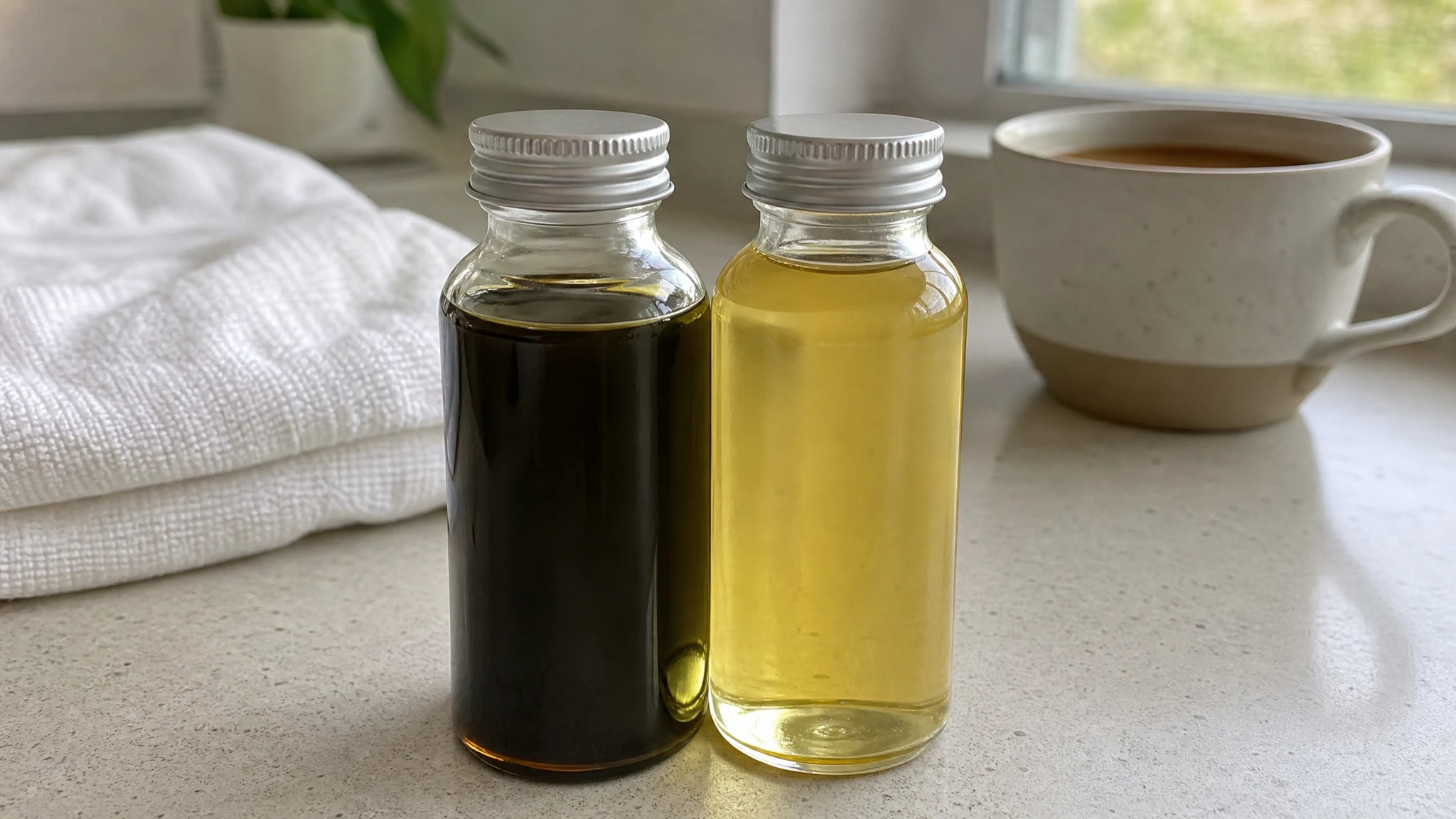
One bottle is nearly black and the other is the colour of pale honey, and both are called castor oil. The difference starts before the oil is even pressed: Jamaican black castor oil is made from roasted beans, and the roasting changes almost everything you can see and smell.
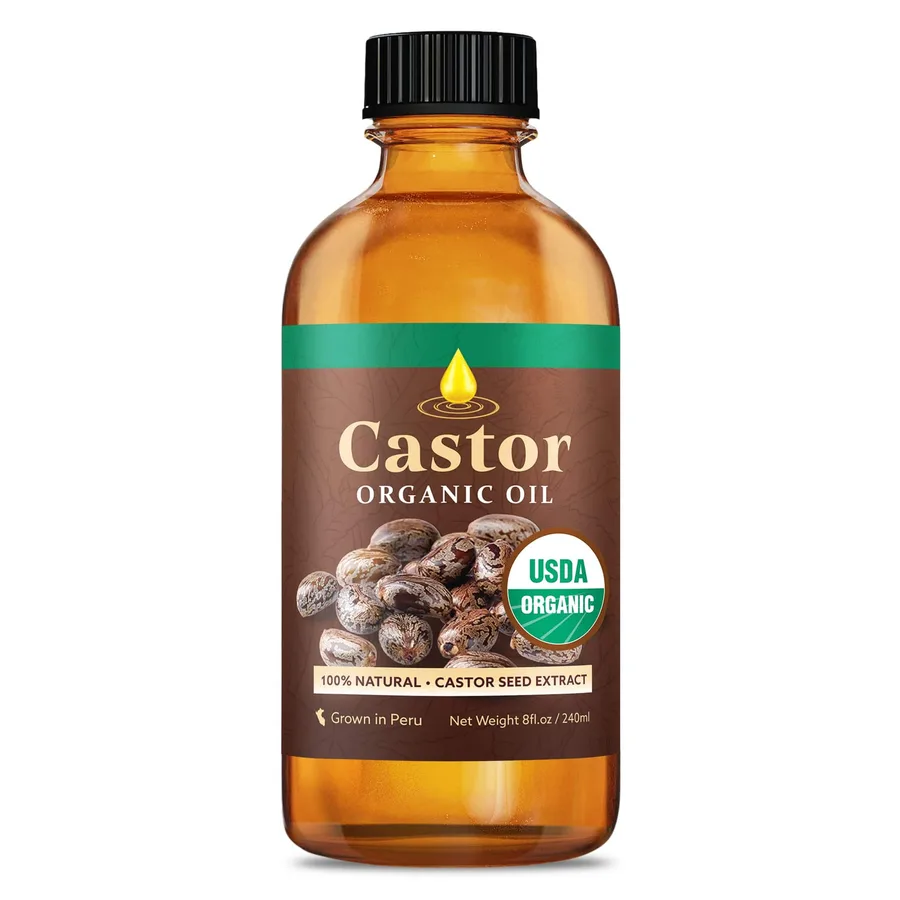
Organic Castor Oil
Cold-pressed, hexane-free castor oil, in sizes from a 0.5 oz sample to bulk drums.
From $13.99
Shop Organic Castor Oil →How the dark oil gets its colour
Do Business Jamaica, the island's trade promotion body, says the oil is distinguished by its dark colour, which results from roasting the bean. It describes the traditional method as manual: the beans are picked, threshed, roasted and boiled, beaten to a pulp with a mortar and pestle, then boiled again to bring the oil up. That is a very different path from simply pressing seeds, and it is a craft with its own heritage.
Cold-pressed oil takes the other road. The seeds are pressed mechanically without added heat, and the oil is filtered. A review of commercial castor processing notes that cold pressing gives lighter-coloured oil than other routes, and crude castor oil is described as pale yellow with a faint, mild scent. That is the oil we sell: organic, cold-pressed, hexane-free, and castor oil only.
Who might love the black one
We do not sell Jamaican black castor oil, but we would not talk anyone out of it. People who like its deep, earthy character, and those with textured hair who enjoy a heavier, richer feel on lengths and ends, often prefer it. Its roasted scent and heft are part of the appeal, and if that is what you want from an oil, it will deliver.
You will also hear that the ash from roasting makes black castor oil stronger or more alkaline than the pale kind. That may sound convincing, but a PubMed search for the name returns no published papers as of this writing, and the pH figures you find on product pages disagree with one another. So we treat it as a popular belief, not a measured result, and we would not pay extra for the ash alone. Neither oil has a published track record for anything beyond conditioning and a rich, protective feel.
A craft with a long road
The traditional route is slow work. The same Do Business Jamaica item describes a mechanised alternative with a roaster, grinder and press, and says it lifts oil yield from about 19 to about 39 percent. That tells you how much effort goes into a bottle of the traditional oil, and it is one reason people value it for the character that effort produces.
A practical way to choose
Here is how we would think about it, as reasoning rather than a rule.
- Scent: pale cold-pressed oil is mild; the black oil has a roasted note that some love and some find a lot.
- Feel on scalp and hair: both are thick, and the dark oil tends to read heavier. Use a few drops either way and spread it with a wide-tooth comb, since buildup is easier to avoid than to wash out. Castor oil for natural hair and castor oil for hair cover routines.
- Face and eye area: we would choose clear, pale cold-pressed oil here, because it is easy to see, mild, and has a simple ingredient story. Do a patch test first and keep any oil out of your eyes.
- Colour on fabric: a dark oil can leave its mark on light pillowcases and towels, so think about your linens.
If you are still deciding between pressing styles, cold-pressed vs refined castor oil is the next read. Our organic cold-pressed castor oil is there if you decide pale and mild is the one.
Neither oil is the wrong choice, only the right one for different hands, and that is a good place to start from when you are choosing.
Organic Castor Oil
Cold-pressed, hexane-free organic castor oil, from a 0.5 oz sample to bulk sizes.
From $13.99
Shop Organic Castor Oil →Sources & Further Reading
- Do Business Jamaica news item on the Jamaican black castor oil market (JAMPRO, 2017)
- Castor Oil: Properties, Uses, and Optimization of Processing Parameters in Commercial Production (Patel et al., Lipid Insights, 2016)