Castor Oil vs Rosemary Oil: What Each One Actually Is
Search for rosemary oil and castor oil together and you would think they were two brands of the same thing. They are not even the same type of oil. One is a heavy, golden carrier that you can put on skin and hair as it is. The other, in most bottles sold for hair, is a strong aromatic that is meant to be diluted before it goes anywhere near you.
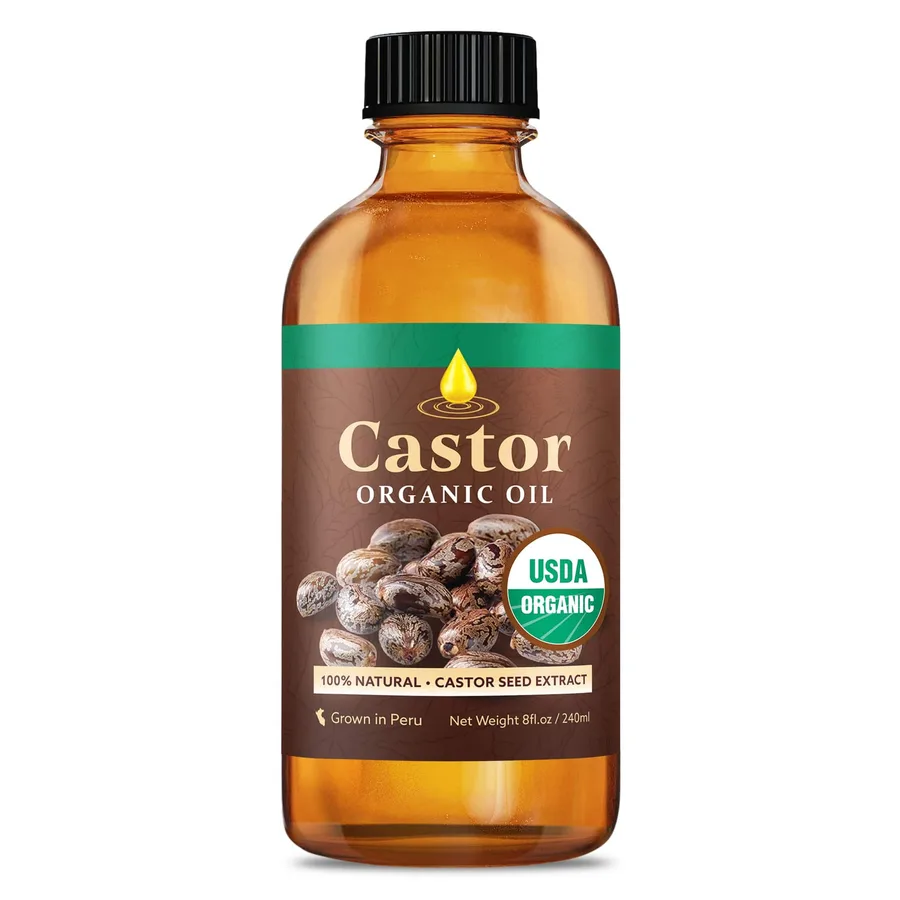
Organic Castor Oil
Cold-pressed, hexane-free castor oil, in sizes from a 0.5 oz sample to bulk drums.
From $13.99
Shop Organic Castor Oil →A carrier and a concentrate
Castor oil is a fixed oil pressed from seeds. It is thick, mild-smelling and slow to spread, and you use it as it comes. Ours is a single ingredient, cold-pressed and hexane-free.
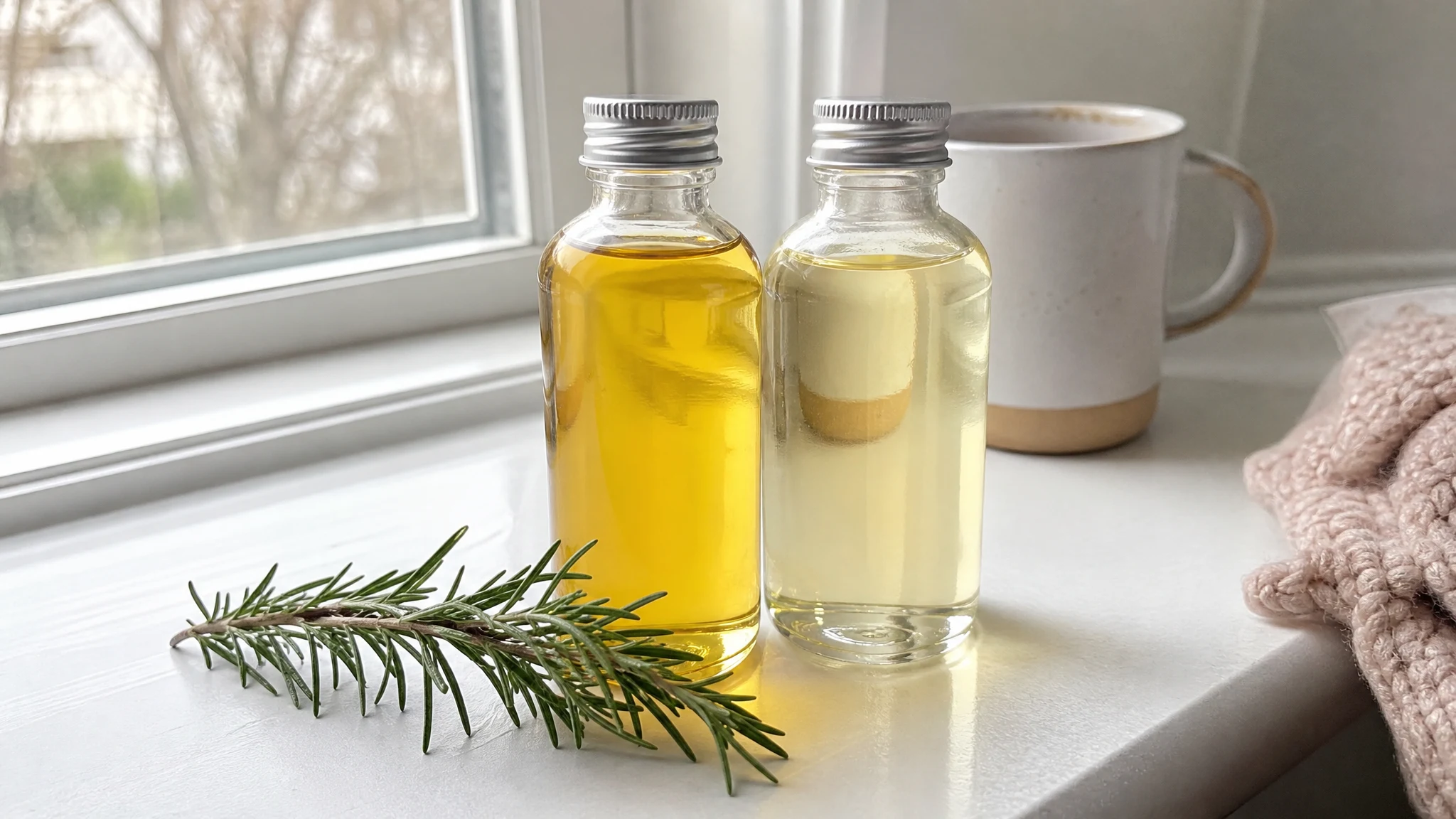
Rosemary "oil" can mean two quite different things. Most often it is a rosemary essential oil: a concentrated, aromatic extract that is far stronger than a carrier. Occasionally it is an infused oil, in which rosemary has soaked in a carrier such as olive or sunflower oil; that one is much gentler. The label should tell you which you are holding, and it is worth reading before it goes on your head.
Why people blend them
The two are natural partners because they do different jobs. Castor oil is the body of the blend: it adds slip, gloss and richness. Rosemary essential oil adds a fresh, herbal scent. That is the honest reason to combine them, and it is a nice one. A scalp massage with a pleasant-smelling oil is a small ritual that is easy to enjoy.
One general dilution figure
An essential oil should never go on skin neat. The Tisserand Institute gives general guidelines of 0.5 to 1.2 percent for the face and other sensitive areas, and 1 to 3 percent for body oils, with 0.2 to 1 percent for skin that is already reaction-prone. It also notes that a higher concentration always raises the chance of a reaction without necessarily adding benefit.
In practice, 1 percent is roughly 3 to 5 drops of essential oil in a tablespoon of carrier oil, depending on drop size. Those figures are general guidance for skin, not a rosemary-specific rule, so we would start at the low end and stay there. Castor oil makes a good carrier for a blend like this because it carries the scent without disappearing into the skin. If it feels too heavy, our guide to the best oils for hair covers lighter oils to mix in.
Patch test, then decide
Tisserand's article points out that allergic reactions are the most common kind of reaction to essential oils, and that dilution cannot undo an existing allergy. So patch test a blend on a small patch of skin before using it on the scalp: here is how to do it. Keep any oil out of your eyes.
Our position
If you want a scalp-massage oil that smells lovely, castor oil is an excellent carrier, and rosemary is an optional extra for the fragrance. You do not need it. We sell castor oil only, so rosemary comes from a pharmacy, health shop or aromatherapy supplier. Start with the carrier and add scent only if you want it. For the full picture of the oil we do sell, read castor oil for hair, and for a recipe that starts from castor oil, try our castor oil hair mask blends.
Reading the bottle
Two quick checks save confusion. First, look for the words "essential oil" or an infused oil on the bottle: if it says essential oil, it is a concentrate and needs dilution. Second, check the ingredient list for the carrier it comes in. Some rosemary products are sold already diluted in a carrier, and adding more of it to your own blend can double up the concentration.
Scent is personal, too. Rosemary has a sharp, herbal, slightly camphor-like aroma that some people love and others find strong on the scalp. Since castor oil is mild-smelling on its own, a blend is the easiest way to test how much fragrance you like. Start with fewer drops than the guideline allows. You can always add another, but you cannot take one out.
A simple way to blend
Pour your carrier into a clean glass bottle, add the essential oil last and swirl. Castor oil is slow to move, so give it a good minute of swirling or stir it with a clean stick. Use a fresh, clean container for each batch and keep it in a cool cupboard away from the window.
Both oils have their place on a bathroom shelf, as long as you know which is which.
Organic Castor Oil
Cold-pressed, hexane-free organic castor oil, from a 0.5 oz sample to bulk sizes.
From $13.99
Shop Organic Castor Oil →