Castor Oil vs Olive Oil: Which Is Better for Hair?
Plenty of us already own a bottle of olive oil, so it is no surprise that it ends up in hair routines. Castor oil gets pulled into the same conversation because it is the famously thick one. They suit different hair, and once you know which is which, the choice is easy.
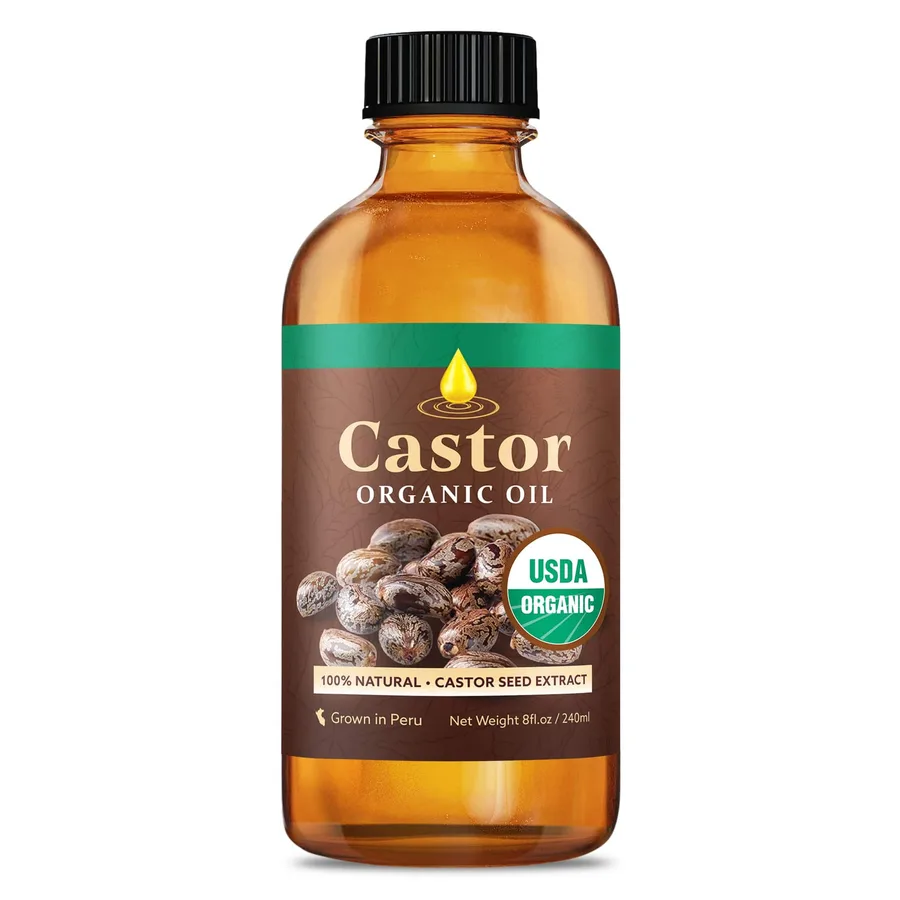
Organic Castor Oil
Cold-pressed, hexane-free castor oil, in sizes from a 0.5 oz sample to bulk drums.
From $13.99
Shop Organic Castor Oil →A free-pouring oil and a slow one
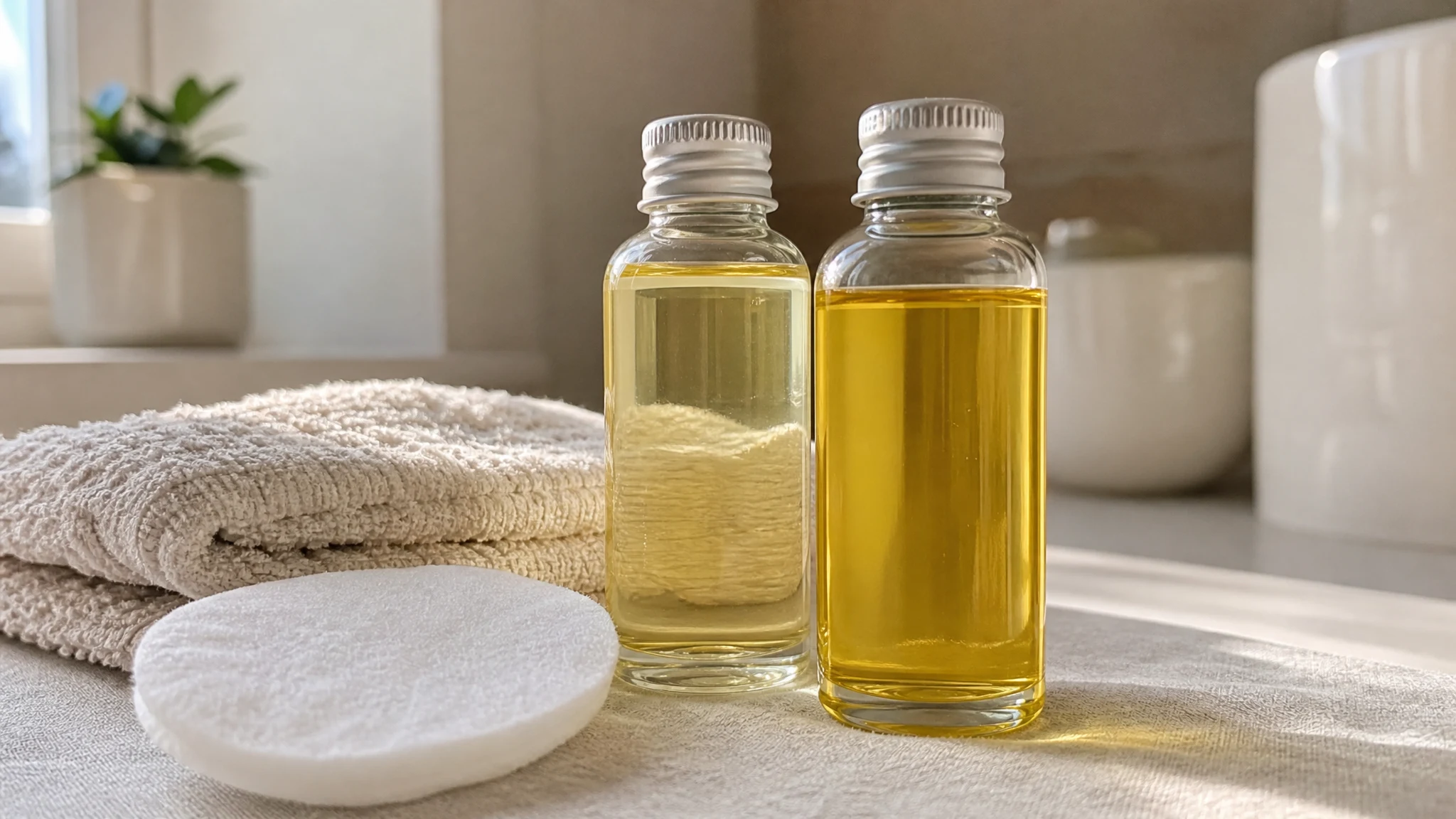
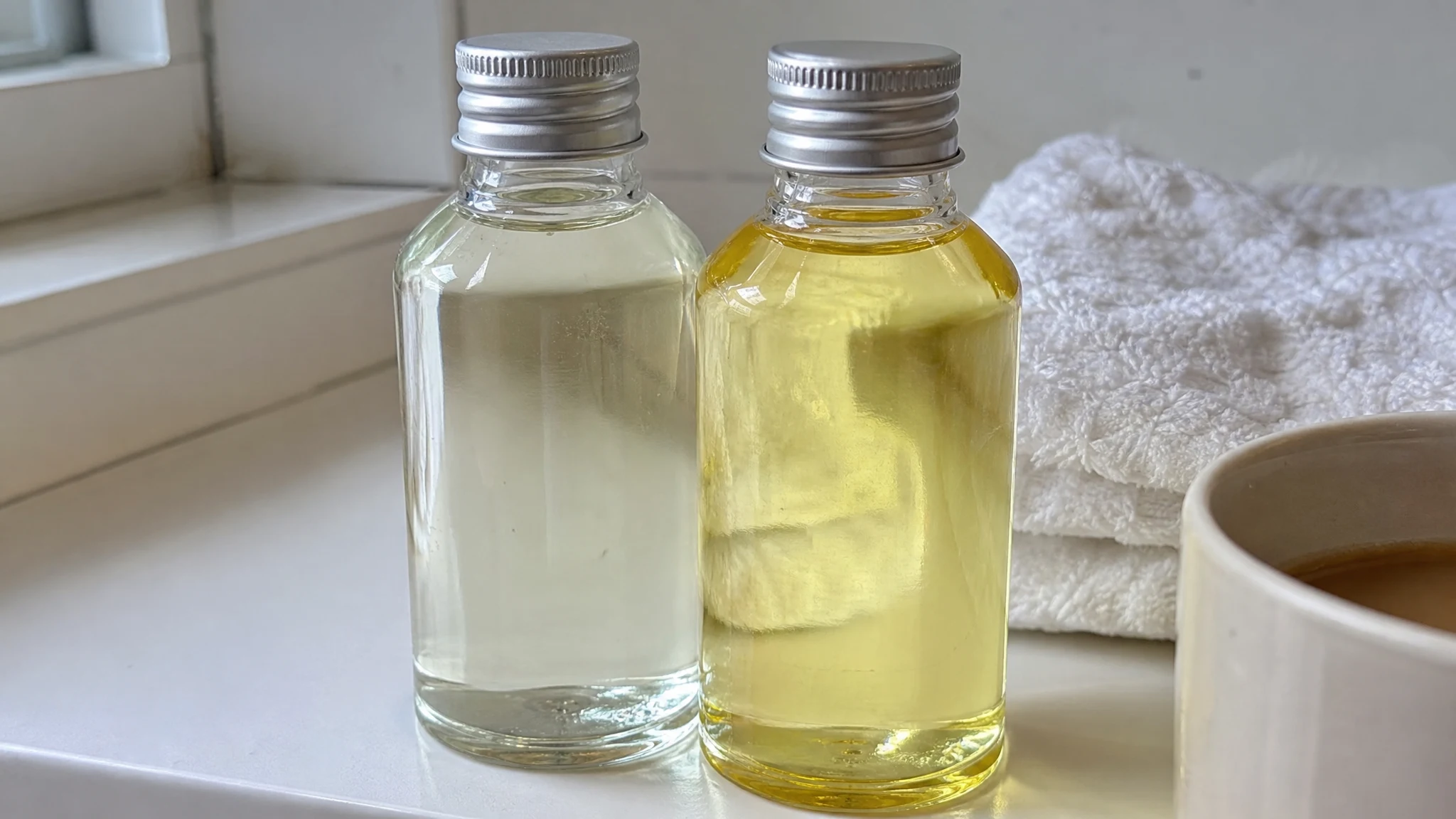
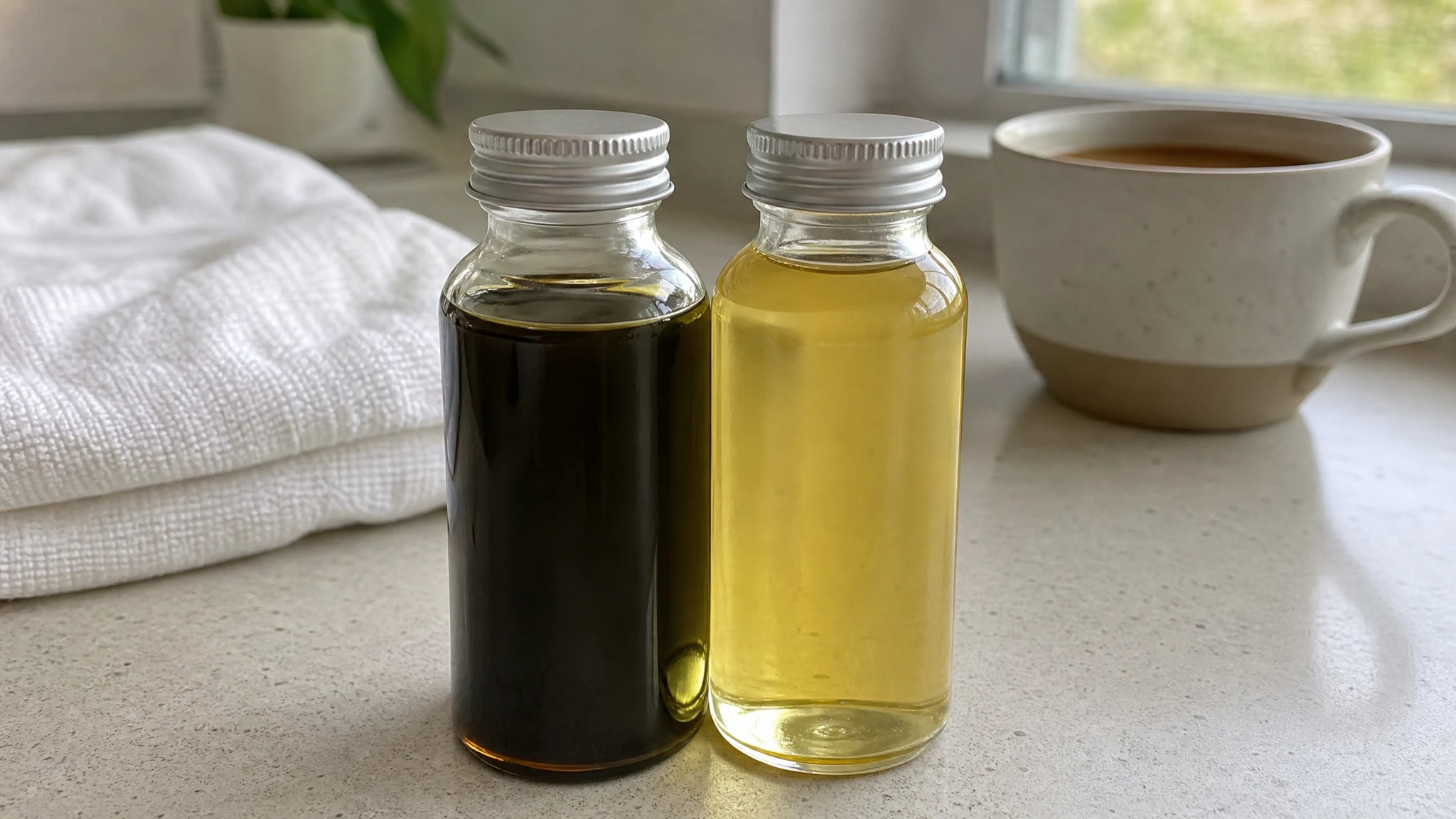
Olive oil is a free-flowing oil with oleic acid as its main fatty acid, 55 to 83 percent in the cosmetic-oil review we looked at, with palmitic and linoleic acids in smaller amounts. Castor oil is built differently: ricinoleic acid makes up up to 90 percent of it, and that hydroxyl-bearing fatty acid is what makes castor oil dense and sticky-rich. A published review reports castor oil's viscosity at about 9 to 10 poise at 25 degrees Celsius, around a thousand times the viscosity of water. We cannot give you a sourced figure for olive oil, but you can tell the difference by pouring one beside the other.
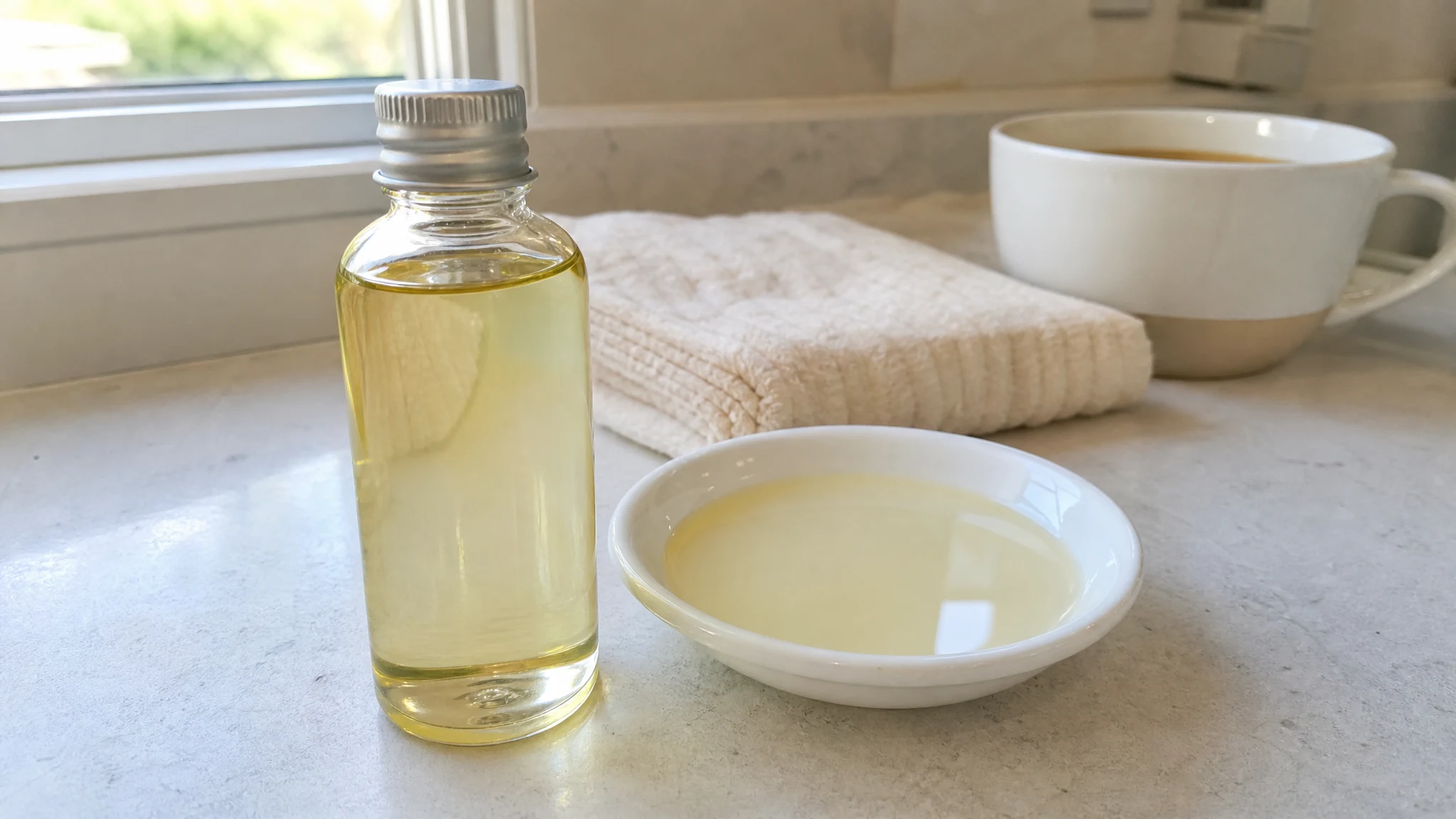
On your fingertips the gap is just as obvious. Olive oil spreads at once and thins as you rub it, with a faintly green, fruity smell that some people enjoy and others find too present in their hair. Castor oil takes its time, feels like thick golden syrup and has hardly any scent, so it suits anyone who likes their hair products quiet.
What the research says (and does not)
Castor oil has no hair study we can point to. A well-known 2003 comparison tested mineral, sunflower and coconut oils on hair, and only coconut oil reduced protein loss; olive and castor were not in it, so we will not claim either one does what coconut did. Olive oil does appear in a 2005 study of oils on hair fibres: like coconut and sunflower oil, and unlike mineral oil, it showed falling adhesion between treated fibres over time, which the authors read as oil being absorbed and leaving a thinner film on the surface. Heavy films, they note, mask the scale structure of the hair. That fits what a heavy oil looks like: smooth, shiny and a little coated.
On skin, the review describes olive oil as an excellent moisturizer when applied to wet skin, and as a second barrier for dry and cracked skin in winter. That is a fair description of how a good oil works on hair, too: it does best on damp strands, where it can seal in the water that is already there.
Which oil for which hair
Here is our position, reasoned from how thin or thick each oil is. If your hair is fine or straight, olive oil is the better fit: a few drops through damp ends gives some shine without weighing everything down, and it tends to rinse out more readily because it is lighter. If your hair is thick, coily or dry to the point of looking dull, castor oil's heavy, sealing film is what you are after, and a blend of the two makes a good middle path. For frizz, the goal is a smooth-looking surface, and either one can do it if you use only a little.
Any oil can go on too heavily. The usual mistake is using too much, not choosing the wrong oil. Our castor oil hair mask ideas show how to build a mask with measured amounts, and if you have already overdone it, how to wash castor oil out of hair walks through it step by step.
Whichever you pick, we would use less than feels right at first. Warm a drop or two in your palms, press it over the ends rather than the roots, and give your hair a day to show you how it likes the result before adding more.
A simple way to try both
Start with olive oil on the ends of damp hair, then, if you want more cushion, add a drop or two of castor oil to your palm first. We sell castor oil only, so olive oil and any other oil are a trip to a pharmacy or beauty-supply shop, and our dilution guide shows how to mix them. Our organic cold-pressed castor oil is a single-ingredient oil, pressed without heat or solvents. For broader context, see best oils for hair and castor oil for hair.
Light for the fine, heavy for the coily, and a blend in the middle: that rule of thumb will take you a long way.
Organic Castor Oil
Cold-pressed, hexane-free organic castor oil, from a 0.5 oz sample to bulk sizes.
From $13.99
Shop Organic Castor Oil →Sources & Further Reading
- A Comprehensive Review of Plant-Based Cosmetic Oils (Virgin Coconut Oil, Olive Oil, Argan Oil, and Jojoba Oil): Chemical and Biological Properties and Their Cosmeceutical Applications, ACS Omega, 2024
- Castor oil (Ricinus communis): a review on the chemical composition and physicochemical properties, Food Science and Technology, 2021
- Effect of mineral oil, sunflower oil, and coconut oil on prevention of hair damage., Journal of Cosmetic Science, 2003
- Investigation of penetration abilities of various oils into human hair fibers., Journal of Cosmetic Science, 2005