Castor Oil Myths vs Facts: Quick Answers
Castor oil collects myths the way a thick oil collects lint. Some are harmless, some send people hunting for the wrong bottle, and a few promise much more than a cosmetic oil can deliver. Here are nine quick verdicts, each with a link if you want the long version, and a straight answer at the end to the question everyone asks.
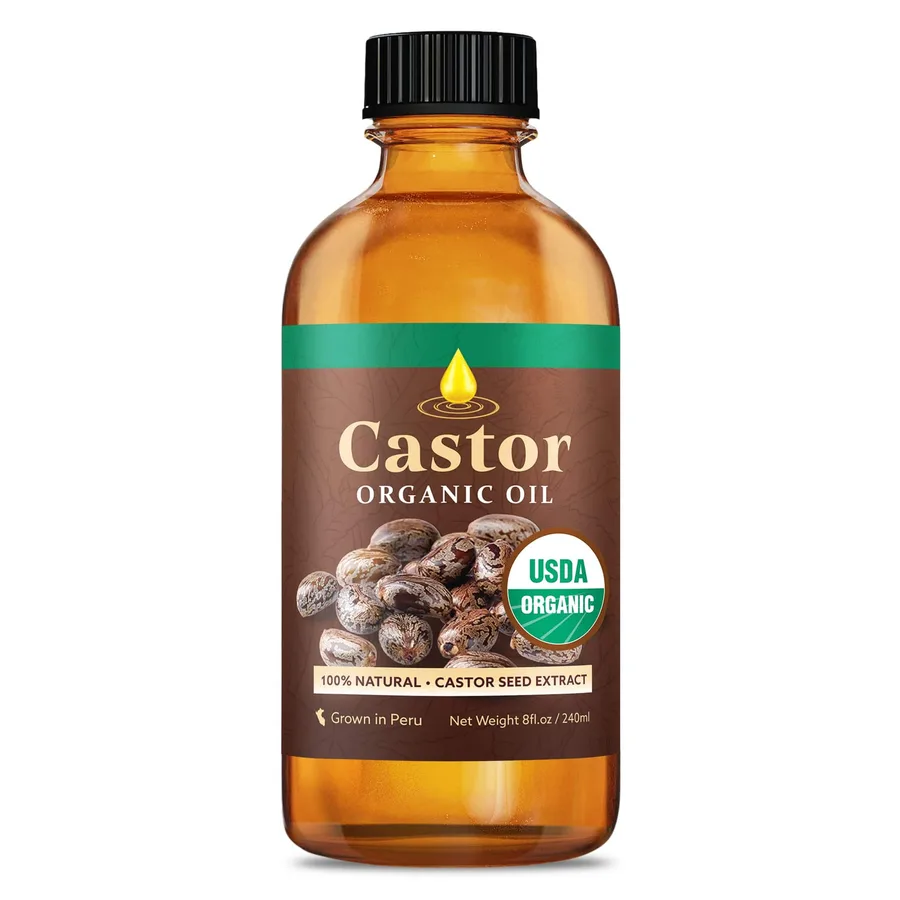
Organic Castor Oil
Cold-pressed, hexane-free castor oil, in sizes from a 0.5 oz sample to bulk drums.
From $13.99
Shop Organic Castor Oil →Myth: thick means pure
Castor oil is naturally thick, but thickness on its own proves very little. A 2026 review of the plant notes that viscosity and oil quality vary with cultivar, environment and origin, so two honest bottles can pour a little differently. Judge purity by the ingredient list and what a seller will show you, not by how slowly the oil moves. Our guide to telling if castor oil is pure explains what to look at instead.
Myth: black is stronger than clear
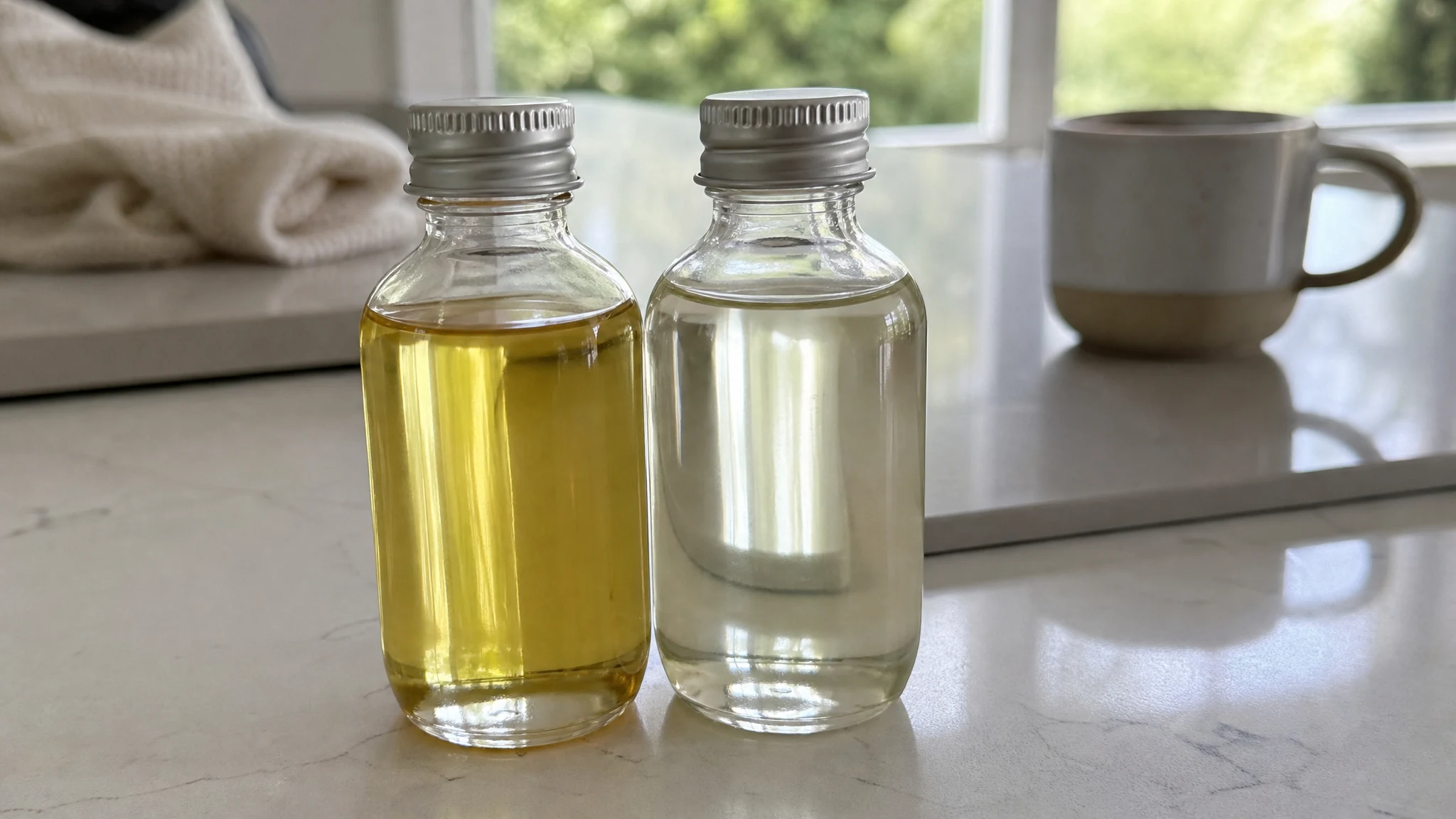
Jamaican black castor oil is a different style of oil, with its own darker character, and "stronger" is not a measure that applies to a cosmetic oil. Choose it if you like it, and choose clear if you prefer that. Our side-by-side comparison lays out the differences without ranking one above the other.
Myth: cold-pressed is just a label
It is a real difference in how the oil is made. A 2021 review notes that more than 90 percent of castor oil worldwide is obtained by solvent extraction, usually with hexane. Cold pressing skips the solvent, and a 2016 review of commercial production reports that cold-pressed oil has lower acid and iodine content and is lighter in colour than solvent-extracted oil. We press our oil without heat or solvents, so it is hexane-free. The cold-pressed vs refined post goes deeper.
Myth: organic means it works better
Organic describes how a crop is farmed and handled, not how an oil feels on your skin. Under the USDA organic rules in 7 CFR 205.105, a product sold as organic has to be produced and handled without most synthetic substances. That is a meaningful promise about the farm and the process, and it is a good reason to choose an organic oil if that matters to you, but it is not a performance claim. We sell organic castor oil, and our bulk listing states the oil is certified under the USDA organic program. Our organic vs regular post explains what the label does and does not tell you.
Myth: castor oil lasts forever
Castor oil is a slow-to-turn oil: the hydroxyl group on its ricinoleic acid is credited with helping it resist oxidation. But slow is not never. The same 2016 review puts the shelf life of refined castor oil at about 12 months if it is kept away from excessive heat. Keep the cap on, keep the bottle away from heat, and trust your nose: a change in colour or smell is the signal to replace it. Details are in our shelf life guide.
Myth: it can change gray hair
Hair turns gray when the pigment-making cells in the follicle run down. A 2022 review describes graying as the result of depletion and dysfunction of melanocyte stem cells, and it does not evaluate any topical oil. Nothing in that science points to a bottle on the bathroom shelf. A rich oil can add shine to the hair you have, which is a lovely thing in itself. See what we say about gray hair.
Myth: it is only for hair
Hair is its celebrity use, but it is far from its only one. The Cosmetic Ingredient Review panel found castor oil in 769 cosmetic products as of 2002, where it mainly works as a skin-conditioning ingredient, and its highest reported use level was in lipstick. Our castor oil for skin guide and our castor oil for hair guide each cover a side of it, and the lip balm recipe shows a third.
Myth: a castor oil pack is a magic fix
A pack is an oiled cloth, a warm towel and half an hour of quiet. We love it as a cosy ritual, and we make no medical claims for it. If you are curious how to set one up, our pack guide covers supplies and handling.
Myth: oil has to stay on overnight
It does not. Nothing about a conditioning oil demands a full night, so leave it on for as long as is comfortable for you. What changes with time is cleanup: a thick oil takes longer to rinse than a thin one, and shampoo works because its molecules grab both oil and water so the oil can be rinsed away. Our guide on how long to leave it in has the practical details.
So does it really work?
For what it is, yes. Castor oil moisturizes dry skin, softens, adds shine and leaves a rich, glossy finish, and it does those things very well. It is not a fix for medical conditions, and no honest cosmetic oil is. In human clinical tests, the Cosmetic Ingredient Review found castor oil was not a significant skin irritant or sensitizer, though people with some occupational skin conditions may react. So do a patch test, keep oil out of your eyes, and ask a doctor or dermatologist about anything specific to you. Our side effects guide covers what to watch for, and our organic cold-pressed castor oil is our single-ingredient answer if you want to try it.
Knowing which claims to wave off makes shopping easier, and gives you more room to enjoy the oil itself.
Organic Castor Oil
Cold-pressed, hexane-free organic castor oil, from a 0.5 oz sample to bulk sizes.
From $13.99
Shop Organic Castor Oil →Sources & Further Reading
- Mtendwa S, Rungqu P, Maqanda V. Phytochemistry, Pharmacological Potential and Industrial Applications of Ricinus communis L.: A Review. Pharmaceuticals, 2026
- Yeboah A, et al. Castor oil (Ricinus communis): a review on the chemical composition and physicochemical properties. Food Science and Technology, 2021
- Patel VR, et al. Castor Oil: Properties, Uses, and Optimization of Processing Parameters in Commercial Production. Lipid Insights, 2016
- Electronic Code of Federal Regulations: Allowed and prohibited substances, methods, and ingredients in organic production and handling (7 CFR 205.105)
- Chen J, et al. Hair Graying Regulators Beyond Hair Follicle. Frontiers in Physiology, 2022
- Final report on the safety assessment of Ricinus Communis (Castor) Seed Oil, Hydrogenated Castor Oil, Glyceryl Ricinoleate, Glyceryl Ricinoleate SE, Ricinoleic Acid, Potassium Ricinoleate, Sodium Ricinoleate, Zinc Ricinoleate, Cetyl Ricinoleate, Ethyl Ricinoleate, Glycol Ricinoleate, Isopropyl Ricinoleate, Methyl Ricinoleate, and Octyldodecyl Ricinoleate, 2007
- Gavazzoni Dias MFR. Hair cosmetics: an overview. International Journal of Trichology, 2015