Castor Oil Lip Balm Recipe: Glossy, Soft, Easy
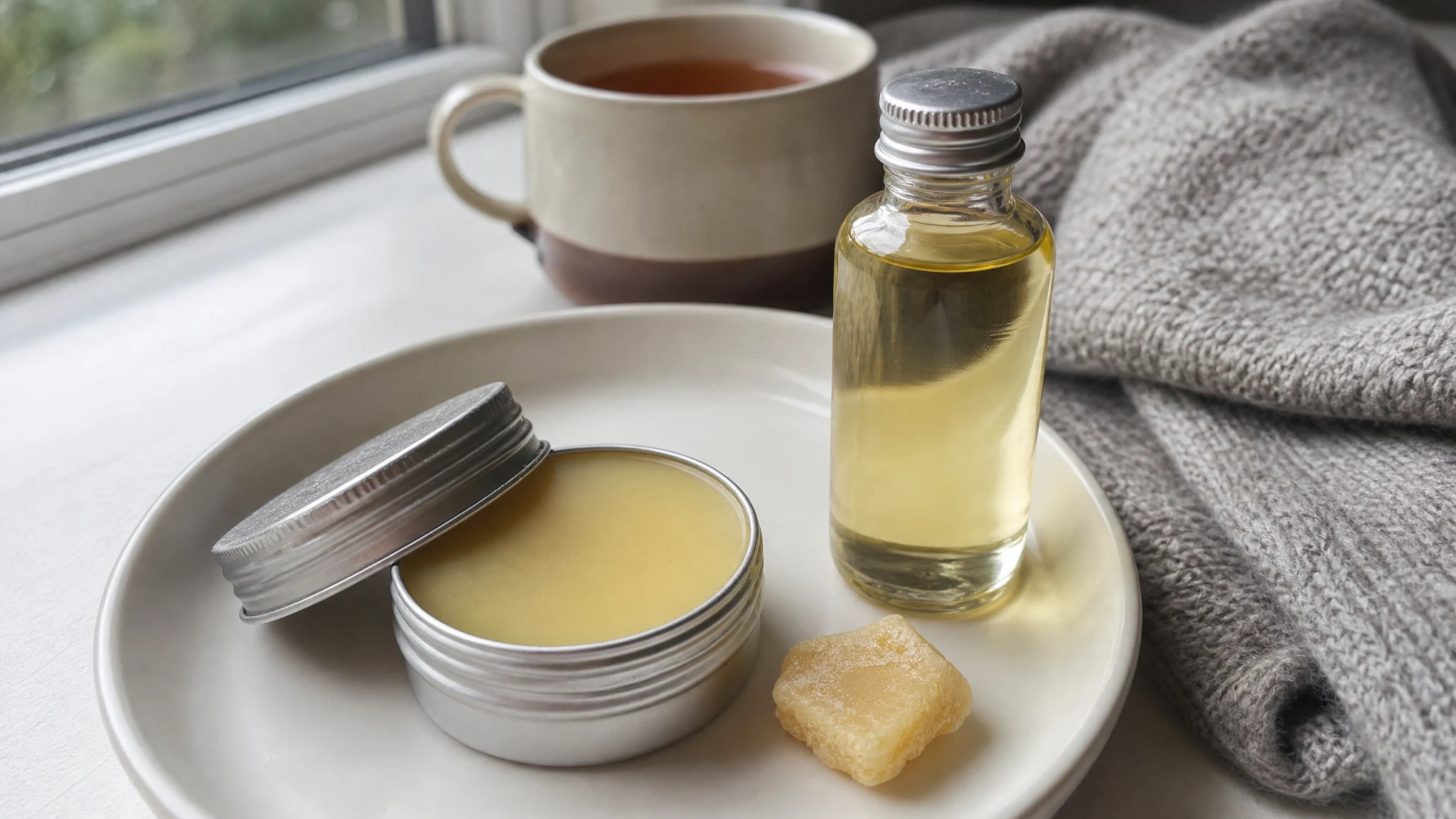
There is a reason lip gloss shines the way it does, and castor oil is a big part of the answer. It is thick, glossy and slow to slide off, which is exactly what you want on lips. This is a small, forgiving balm built from a published starter formula, with castor oil giving it that glassy finish.
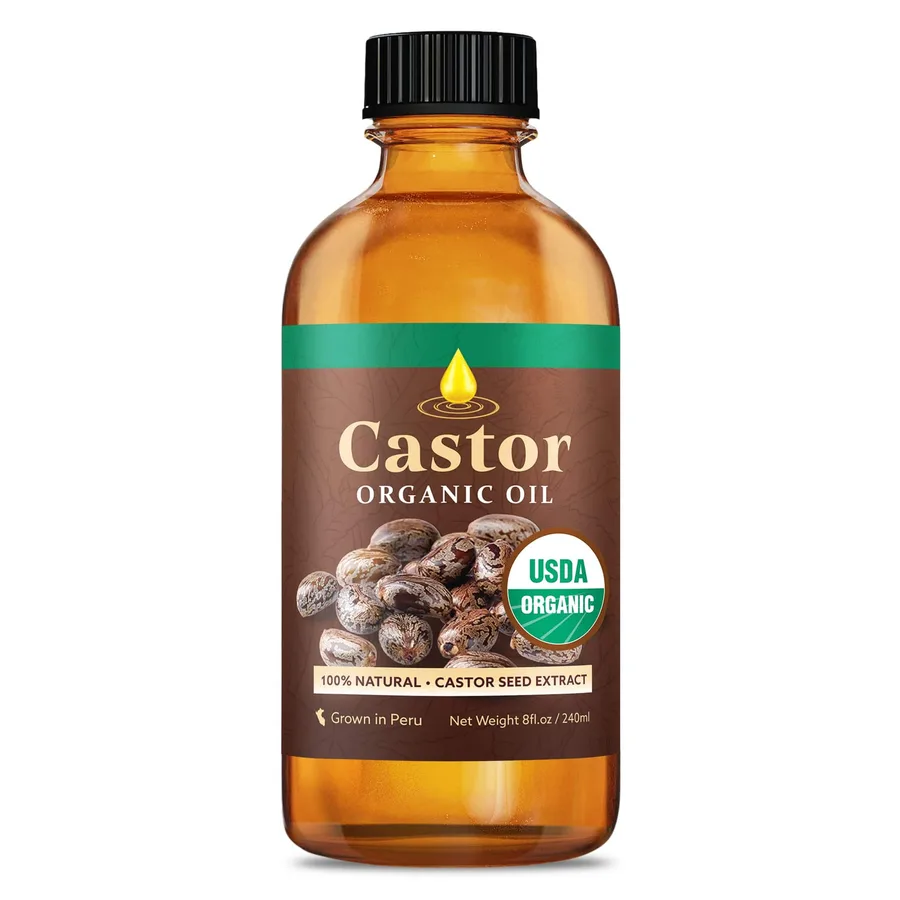
Organic Castor Oil
Cold-pressed, hexane-free castor oil, in sizes from a 0.5 oz sample to bulk drums.
From $13.99
Shop Organic Castor Oil →Why castor oil gives gloss
Gloss comes down to viscosity. A thin oil spreads out and disappears; a thick one stays in a smooth, shiny layer. Castor oil is thick enough that a review of its properties puts it at about 9 to 10 poise at 25 C, roughly a thousand times water's viscosity by our arithmetic. Cosmetic chemists have noticed too. The Cosmetic Ingredient Review panel, in its 2007 safety assessment, found castor oil in 769 cosmetic products as of 2002, with its highest reported use concentration, 81 percent, in lipstick. Lipstick is where castor oil shows up at its highest concentrations.
The recipe, with the arithmetic
We did not invent the ratios here. They come from the basic formula published by Wholesale Supplies Plus, a cosmetic-making supplier, for a 2 oz batch: 20 percent beeswax, 15 percent coconut oil, 10 percent shea butter, 15 percent cocoa butter and 40 percent sweet almond oil. That page suggests adding a little castor oil for extra shine and slickness, without giving an amount. So here is how the numbers work out if you give castor oil a 10 percent share, taken out of the liquid-oil portion.
| Ingredient | Weight (oz) | Share |
|---|---|---|
| Beeswax | 0.40 | 20% |
| Cocoa butter | 0.30 | 15% |
| Coconut oil | 0.30 | 15% |
| Shea butter | 0.20 | 10% |
| Sweet almond oil | 0.60 | 30% |
| Castor oil | 0.20 | 10% |
| Total | 2.00 | 100% |
The 0.80 oz of liquid oil in the original is split into 0.60 oz almond oil and 0.20 oz castor oil, so everything still adds up to 2 ounces. That makes about ten tubes' worth. Weigh on a digital scale rather than measuring by the spoon.
Making it
- Weigh the beeswax, cocoa butter, coconut oil and shea butter into a glass container.
- Melt them in 30-second bursts in the microwave, stirring between each, and let the leftover warmth finish the job.
- When they are about halfway melted, stir in the almond oil and the castor oil, then keep melting until the mix is clear and even.
- Let it cool for a minute, then pour into clean tubes or small tins.
- Leave the balms to set completely before you put the lids on.
Beeswax, butters, almond oil and tubes or tins are things you find at a craft or cosmetic-making supply shop. We press and sell one oil, our organic cold-pressed castor oil, so that is the one ingredient we can supply.
Adjusting the texture
Firmness is yours to tune. According to that same supplier, more beeswax and less butter gives a harder balm, and the opposite gives a softer one. Researchers who study cosmetic sticks measure hardness carefully for just this reason: in a 2012 study of stick bases made with castor, jojoba, coconut and sunflower oils and several waxes, the exact oil and wax chosen shaped how the base behaved. We would keep castor near 10 percent. The glossier, stickier-rich feel is lovely in small amounts, and a larger share turns the balm into something closer to gloss than balm.
A small routine
A thin layer is plenty. Dab it on with a clean fingertip, or use the tube straight. Keep it for lips only and out of your eyes. As with anything new, do a patch test first, on the inside of your forearm (our patch test guide covers it), and ask a doctor or dermatologist about anything specific to you. If you like the idea of an evening ritual, our nails and cuticles routine uses the same oil, and the castor oil for skin guide shows where else it fits.
A homemade balm is a small pleasure: a few minutes at the counter and a little tin for your bag that is entirely yours.
Organic Castor Oil
Cold-pressed, hexane-free organic castor oil, from a 0.5 oz sample to bulk sizes.
From $13.99
Shop Organic Castor Oil →Sources & Further Reading
- Wholesale Supplies Plus: Lip Balm Recipe: How to Formulate a Basic Lip Balm
- Budai L, Antal I, Klebovich I, Budai M. Natural oils and waxes: studies on stick bases. Journal of Cosmetic Science, 2012
- Final report on the safety assessment of Ricinus Communis (Castor) Seed Oil, Hydrogenated Castor Oil, Glyceryl Ricinoleate, Glyceryl Ricinoleate SE, Ricinoleic Acid, Potassium Ricinoleate, Sodium Ricinoleate, Zinc Ricinoleate, Cetyl Ricinoleate, Ethyl Ricinoleate, Glycol Ricinoleate, Isopropyl Ricinoleate, Methyl Ricinoleate, and Octyldodecyl Ricinoleate, 2007
- Yeboah A, et al. Castor oil (Ricinus communis): a review on the chemical composition and physicochemical properties. Food Science and Technology, 2021