Castor Oil Side Effects: Who Should Go Easy
Castor oil has a reputation for being easy on the skin, and for most people using it as a cosmetic oil, it is. But "most people" is not "everyone", and a thick, slippery oil comes with a few practical quirks worth knowing before you pour. Here is our plain, proportionate rundown, for topical cosmetic use on skin and hair only.
Organic Castor Oil
Cold-pressed, hexane-free castor oil, in sizes from a 0.5 oz sample to bulk drums.
From $13.99
Shop Organic Castor Oil →What the experts actually found
The best single reference is the Cosmetic Ingredient Review, an independent expert panel that assesses cosmetic ingredients. Its report on castor oil and ricinoleic acid found the oil was not a significant skin irritant, sensitizer or photosensitizer in human clinical tests, and that sensitization reactions are seen infrequently. The panel judged the ingredients safe in the practices of use and concentrations described, and reaffirmed that conclusion in a 2025 re-review.
The same report carries a note that sets the tone for the rest of this article: patients with occupational dermatoses, meaning existing skin conditions linked to their work, may have a positive reaction to castor oil or ricinoleic acid. Reaction is the exception, and it does happen. A 2025 report in Contact Dermatitis is titled "Allergic contact dermatitis triggered by castor oil-containing dressings", a reminder that the skin of some people simply objects to it.
What a reaction looks like
Skin that objects usually says so with redness, itching, burning or stinging, a rash, small blisters or hives. Sometimes it appears within hours. Sometimes it takes a few days. That is exactly why we like a patch test before any new routine, and our step-by-step patch test guide shows how.
If your skin reacts, stop using the oil, rinse it off with mild soap and water, and talk to a doctor or dermatologist if it does not settle. The FDA gives the same advice for any cosmetic product: stop using it and contact your healthcare provider.
Near the eyes, go lightly
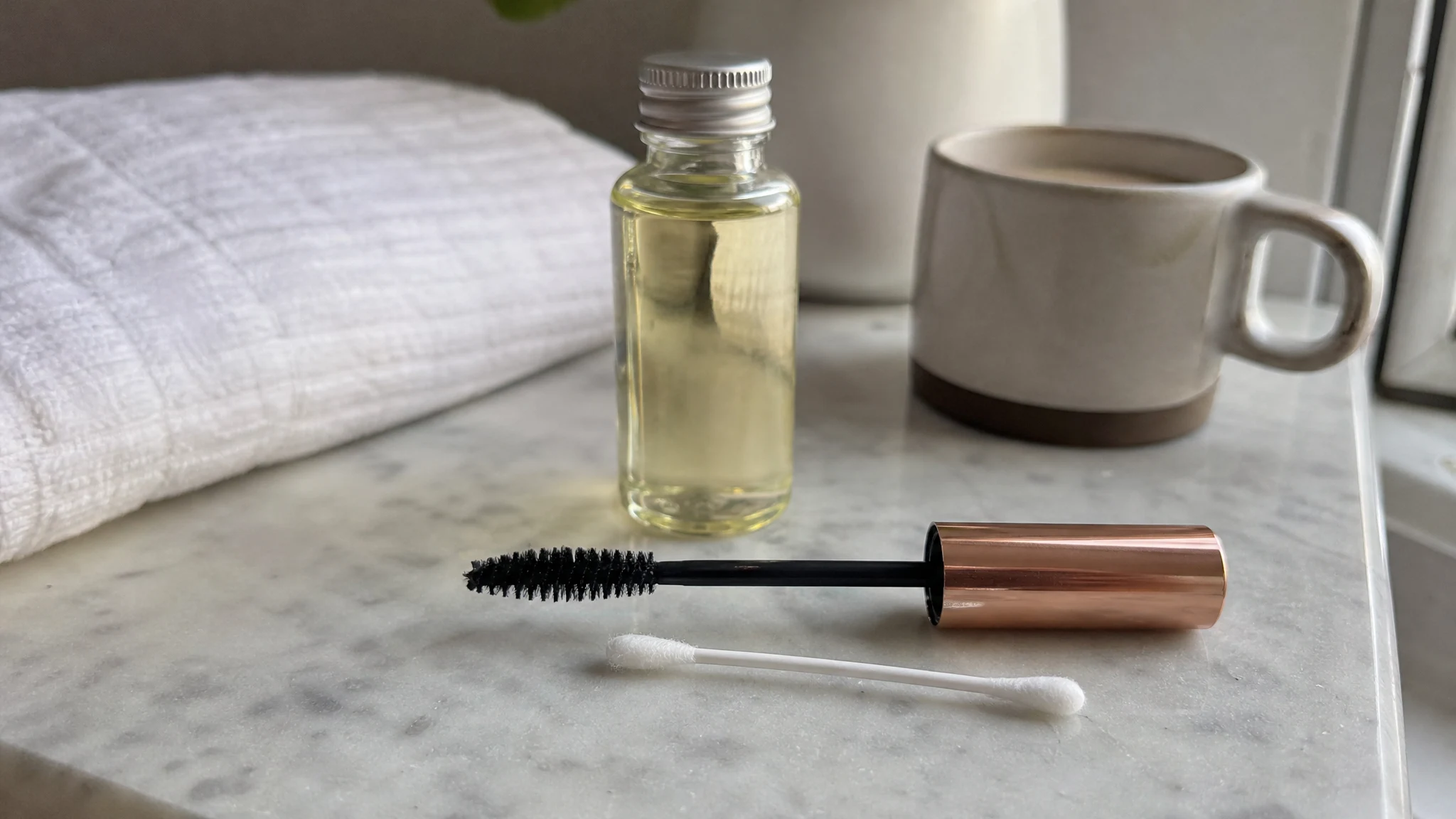
This is the one place where "a little" matters more than anywhere else. The FDA's advice is to use products near your eyes only if they are meant for that purpose. The Cosmetic Ingredient Review report describes studies in which castor oil placed in the eyes caused mild, short-lived discomfort in one group and surface changes to the cornea in another. Oil that is thick and slow-moving does not rinse out as quickly as a thin one either, so a heavy hand is a poor idea. Apply it well away from the lash line, keep your eyes closed while you work, and see an eye care professional about anything that persists. If lashes and brows are what brought you here, our post on castor oil for eyelashes goes through the careful way to handle it.
Who should check with a doctor first
If you are pregnant or have a medical condition, check with your doctor before trying anything new. The same goes for skin that is broken, very sensitive, freshly irritated or already being managed by a dermatologist. Castor oil is a cosmetic oil, and it is not a replacement for anything a medical professional has recommended.
The practical side effects nobody mentions
Some of the most common complaints have nothing to do with the skin.
- Slippery surfaces. A drop on tile or a bathroom floor turns it into a rink. Wipe the floor and the soles of your feet.
- Stained fabric. Oil marks pillowcases and towels. Use an old towel and a scarf or cap at night.
- Tangles. A 2026 narrative review of castor oil in dermatology mentions hair felting among the rare adverse effects reported. In practice, a little oil on dry hair, worked through gently, is easier to wash out than a lot. Our guide to castor oil for hair covers the technique.
- Slow absorption. A thick oil that sits on the surface leaves a shiny layer. Some people love that. If you prefer a quicker finish, use less.
Keeping it in proportion
None of this should put you off. For most people, castor oil is a rich, enjoyable oil that does its soft, glossy job and lets you get on with your day. The sensible routine is the same for any new oil: test a small patch, keep it off the eyes, use a modest amount, and pay attention to how your skin feels. For ideas on using it on the face and body, castor oil for skin is a good next stop, and if the thing you were really wondering about was the belly button trend, we sorted fact from folklore in castor oil in the belly button. For a warm, calm project to try once your patch test is clear, how to make a castor oil pack is worth a read.
Skin is personal, and the best test of any oil is how yours responds. Go slow, and enjoy it.
Organic Castor Oil
Cold-pressed, hexane-free organic castor oil, from a 0.5 oz sample to bulk sizes.
From $13.99
Shop Organic Castor Oil →Sources & Further Reading
- Final report on the safety assessment of Ricinus Communis (Castor) Seed Oil, Hydrogenated Castor Oil, Glyceryl Ricinoleate, Glyceryl Ricinoleate SE, Ricinoleic Acid, Potassium Ricinoleate, Sodium Ricinoleate, Zinc Ricinoleate, Cetyl Ricinoleate, Ethyl Ricinoleate, Glycol Ricinoleate, Isopropyl Ricinoleate, Methyl Ricinoleate, and Octyldodecyl Ricinoleate. Cosmetic Ingredient Review expert panel, 2007.
- Re-Review Summary of Ricinus Communis (Castor) Seed Oil and Ricinoleates as Used in Cosmetics. Cosmetic Ingredient Review expert panel, 2025.
- Allergic contact dermatitis triggered by castor oil-containing dressings. Contact Dermatitis, 2025.
- Use of Castor Oil in Dermatology: A Narrative Review. Cureus, 2026.
- U.S. Food and Drug Administration. How to Report a Cosmetic Product Related Complaint.
- U.S. Food and Drug Administration. Using Cosmetics Safely.