Is Castor Oil Safe for Cats? Grooming and Risks
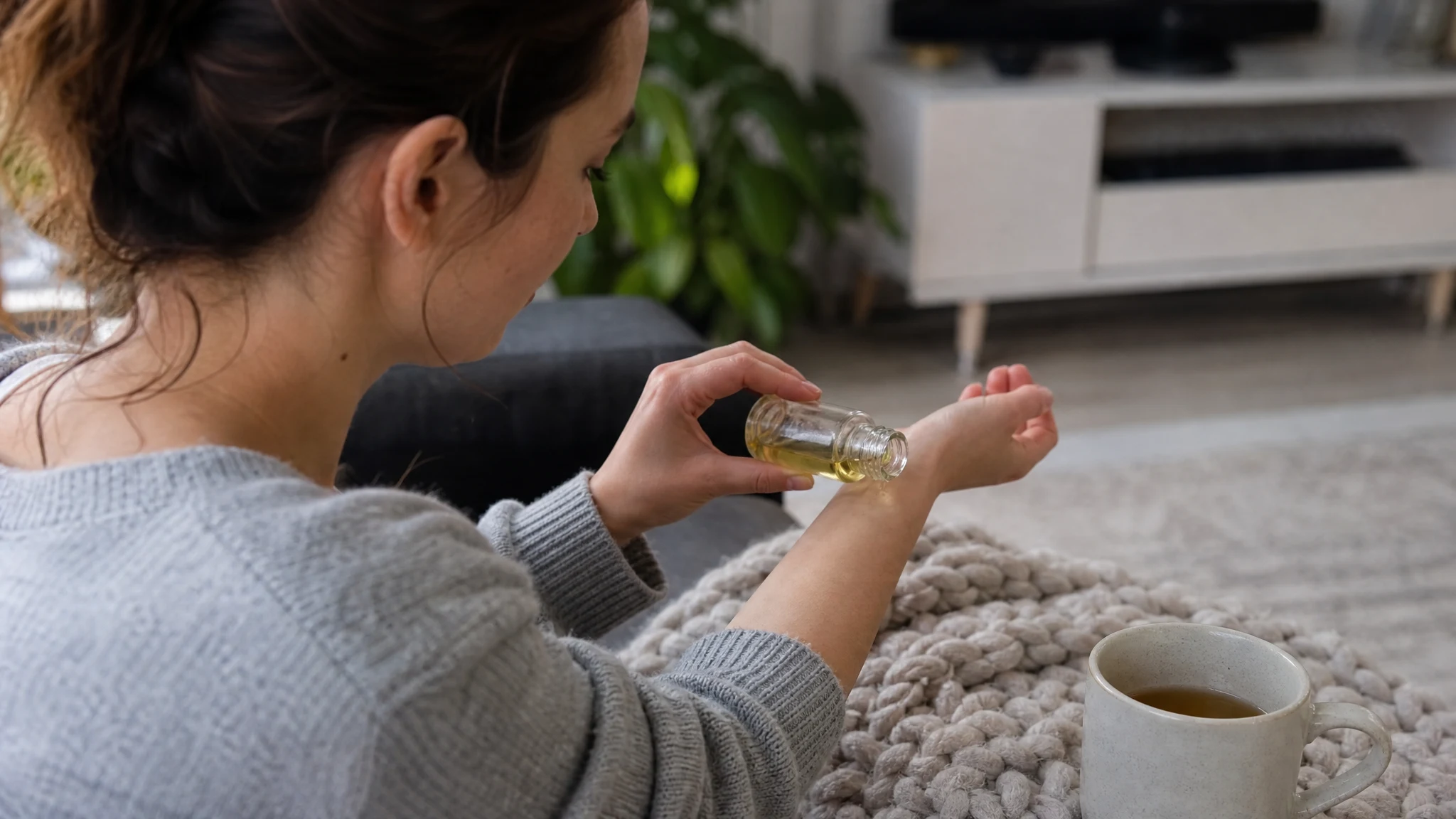
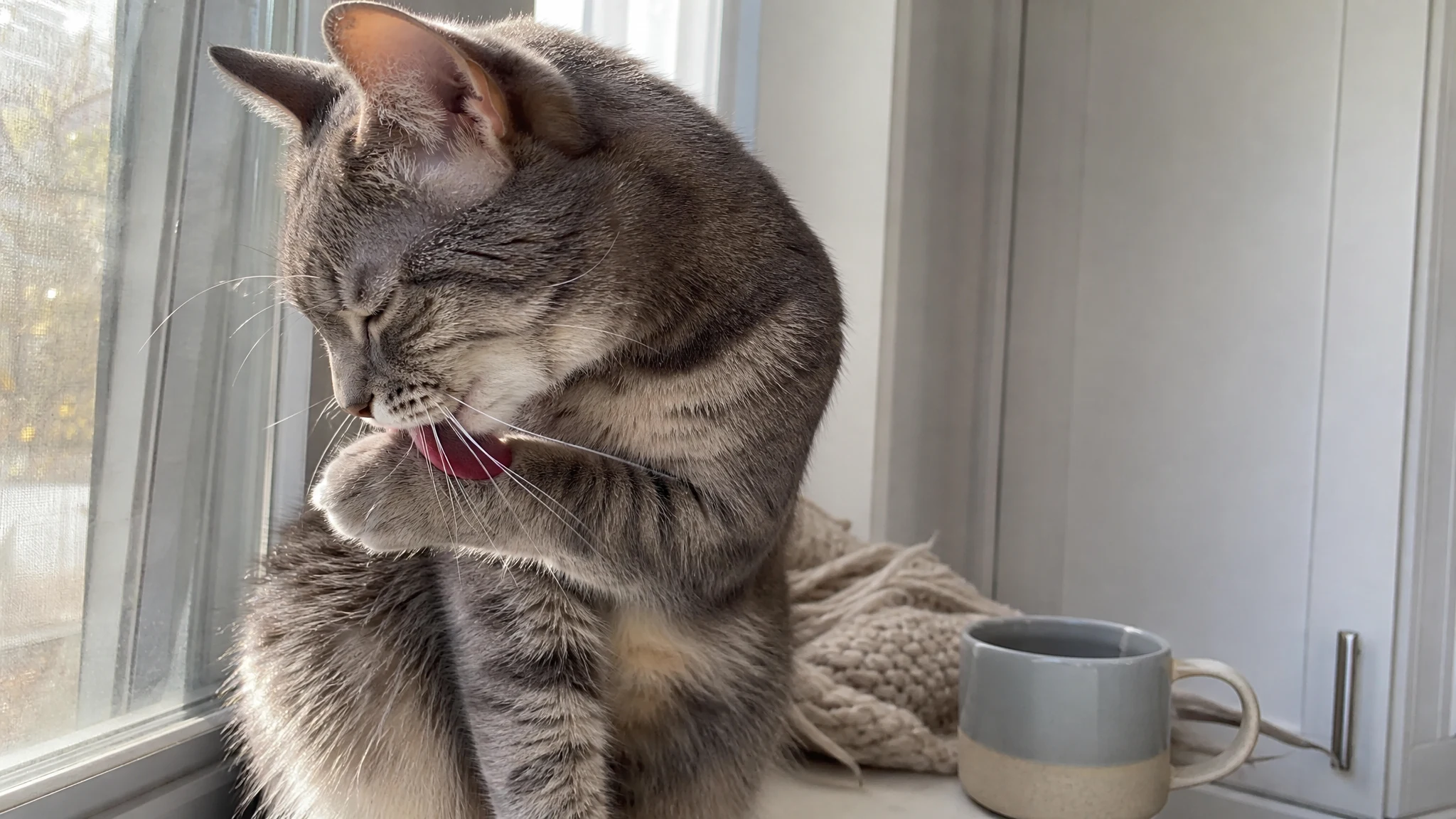
Watch a cat for ten minutes and you will see the whole problem. Anything that lands on a cat's fur ends up on its tongue, because cats groom constantly and very thoroughly. That one habit is why we would not put castor oil on a cat, and why the way you store it at home matters more with a cat in the house.
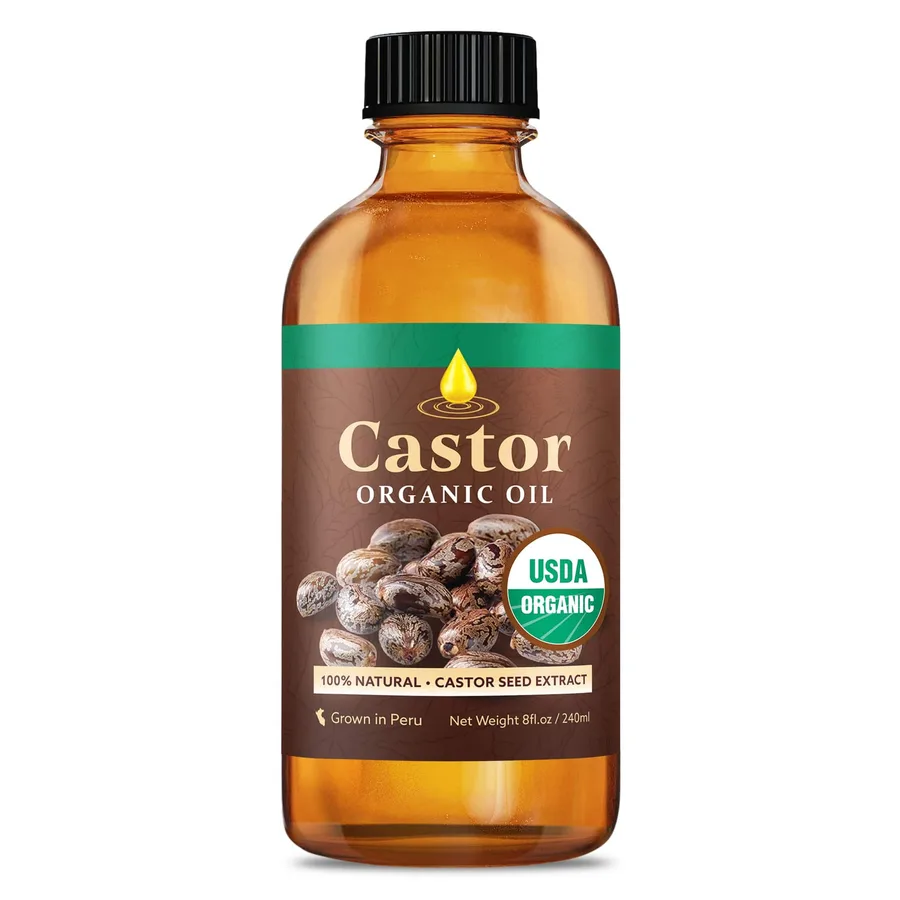
Organic Castor Oil
Cold-pressed, hexane-free castor oil, in sizes from a 0.5 oz sample to bulk drums.
From $13.99
Shop Organic Castor Oil →We know how cats behave: they investigate every open bottle, every warm towel and every new smell in the house. That curiosity is charming, and it is a good reason to plan the room around the cat, not to hope the cat will leave things alone.
The tongue is the second route
The Merck Veterinary Manual, in its entry on oils and animals, puts it plainly: cats' natural grooming behaviour places them at additional risk from both skin contact and licking, because oil that reaches the coat can be absorbed through the skin or taken in during self-grooming. That page is about essential oils, not castor oil, and we want to be clear about that. We cite it for the behaviour, which is true of any oil on fur: if it is on the coat, a cat will lick it off.
Why cats get extra caution
The same manual says cats are especially at risk from essential oils because they are deficient in an enzyme, glucuronyl transferase, which makes them very sensitive to phenols and related compounds that some oils contain. We bring it up as context, not as a claim about castor oil: it is one reason veterinary sources treat a cat as less forgiving than a dog about household substances. For the pressed oil we sell, we found no veterinary source describing what happens when a cat licks it, so we are not going to guess. Our advice follows from the grooming habit alone: keep castor oil off cats unless your veterinarian says otherwise.
After a mishap
If a cat has walked through a spill, or oil has reached its fur or paws, call your veterinarian. If it is out of hours, the 24-hour lines are Pet Poison Helpline at (855) 764-7661 and the ASPCA Animal Poison Control Center at (888) 426-4435. Have the product in front of you and know roughly how much and when. One caution from the same Merck page, written for a different kind of oil exposure but worth keeping in mind: because of the risk of aspiration, it says vomiting should not be induced. So please do not try anything at home; let the professional decide.
It also helps to keep the number written down somewhere easy to find, such as on the fridge, so nobody scrambles for it at midnight. Being calm and having the bottle in your hand will make that phone call faster.
And if there is any chance the cat chewed a castor plant or its seeds, rather than touched the oil, mention that first. Seeds are a separate matter, covered in our post on the castor plant versus the oil.
Why a quick wipe is not the plan
People sometimes imagine a small dab on a cat is no different from a dab on a hand. The difference is the destination. A hand gets washed or left alone; a cat's coat gets worked over by its tongue within moments, and a thick oil like castor clings and spreads on fur rather than disappearing. That is reasoning from the grooming habit, not from a study of castor oil on cats, and it is why we point you to your veterinarian rather than to a home fix.
Keeping a cat-friendly castor routine
- Cats climb. A high shelf is not out of reach, so choose a closed cupboard.
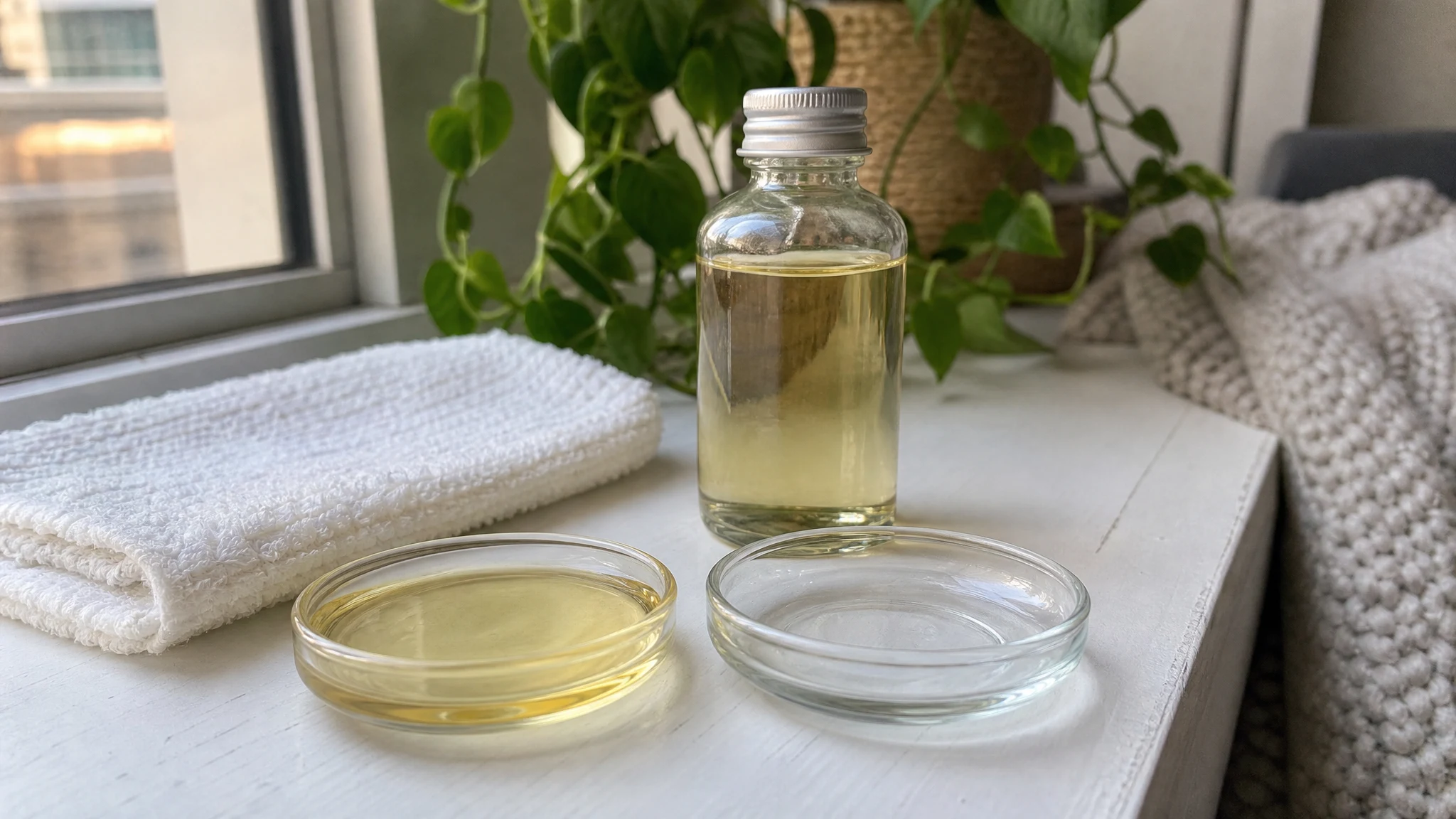
- Keep the cap on and the bottle upright, and wipe up drips: a cat will walk through a spill and clean its paws afterward.
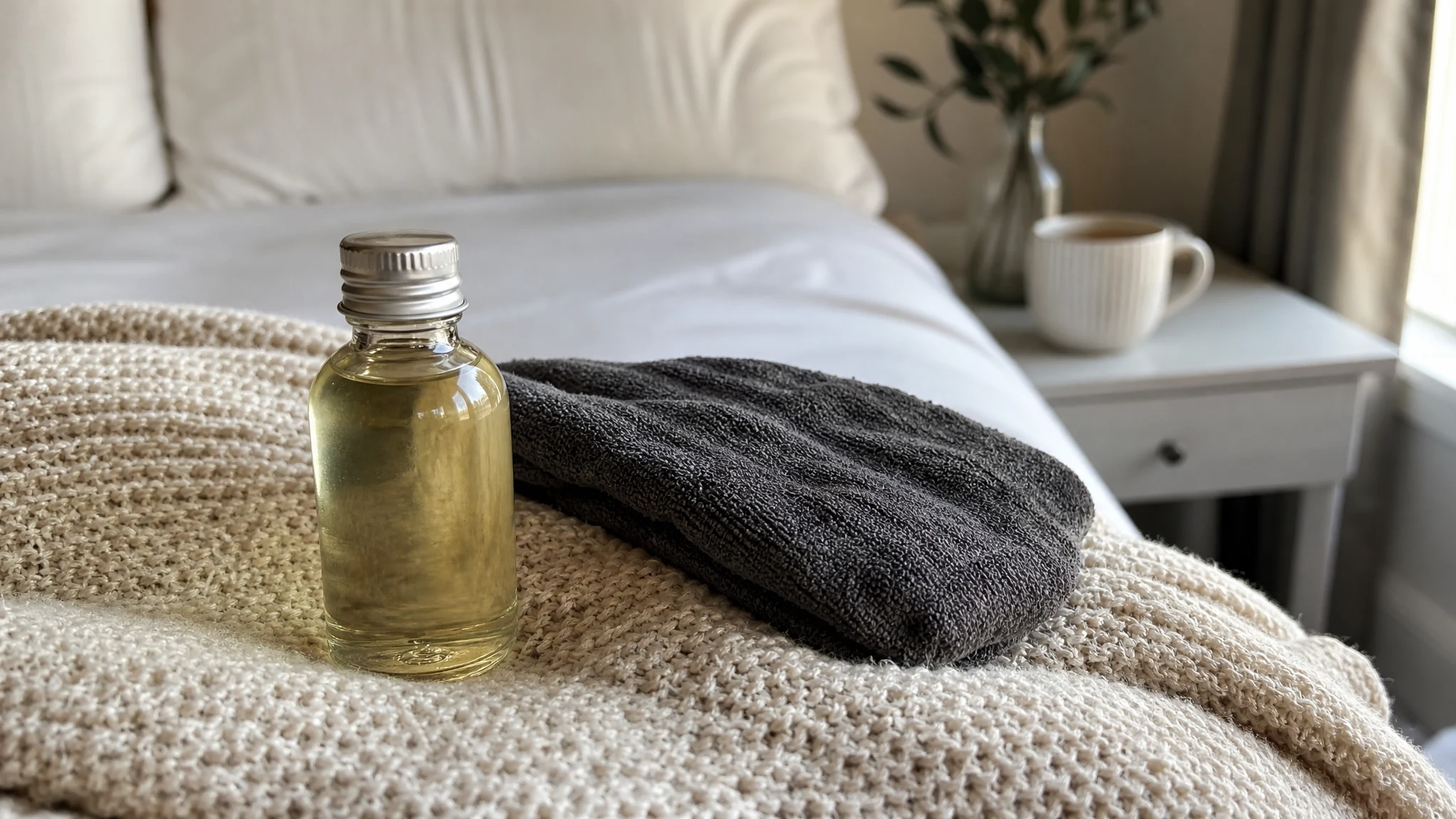
- Do not leave oil-soaked pack cloths on a chair or bed. A warm, oily cloth is exactly where a cat likes to curl up. Our shelf life guide has more on storage.
- Wash your hands after you handle oil, before you pet the cat.
- Do your oiling in a room the cat does not enter, and close the door until the area is wiped down and everything is put away.
Dog owners face a similar question with a different habit behind it, and we cover that in castor oil and dogs. For both, the pattern holds: the animal's own behaviour, not the oil's reputation, is what you plan around.
Organic Castor Oil
Cold-pressed, hexane-free organic castor oil, from a 0.5 oz sample to bulk sizes.
From $13.99
Shop Organic Castor Oil →Sources & Further Reading
- Toxicoses From Essential Oils in Animals (Merck Veterinary Manual)
- Castor Bean Is Toxic To Dogs | Pet Poison Helpline (the castor plant entry; Pet Poison Helpline 24-hour line)
- Poisonous Plants (ASPCA)