Castor Oil for a Dry-Feeling Scalp: A Light-Handed Guide
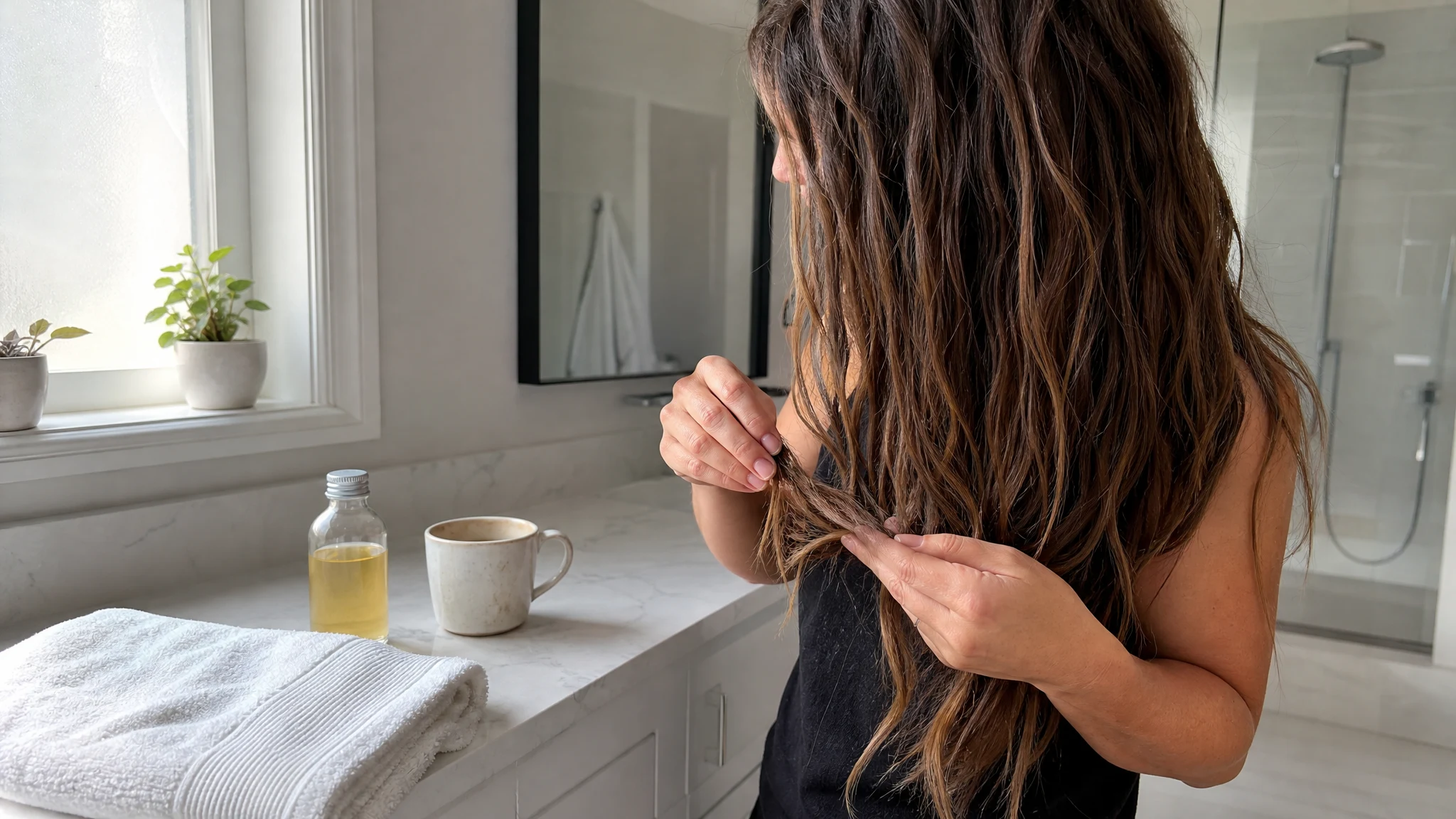
Some Sunday mornings the scalp tells you about it before the mirror does: a tight, slightly itchy feeling after a week of heated styling and long showers. Our favourite answer is not a bigger bottle or a stronger routine. It is about half a teaspoon of castor oil, a few quiet minutes with your fingertips, and a proper wash afterward.
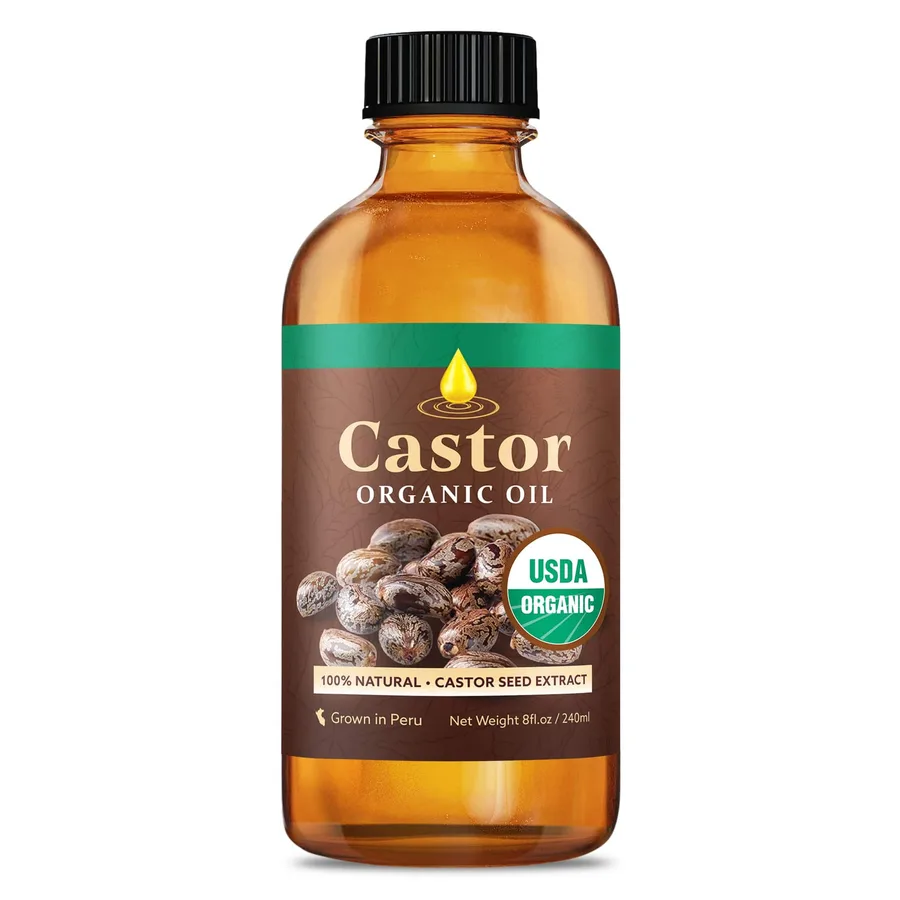
Organic Castor Oil
Cold-pressed, hexane-free castor oil, in sizes from a 0.5 oz sample to bulk drums.
From $13.99
Shop Organic Castor Oil →Why a dry scalp is a water story
The American Academy of Dermatology describes dry skin as skin that loses too much water, and on the scalp that usually shows up as itchiness and flakes. Its page also points to everyday causes: some hair products strip natural oils, and cold, low-humidity weather dries the scalp out. Its first suggestion is simple, a gentle, non-medicated shampoo.
Oil is not water, so we do not pretend castor oil adds moisture from nowhere. What a rich oil like ours does is sit on the surface, make skin feel softer and cushion the feeling of tightness while the shampoo does its work. Think of it as a conditioning step for the skin under your hair, the same way you would condition the lengths.
The half-teaspoon ritual
Castor oil is the thickest oil most of us will ever pour, slow to spread and happy to cling. That is exactly why a small amount goes so far. Here is the routine we would follow:
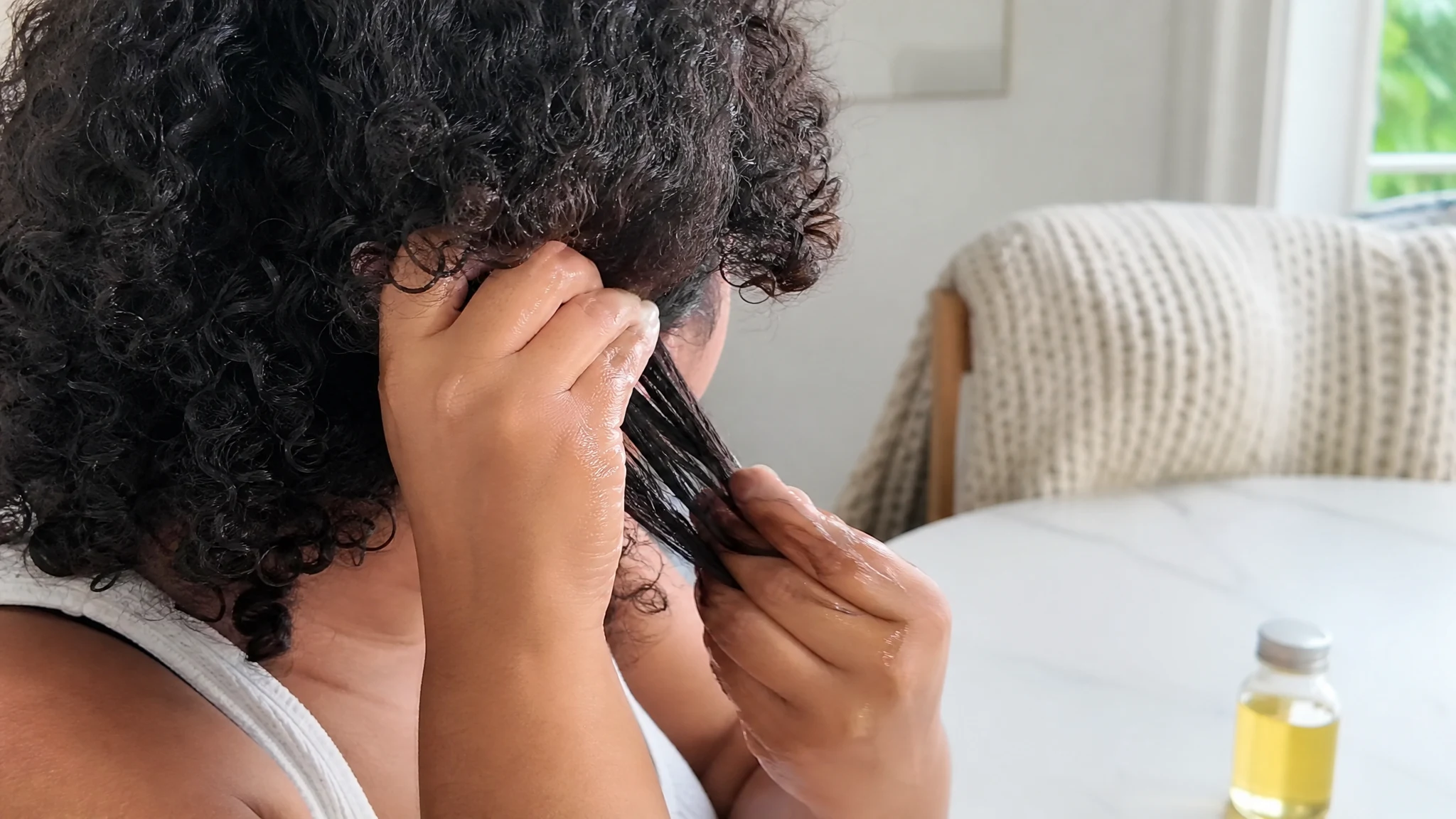
- Start with dry hair and a quarter to half a teaspoon of oil in your palm. Rub your hands together so the oil warms and loosens.
- Part your hair in a few lines and press the oil onto the scalp with the pads of your fingers, not your nails. Small slow circles, about three to five minutes.
- Leave it for ten to twenty minutes while you make coffee or answer a message. There is no prize for overnight; a longer leave-in mostly makes the rinse harder.
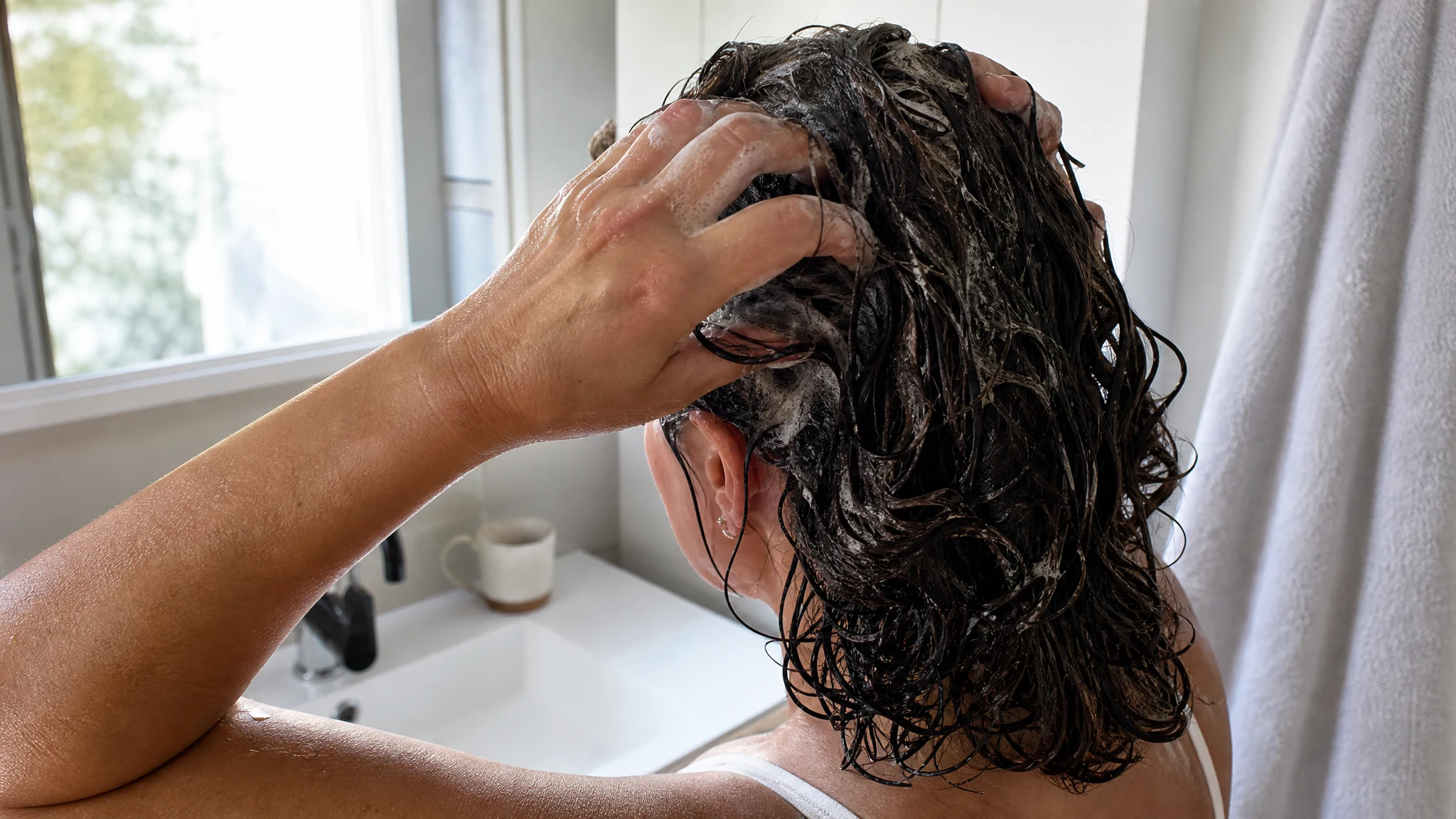
- Wet your hair thoroughly with warm (not hot) water before the shampoo, so the oil has something to mix with, then shampoo gently, rinse, and shampoo again if the first lather feels slick.
Our full walkthrough on washing castor oil out of hair covers the rinsing step in more detail, and how long to leave it in explains the timing. If this is your first time, do a patch test a day ahead, and keep the oil out of your eyes.
Why more is not better
It is tempting to answer a dry scalp with a generous pour. Resist that. A heavy layer is hard to rinse, and what is left behind can dry into pale specks that look much like flakes. Then you reach for more oil to fix what looks like dryness, and the loop starts over. By the arithmetic of a rinse, using less is the surest way to finish with a clean scalp.
That is also why we suggest using it before you shampoo rather than as a leave-in. A pre-wash oil does its job and then goes down the drain; you walk out with hair that feels soft and a scalp that does not feel coated. If you want the wider picture of how we think about oiling hair, our post on castor oil for hair is the place to start, and how to use it lays out the everyday methods.
Small habits that matter as much as the oil
- Keep the water lukewarm. That is the AAD's advice for washing the face, and it is a sensible habit for the scalp too.
- Check what else is on your scalp. A shampoo that strips oils, or a dry-shampoo habit, can undo a lot of good oiling.
- In winter, expect to oil a little more often than in summer, and a little less in humid months.
- Our organic castor oil is a single ingredient with nothing added, which keeps a pre-shampoo routine simple: one thing in your hand, nothing to wonder about.
When oil is not the answer
A dry scalp that stays flaky, red or itchy despite a gentler shampoo and a lighter hand belongs with a board-certified dermatologist. The AAD says the same: if over-the-counter products do not do the trick, it is time for a proper diagnosis. Castor oil is a lovely cosmetic ritual, and for anything beyond that, the experts are the right people to ask.
The nicest scalp routines are the ones that feel like a small pause in the week. Warm oil, quiet hands, a good rinse, and you are done.
Organic Castor Oil
Cold-pressed, hexane-free organic castor oil, from a 0.5 oz sample to bulk sizes.
From $13.99
Shop Organic Castor Oil →Sources & Further Reading
- American Academy of Dermatology, Is your dry scalp something more serious?
- American Academy of Dermatology, Face washing 101