Castor Oil for Natural Hair: Sealing and Shine for Coils
If you wear your hair in its natural curl, you have probably heard the order of operations: liquid, oil, cream. Castor oil is one of the most talked-about picks for that middle step, and it is easy to see why. It is thick, glossy and stays put. The trick is knowing what job it does, and what it leaves to other products.
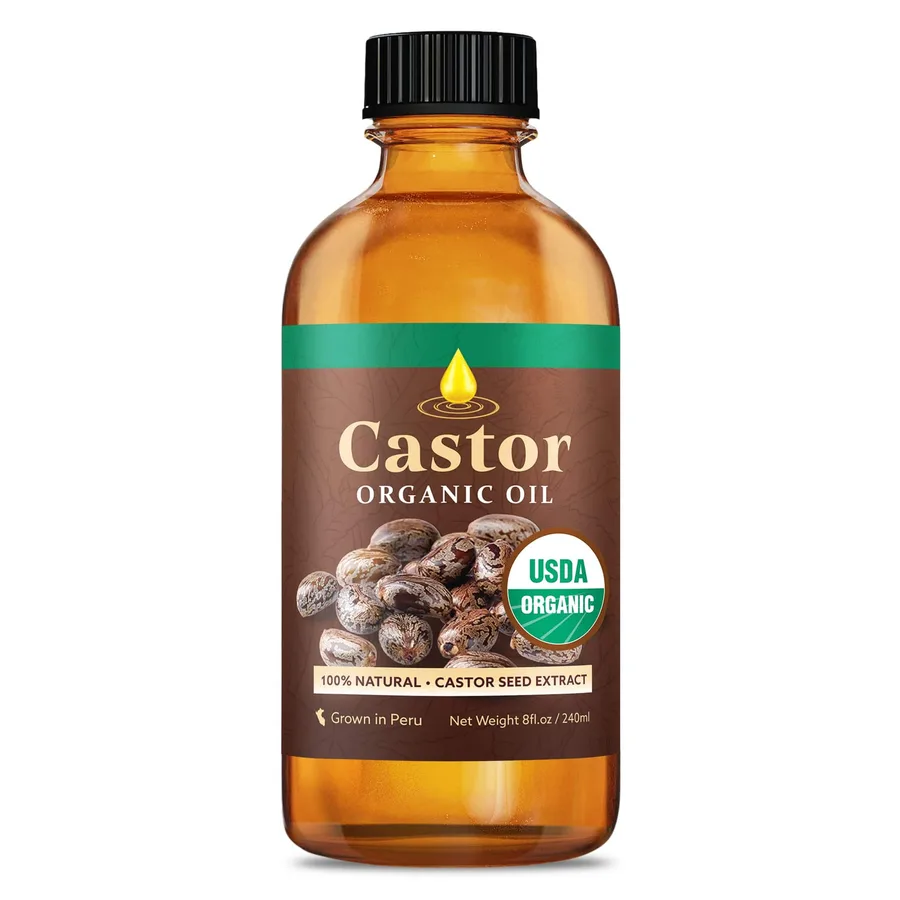
Organic Castor Oil
Cold-pressed, hexane-free castor oil, in sizes from a 0.5 oz sample to bulk drums.
From $13.99
Shop Organic Castor Oil →Castor oil is a sealant, not a moisturizer
Here is our position: castor oil seals moisture in, it does not supply any. Water is what hydrates hair. An oil sits on the surface and slows how quickly that water leaves, which a review of hair cosmetics describes as oils reducing the amount of water that hair absorbs and the swelling that follows. So water-based products come first, always, and castor oil comes after them.
That is the heart of the two common methods:
- LOC: liquid (water or a water-based leave-in), then oil, then cream.
- LCO: liquid, cream, then oil. Castor oil as the last step gives a glossy finish and tends to suit hair that dries out quickly.
Either order works. Most people pick whichever leaves their hair softer after a day or two, and it is worth trying both for a few wash days before deciding.
A word on porosity
Porosity describes how readily the outer cuticle lets water in and out. High porosity hair, often with lifted cuticle scales, takes up water quickly and loses it quickly. Low porosity hair has cuticle scales that lie flat, so water enters slowly and products can sit on top.
That suggests a sensible pairing. A thick oil like castor is a natural partner for high porosity hair, because it holds on to moisture that would otherwise slip away. On low porosity hair, it can sit on the strand rather than settle in, so use less and apply it to damp, well-moisturized hair. Research shows that oils behave differently depending on their make-up: in one mass spectrometry study coconut oil entered the hair shaft while mineral oil did not. Castor oil was not tested in them, so porosity advice for castor is reasoning, not a measured result.
Applying it without a struggle
- Start with damp hair and a water-based leave-in, working in sections.
- Warm the oil slightly. Standing the bottle in a bowl of warm tap water for a few minutes loosens it so it spreads.
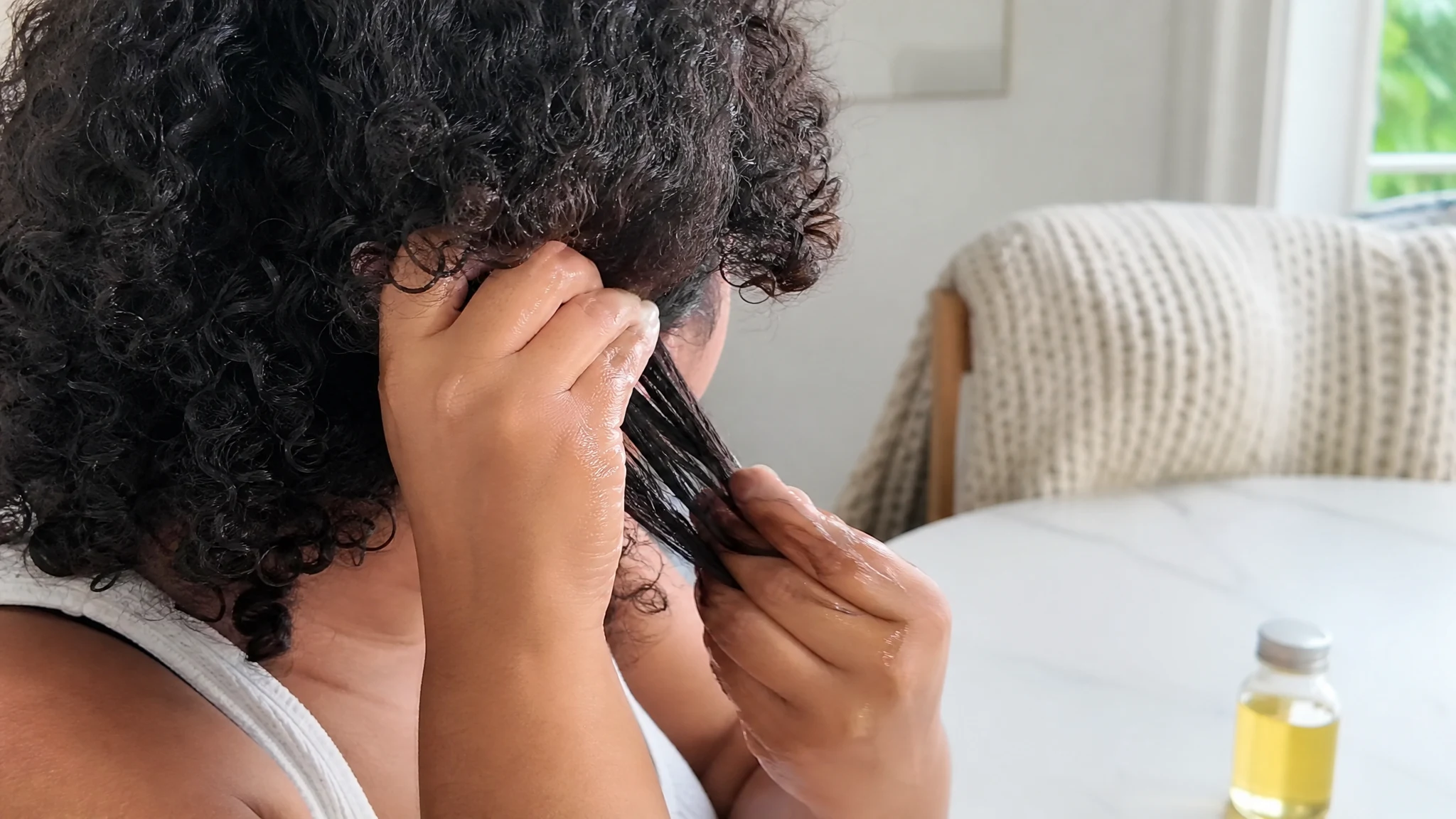
- Use a small amount. A few drops per section is a good place to begin, rubbed between your palms first.
- Smooth, then twist, braid or style. Pay most attention to the ends, which dry out first on tightly coiled hair.
If castor oil feels too heavy on its own, blend it with a lighter oil from a pharmacy or beauty-supply shop. Mixing about one part castor oil with two parts of something runnier makes it far easier to distribute, and it is the approach we would recommend for most textures.
Castor oil and the edges
Many people reach for castor oil to smooth and lay down the hairline. Our post on castor oil for edges covers how to do that gently, with a light hand and a soft brush.
What about Jamaican black castor oil?
Some people prefer Jamaican black castor oil for its darker colour and smoky scent. We do not sell it, but our comparison of Jamaican black castor oil and castor oil explains the difference so you can decide which you like.
Fitting it into your week
Castor oil is not an everyday product for most textures. Once or twice a week as a sealing step, or as a pre-shampoo session, keeps things light. Our guides to castor oil for hair and the routine for using castor oil on hair go into amounts and timing, and the castor oil hair mask suits a deeper wash day.
When you are ready to try it, our organic cold-pressed castor oil is castor oil only, with no fragrance or fillers, which makes it easy to layer under whatever you already use. As always, patch test first and keep it out of your eyes.
Natural hair loves a routine it can count on, and a small, steady hand with a thick oil is usually what makes it shine.
Organic Castor Oil
Cold-pressed, hexane-free organic castor oil, from a 0.5 oz sample to bulk sizes.
From $13.99
Shop Organic Castor Oil →Sources & Further Reading
- Hair cosmetics: an overview (Gavazzoni Dias, Int J Trichology, 2015)
- Effect of mineral oil, sunflower oil, and coconut oil on prevention of hair damage (Rele and Mohile, J Cosmet Sci, 2003)
- Investigation of penetration abilities of various oils into human hair fibers (Keis et al., J Cosmet Sci, 2005)
- Secondary ion mass spectrometric investigation of penetration of coconut and mineral oils into human hair fibers: relevance to hair damage (Ruetsch et al., J Cosmet Sci, 2001)