Castor Oil for Edges: Smooth, Soft Hairline Styling
Edges are the small, fine hairs around the hairline, and styling them is its own craft. The right amount of product lays them down smoothly and adds shine. The wrong amount leaves them heavy and flat. Castor oil, being thick and slow, suits the first goal well if you are patient with it.
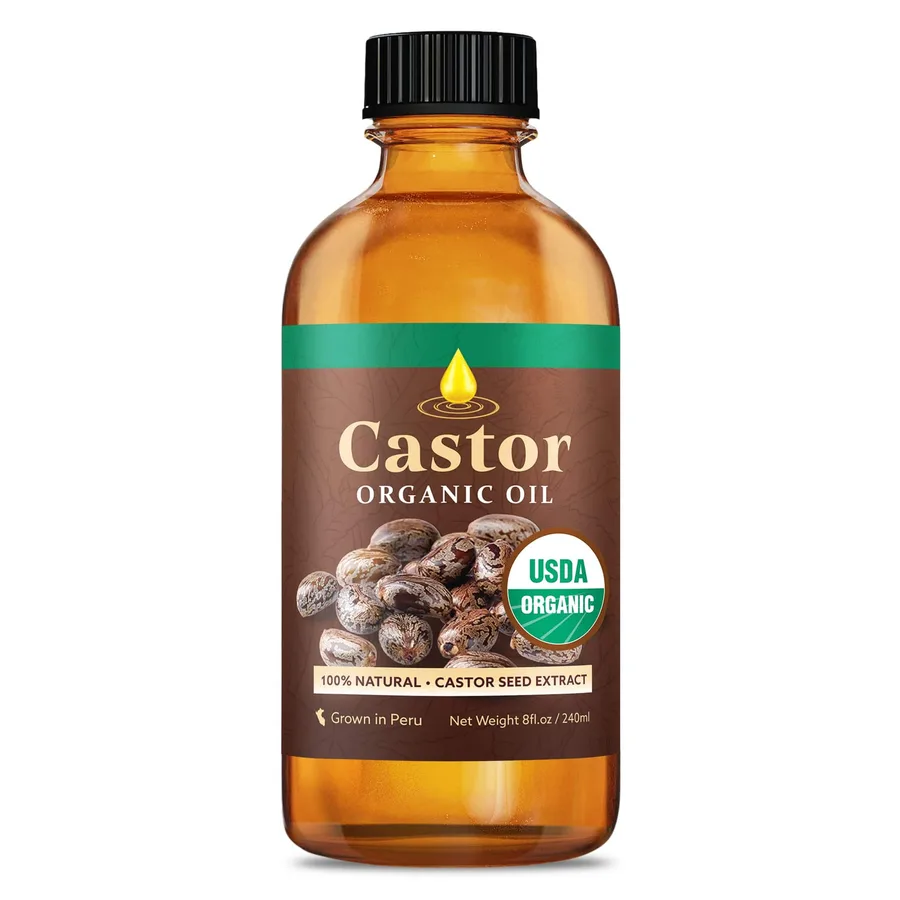
Organic Castor Oil
Cold-pressed, hexane-free castor oil, in sizes from a 0.5 oz sample to bulk drums.
From $13.99
Shop Organic Castor Oil →A drop, warmed
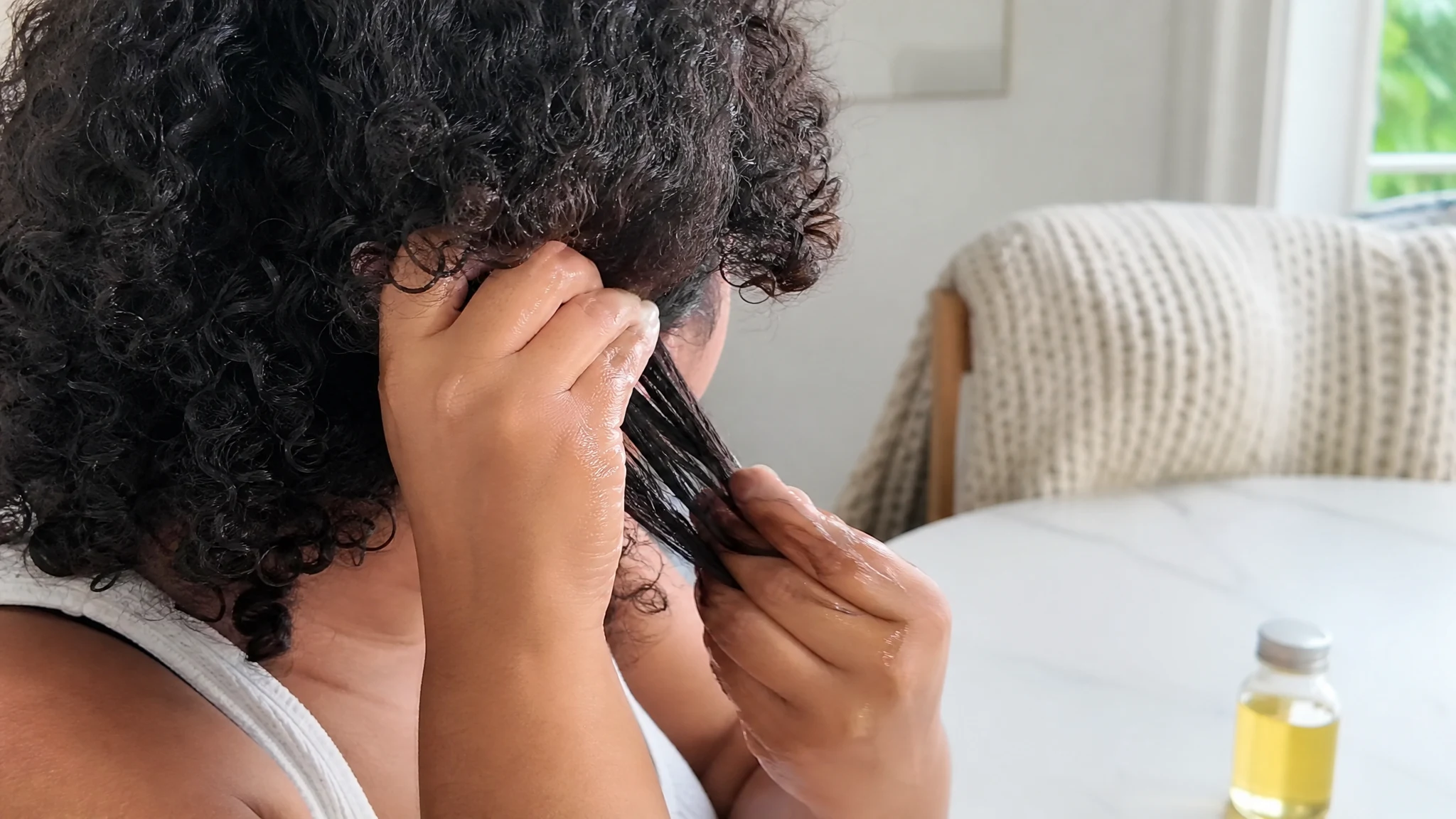
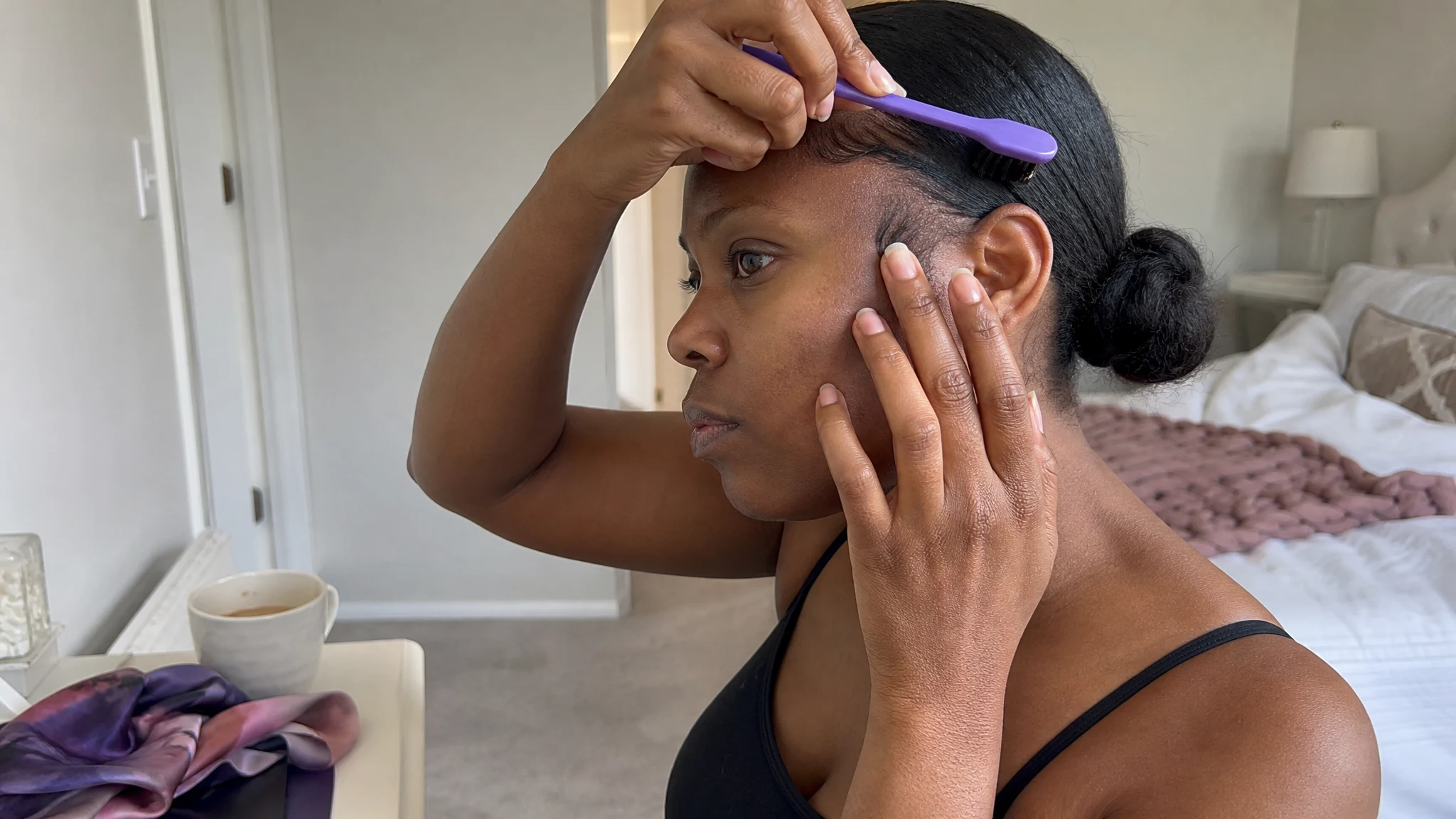
Put one small drop in the palm of your hand and rub your fingertips together until it is warm and thin. A warm oil spreads in a whisper-thin layer instead of a clump. Then pat, do not wipe, along the baby hairs. Use a soft brush, like a clean, soft toothbrush or a purpose-made edge brush from a beauty-supply shop, and sweep the hairs gently into place in the direction you want them to lie.
- Start with clean, slightly damp edges.
- Warm one drop between your fingertips.
- Smooth it onto the baby hairs, then brush gently with a soft brush.
- Tie a silk or satin scarf loosely for 10 to 15 minutes to set the shape.
If your edges look glossy but a little wet, that was too much; a tissue pressed lightly over them will lift the excess.
Why silk, and why loose
A silk or satin scarf lets the hair settle without friction, and it holds the smoothed shape. The word that matters is loosely. The American Academy of Dermatology advises avoiding hairstyles that pull on the hair frequently, and says that a style that feels painful is too tight. That goes for scarves, braids and ponytails alike. Gentle styling is kind to your hairline, and any worry about your hairline is a reason to see a board-certified dermatologist rather than a reason to reach for another product.
Keeping the hairline clean
The hairline is where product tends to collect, because it is where you reach for the oil most often. Heavy oil layered on top of oil, gel and sweat starts to look dull and feel stiff. Rinse it away on wash day with a good shampoo, working it in before you add water; our guide on washing castor oil out of hair walks through the process. If you use a lot of edge products, a clarifying wash every so often resets the area.
Where this fits
This is a styling use, and that is how we would keep it. If you wear natural hair, our guide to castor oil for natural hair covers the length and the coils, and the basics of applying it are in how to use castor oil for hair. For a broader tour of what this oil does, see castor oil for hair.
Choosing the right tools
Edge styling is a game of small things. A soft, fine-bristled brush picks up less product and lays the hair more gently than a stiff one. A silk or satin scarf comes from a fabric or beauty-supply shop; we do not sell either, but a cheap one does the job. Keep a separate brush for oil so it does not transfer onto your everyday hairbrush, and wash it with shampoo every couple of weeks.
Making it last through the day
Castor oil sits on the surface and does not dry, so a smoothed hairline may stay soft-looking and flexible rather than stiff. If you want more hold, many people finish with their usual gel or edge control. Apply a thin layer of oil first, then a touch of the product, and let it set under the scarf. If you prefer a softer look, the oil alone is enough. Keep a tissue in your bag to blot any shine that feels like too much.
Whatever you choose, build the habit of cleansing the hairline at the end of the day, so that no layers of product pile up from one morning to the next.
Clean, smooth edges are a small detail that changes a whole look, and a drop of warm oil goes a long way.
Organic Castor Oil
Cold-pressed, hexane-free organic castor oil, from a 0.5 oz sample to bulk sizes.
From $13.99
Shop Organic Castor Oil →