Castor Oil for Nails and Cuticles: A Simple Night Routine
Our hands get plenty of attention in the daytime and almost none at night. A drop of castor oil pressed into the cuticles before bed is one of the simplest ways to change that. It will not do anything dramatic, and it does not need to: it keeps the skin around your nails soft and leaves the nails themselves looking glossy and neat.
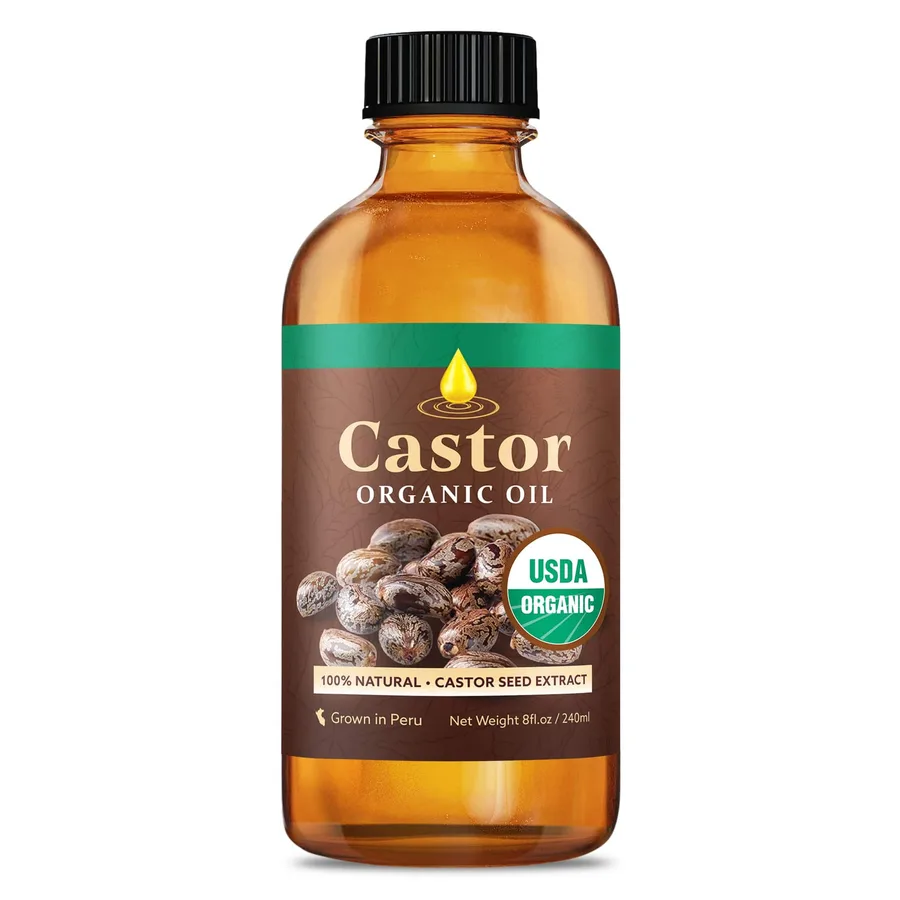
Organic Castor Oil
Cold-pressed, hexane-free castor oil, in sizes from a 0.5 oz sample to bulk drums.
From $13.99
Shop Organic Castor Oil →Why a thick oil suits cuticles
Cuticles are a tiny strip of skin that spends the day in and out of water, soap and hand sanitizer. Thin oils can disappear into that strip within minutes. Castor oil is the opposite: it is famously thick, with a viscosity of roughly 9 to 10 poise at 25 C in one published review, around a thousand times water's viscosity by our arithmetic. That slow, sticky-rich texture is exactly what you want on a small area, because it stays put, and a very small amount is plenty.
The night routine
- Wash and dry your hands. Dermatologists at the American Academy of Dermatology advise moisturizing after every hand wash, so this step slots into a habit you already have.
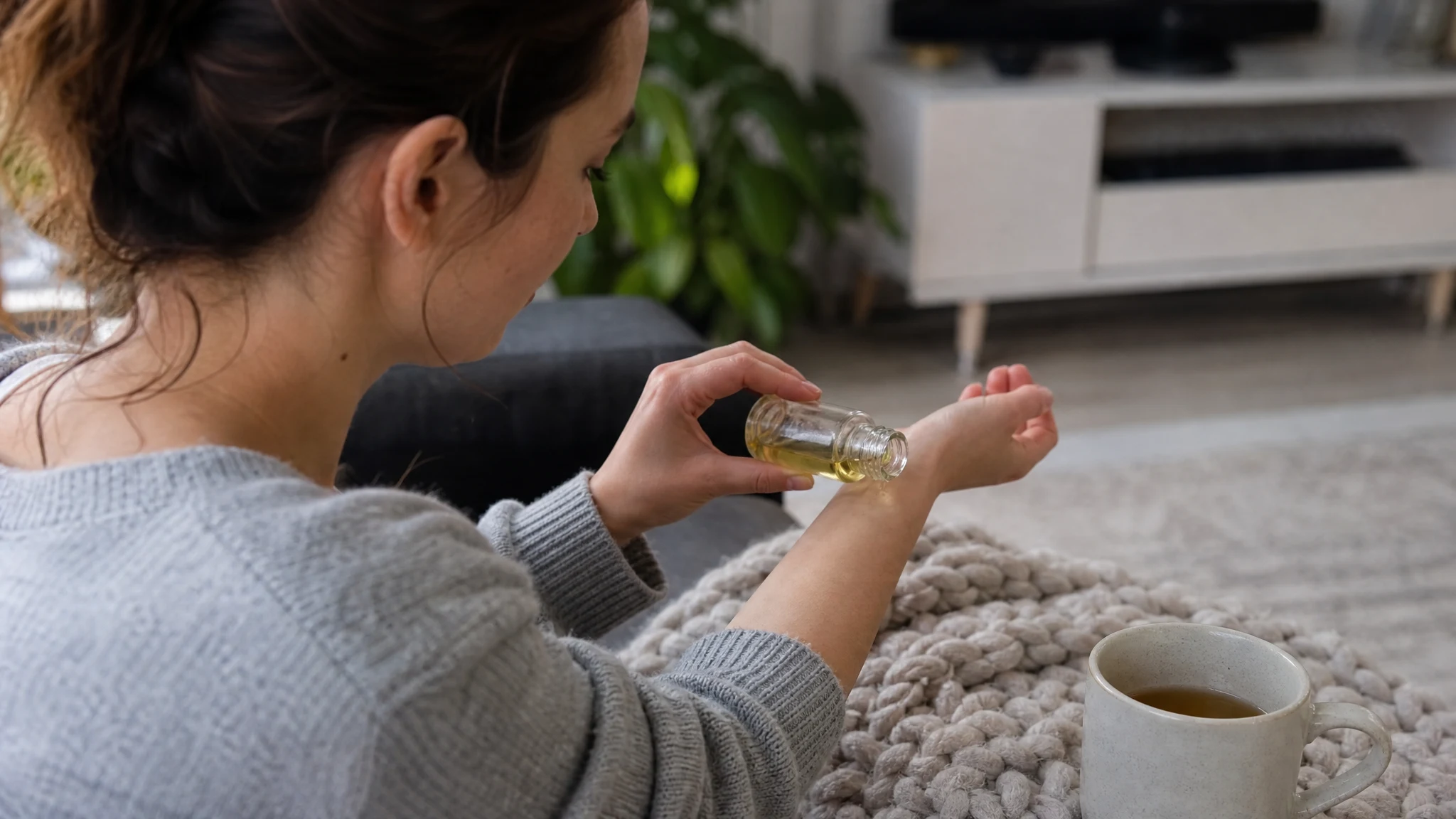
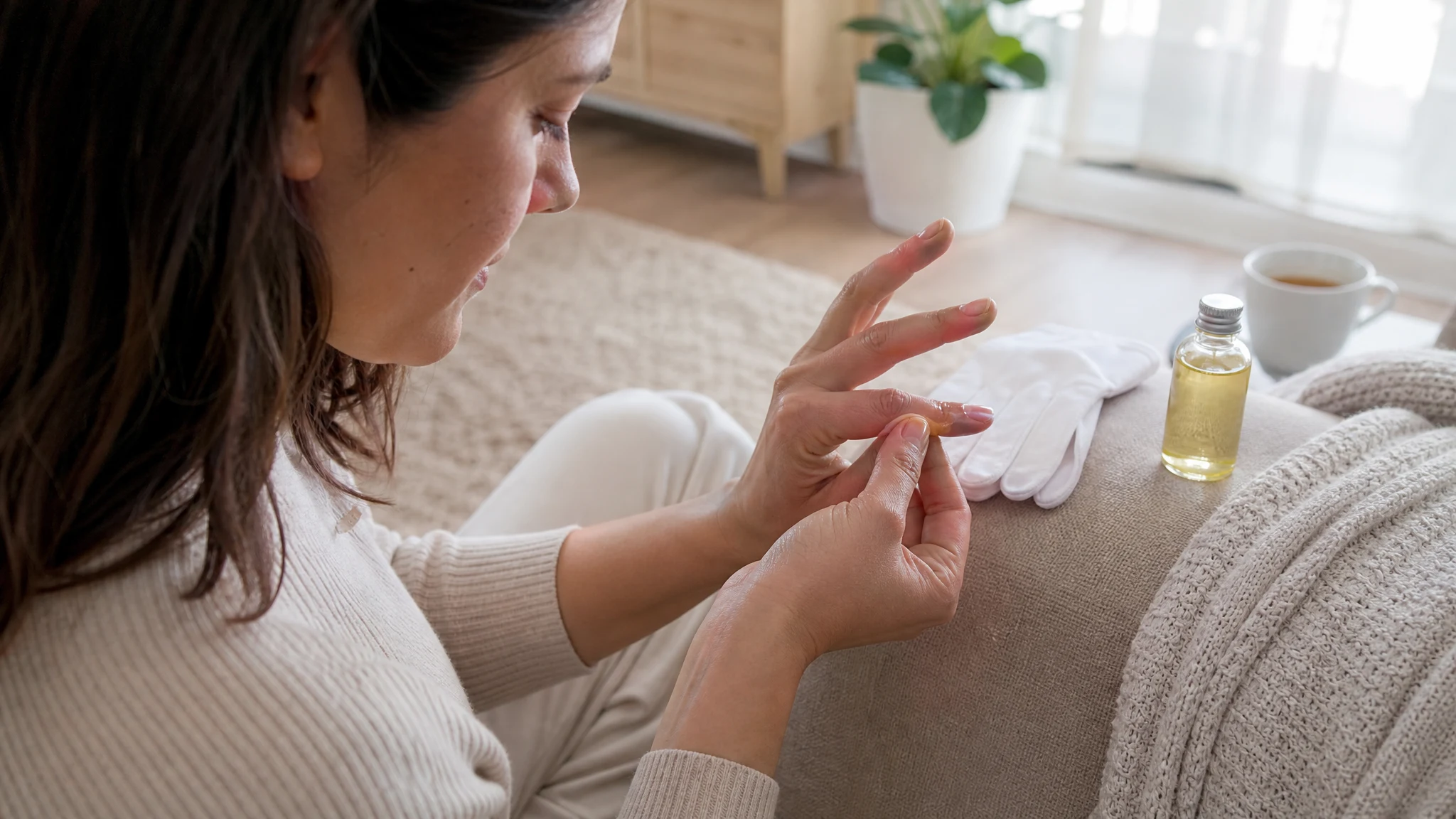
- Put a drop the size of a rice grain on each hand, warm it between your fingertips, and dab it onto the cuticle and the skin around the nail, the nail wall.
- Massage it in with small circles for about 30 seconds per hand, then run any leftover oil over the nails to leave them glossy.
- If you like, slip on a pair of thin cotton gloves, which keeps the oil off your sheets and holds the warmth of your hands against the skin.
- In the morning, wash your hands as usual. The shine that remains is the nice part.
Those quantities are our suggested starting point, not a lab result, so adjust them to how your skin feels. Once or twice a week is a sensible rhythm to begin with. Castor is thick enough that more is rarely better.
Handling a thick oil
Castor oil takes a little getting used to, and the trick is restraint. Warm the bottle in your hands for a minute and it pours more willingly. Dispense onto a fingertip rather than straight onto the nail, because the thick oil lets go of a bottle slowly. If you end up with extra, wipe your fingers on a tissue before you pick up your phone or a light switch. Plain soap lifts the oil off in the morning with a little patience, and a pillowcase you do not mind is a good idea if gloves are not your thing.
Habits that do half the work
An oil is only one piece of nail care. The American Academy of Dermatology notes that too much water exposure can leave nails prone to splitting, peeling and breaking, and recommends gloves for washing dishes and cleaning. The same list says not to bite your nails or remove your cuticles, and not to use your nails as tools. Cuticles are there for a reason, so we would rather condition them than cut them.
When to see someone instead
Castor oil is a conditioning oil for skin, not an answer to a nail problem. If your nails change, swell or cause pain, the American Academy of Dermatology advises seeing a dermatologist. If the skin around a nail turns red or feels sore after you use any oil, stop using it and see a doctor. As with any new product on your skin, do a patch test first (here is our patch test guide) and keep oil out of your eyes.
One bottle, a few jobs
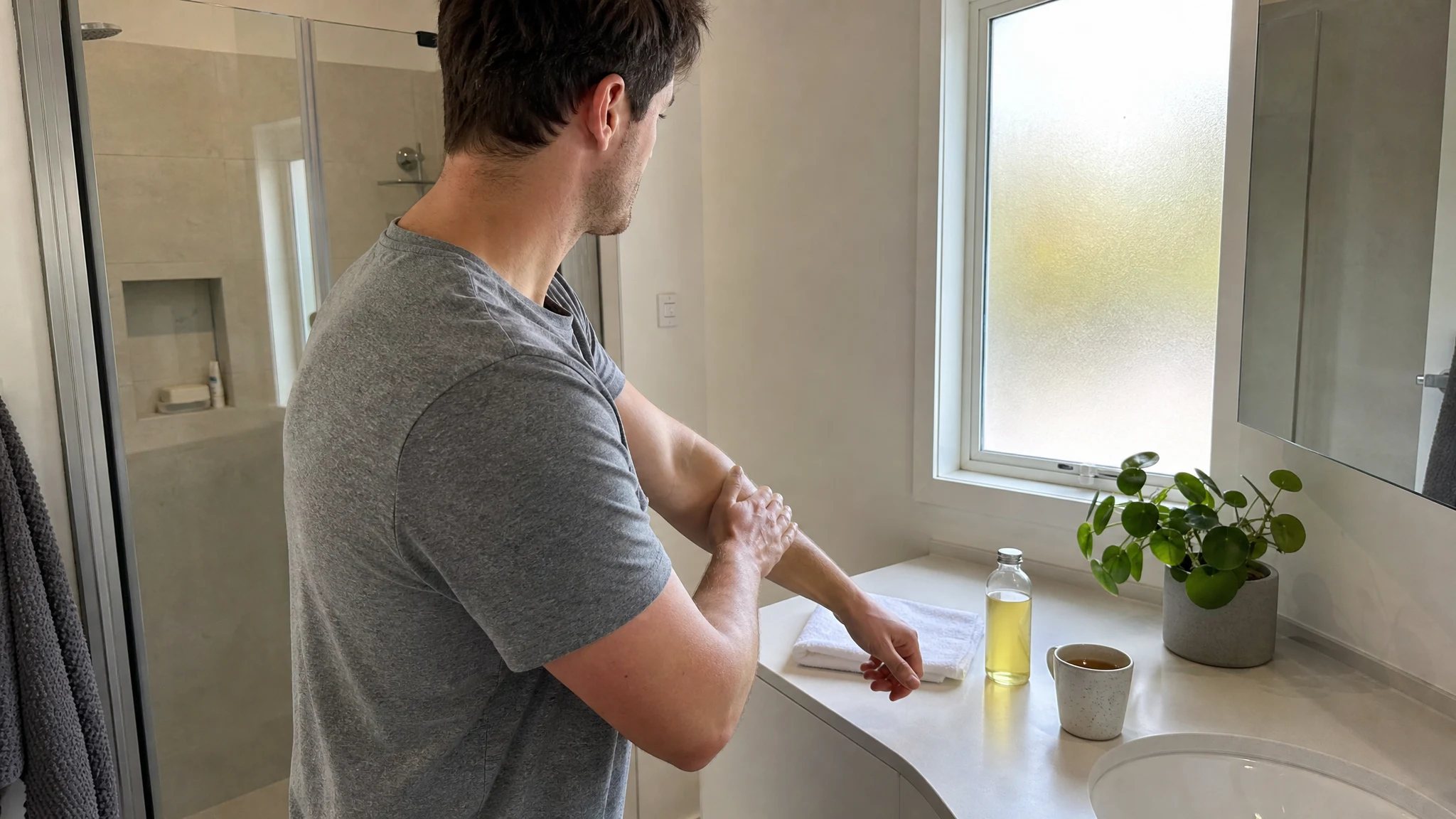
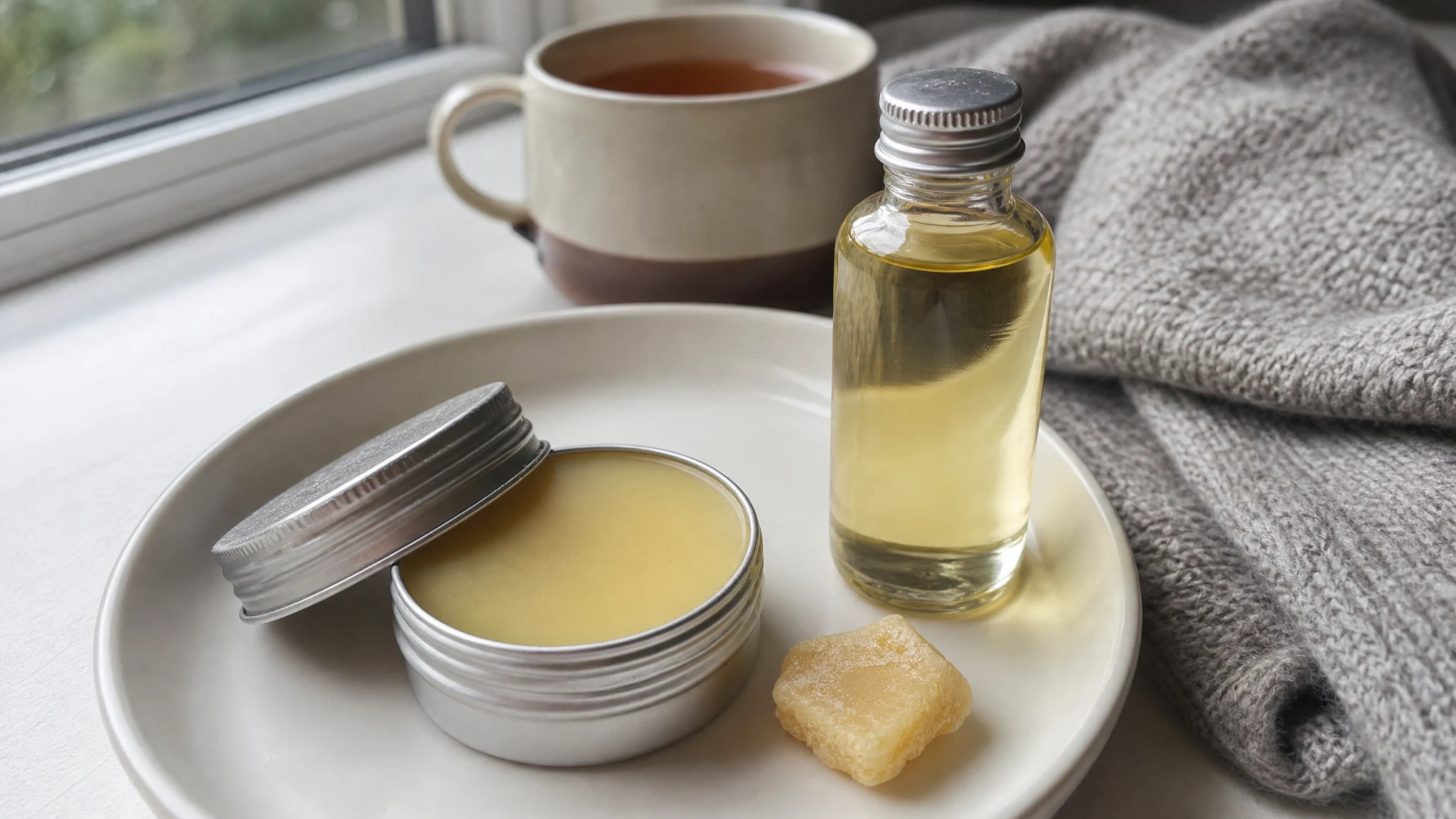
The same drop that does your cuticles works on other dry spots. A bit goes on rough elbows, a little on knuckles, and a dab on lips, where our lip balm recipe puts it to work. Our castor oil for skin guide covers the broader picture. A small bottle goes a long way for this kind of use, which is why we offer a 0.5 oz size of our organic cold-pressed castor oil.
Think of it as a two-minute ritual: soft hands, tidy cuticles, a little shine. It is the kind of habit that feels like a small treat at the end of a busy day.
Organic Castor Oil
Cold-pressed, hexane-free organic castor oil, from a 0.5 oz sample to bulk sizes.
From $13.99
Shop Organic Castor Oil →Sources & Further Reading
- American Academy of Dermatology: 11 dermatologists' tips for healthy nails
- Yeboah A, et al. Castor oil (Ricinus communis): a review on the chemical composition and physicochemical properties. Food Science and Technology, 2021