Castor Oil Under the Eyes: A Gentle Moisture Routine
The skin under your eyes is the part of your face that asks for the least and notices the most. It is thin, it dries out early, and it does not appreciate being rubbed. That makes it a good place for a very little castor oil and a very light touch, and a poor place for anything generous.
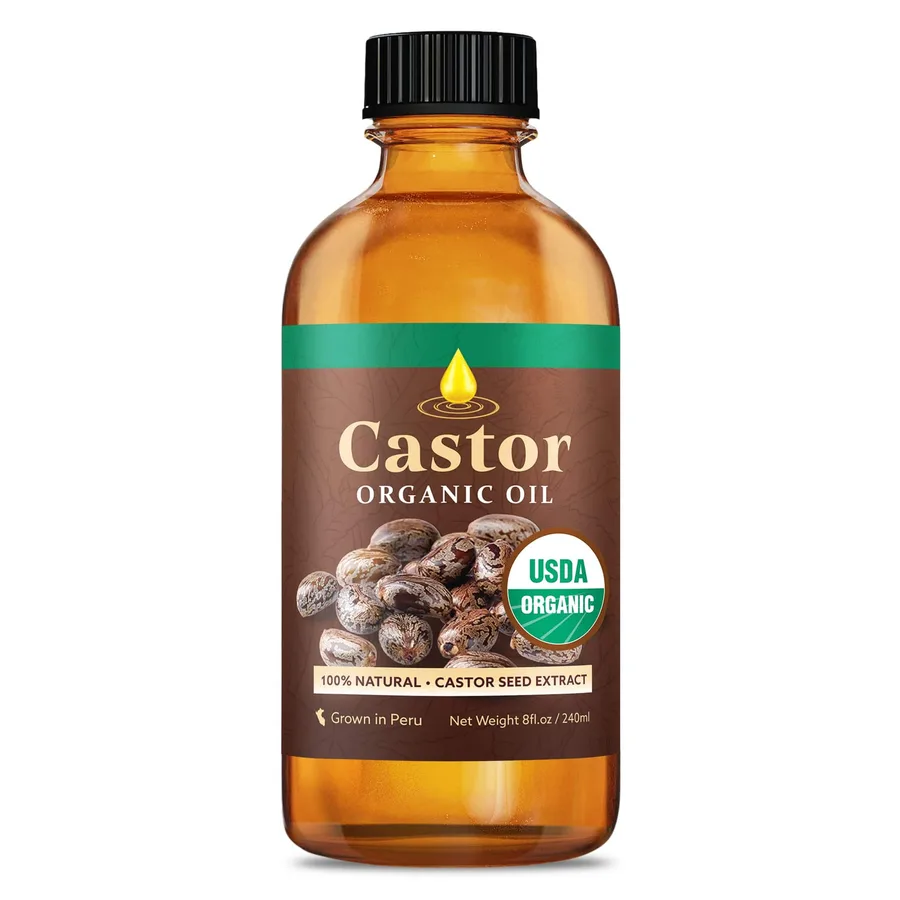
Organic Castor Oil
Cold-pressed, hexane-free castor oil, in sizes from a 0.5 oz sample to bulk drums.
From $13.99
Shop Organic Castor Oil →Why this skin is different
Cleveland Clinic describes the skin around the eyes as the thinnest on the body, which makes it prone to dryness and irritation. Its page on dry eyelids adds that eyelid skin lacks the protective fat layer found elsewhere, and notes that the American Academy of Dermatology recommends petroleum jelly for dry eyelids. In plain terms: this skin does like a protective, rich layer, but only a small one, and it is easily upset by strong fragrance.
Castor oil is one of the richest oils we know, and our organic oil is a single ingredient with no fragrance added. That makes it a reasonable candidate for a tiny bedtime layer, as long as you treat it with the care you would give any rich product near the eyes.
What to expect
Here is the realistic picture. A thin layer of oil can leave the skin under the eyes feeling soft and cushioned by morning. That is all. It does not change shadows or dark circles, because those have nothing to do with how moisturized the surface is, and it does not smooth anything permanently. If you like the feel of it, good; if you are hoping for something else, a dermatologist is the right person to ask.
The routine
- Patch test first. Our patch test guide shows how. Because the eye area is sensitive, test on your inner forearm, wait a day, then try a dab on the outer cheekbone before going near the eye.
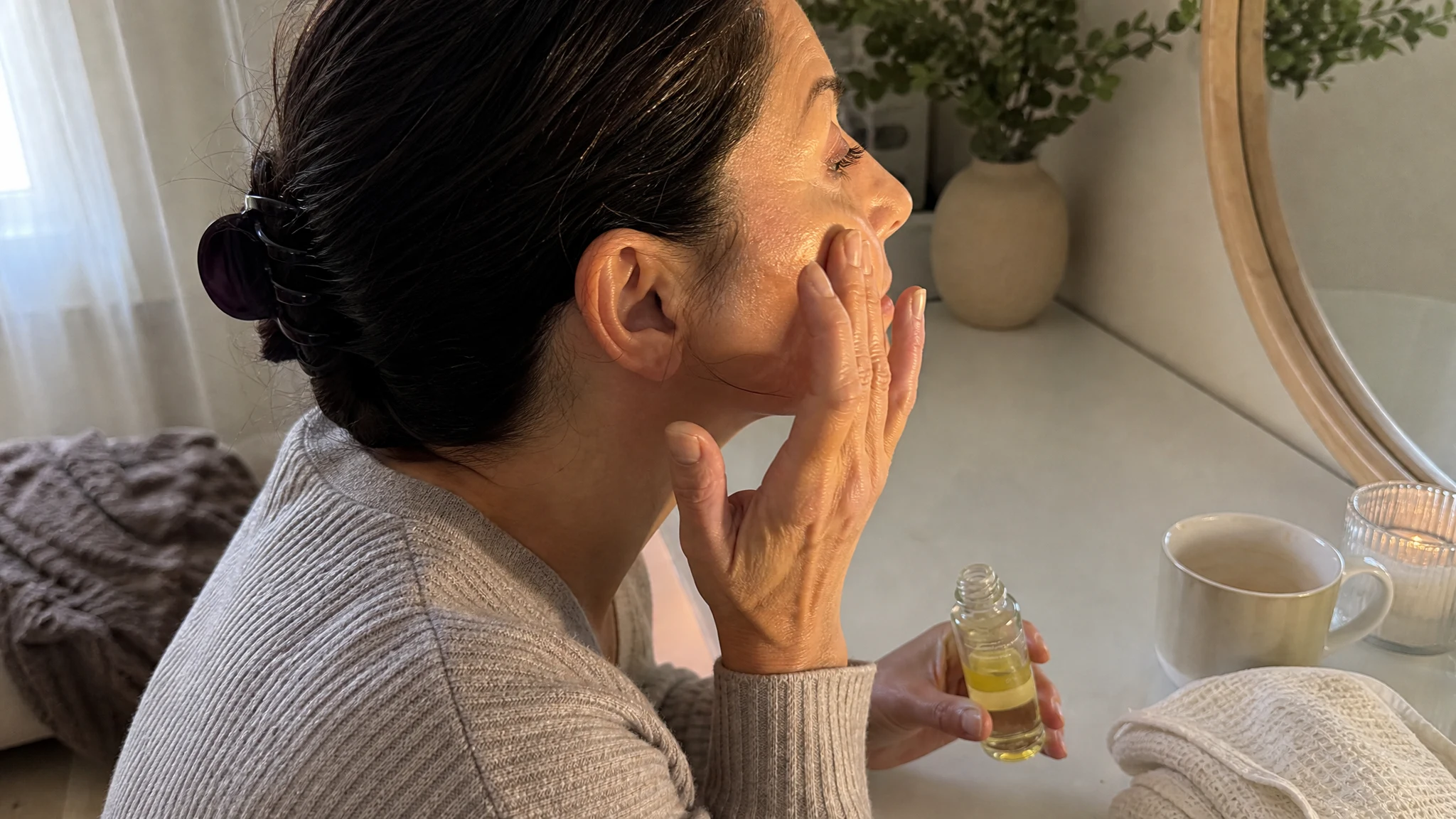
- Use almost nothing. A pea-sized amount at most for both eyes together. For an oil this dense, that is about one drop. Warm it between your fingertips.
- Use your ring finger. It tends to press lightly. Dot the oil along the cheekbone, on the bone itself, and pat. Cleveland Clinic advises patting gently with a finger and avoiding pulling or tugging.
- Stay well below the lash line. Aim for the bony ridge, about a finger's width under the lashes, never the eyelid itself.
- Leave it alone. No massaging, no extra layers on top.
Why the lash line is off limits
This is the one rule worth explaining. Castor oil is thick, and you spend the night warm and lying down. A thick oil can slowly creep from where you put it, and the eye is the closest place to creep to. A small dab on the bone stays put better than a smear near the lashes. If any oil does get into your eye, rinse gently with clean water; if the eye stays sore or blurry, an eye doctor is the person to see. The same goes for a persistent reaction on the lid or under the eye. Cleveland Clinic notes that irritated eyes may need a dermatologist or an eye specialist.
Small tweaks
- Apply it a little before you lie down rather than at the last second, so you are not pressing a fresh layer straight into the pillow.
- Skip it on days your eyes feel irritated from tiredness, allergies or makeup. A rich oil is for comfortable skin.
- If you wear contact lenses, put the oil on after you remove them, with clean hands.
- If your under-eye skin feels dry, a little at a time is the way; add more only after a week of using the same small amount.
If you were hoping this post was about lashes, that is a different topic with its own page: see our guide to castor oil and eyelashes. For the rest of your face and body, our overview of castor oil for skin covers where a rich oil fits and where it does not.
A tiny amount, a light finger and a little patience is all this routine asks.
Organic Castor Oil
Cold-pressed, hexane-free organic castor oil, from a 0.5 oz sample to bulk sizes.
From $13.99
Shop Organic Castor Oil →Sources & Further Reading
- Cleveland Clinic, How To Choose the Right Eye Cream
- Cleveland Clinic, Dry Eyelids: Possible Causes, Care & Treatments